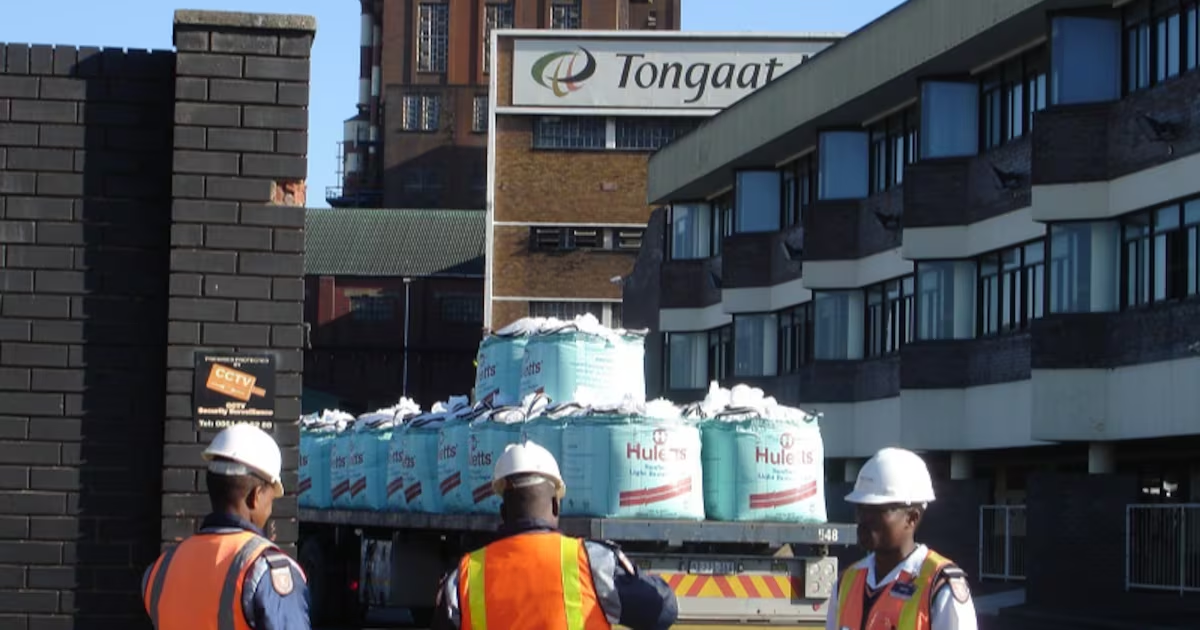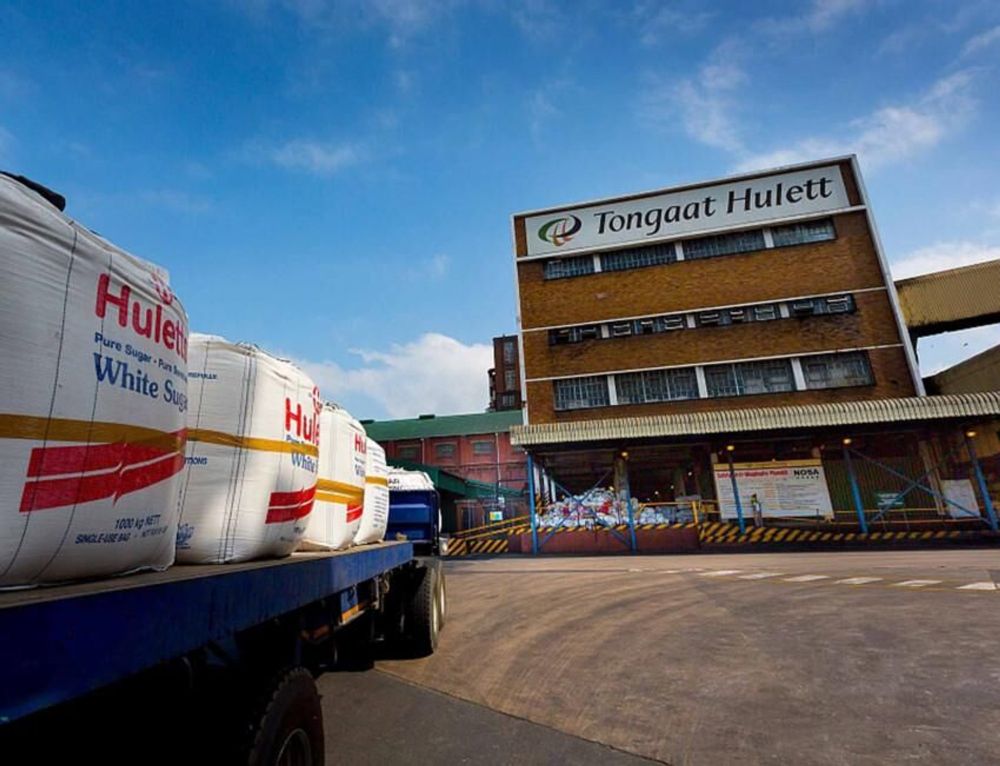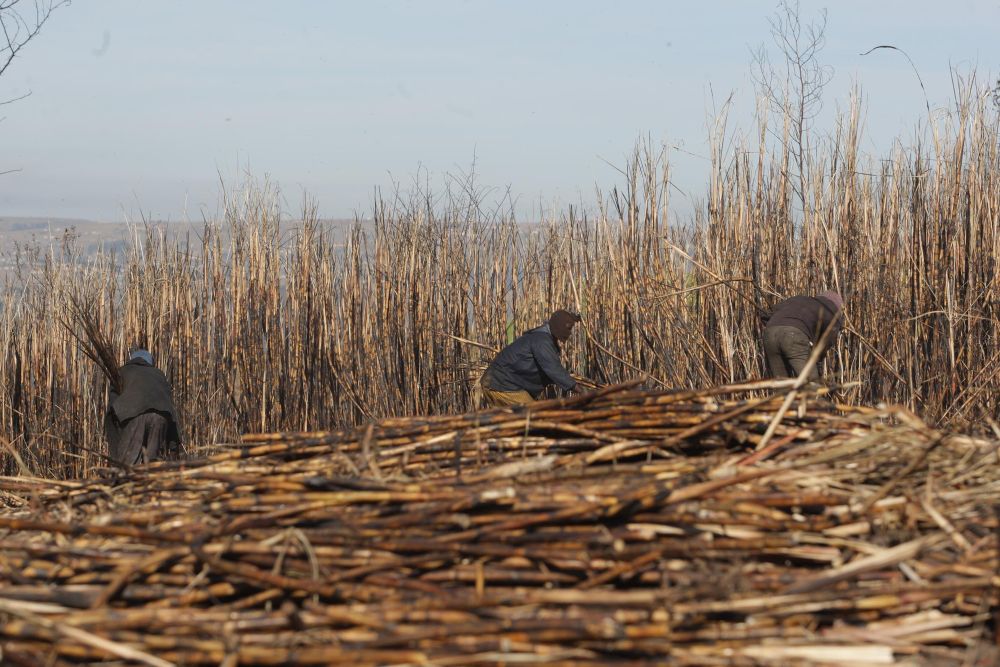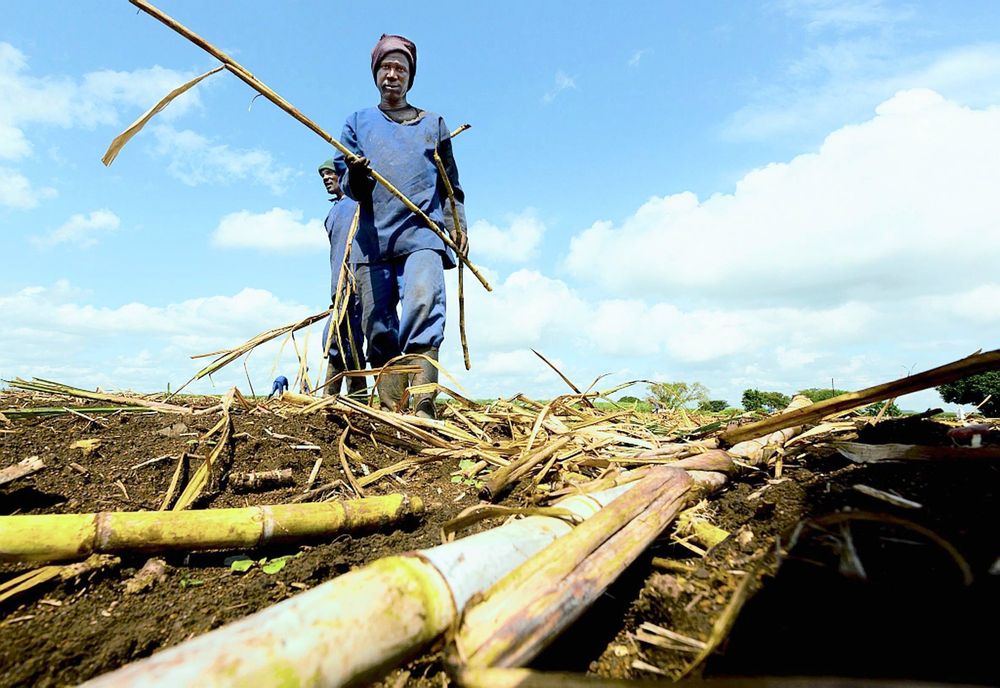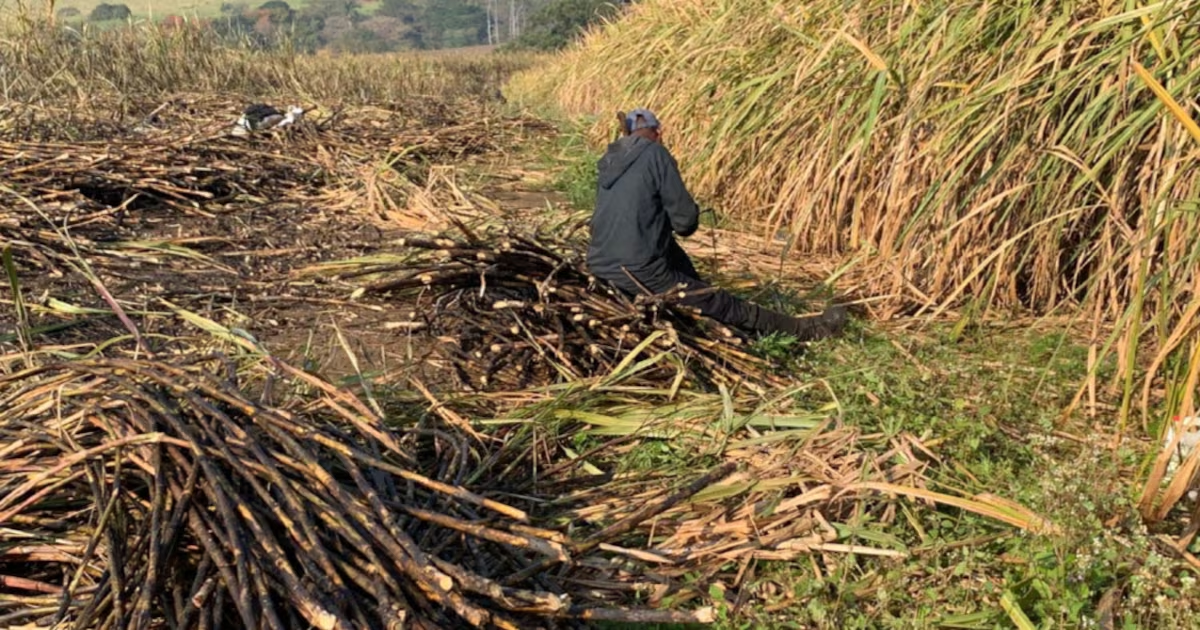
The government’s recent intervention, led by the department of trade, industry & competition (DTIC) and the Industrial Development Corporation (IDC), to secure Tongaat Hulett’s financial viability has averted a disaster that would have devastated more than 17,500 sugarcane growers and the KwaZulu-Natal rural communities that depend on them and the company for their livelihoods.While this is a welcome short-term reprieve, South Africa’s sugar industry is facing another crisis: the flood of imported sugar, which, if left unaddressed, could destroy the industry and render the efforts to save Tongaat Hulett redundant.The scale of imports reached crisis point as early as 2025, and the situation continues to deteriorate. Between January and April this year, there was a further 35% increase in imports, as 69,214 tonnes of sugar entered the country, compared with 44,751 tonnes over the same period last year and just 12,670 tonnes in 2024.The government has rightly demonstrated that it understands the strategic importance of the sugar value chain to rural employment and economic stability. That understanding informed the decision to support Tongaat Hulett. The same principle must now be applied to the growers who supply the industry. Saving sugar mills while allowing the entire industry to be undermined by unfairly priced imports would amount to a short-sighted victory.For several years, the industry has worked alongside the government and other stakeholders through the sugarcane value chain master plan to rebuild competitiveness, support transformation, protect jobs and create opportunities for growth. The master plan has demonstrated what can be achieved when industry and the government work together with a shared purpose.Yet, South African producers are increasingly competing against imported sugar produced under vastly different conditions. In many exporting countries, growers and producers benefit from extensive government support and subsidies, enabling sugar to be sold on international markets at prices that do not reflect the true cost of production.South African growers do not enjoy the same level of support, either during production or when surplus sugar is exported. Instead, they are expected to compete while confronting rising fuel and electricity costs, increasing fertiliser prices, deteriorating infrastructure and mounting operational pressures.This is precisely why South Africa’s tariff protection mechanism exists. The dollar-based reference price is intended to provide a measure of protection by triggering tariff adjustments when imported sugar enters the market at unfairly low prices. However, the mechanism can only work if it reflects current market realities.The industry requested a review of the dollar-based reference price because the existing calculation no longer adequately accounts for changes in global markets, cost structures and the realities facing local producers. Yet, while the review process at the International Trade Administration Commission has been under way, imported sugar has continued to enter the country at record levels.Every tonne of imported sugar that displaces locally produced sugar represents lost income for South African growers and millers, reduced economic activity in rural communities and fewer resources available for future investment. The cumulative impact already runs into billions of rand. Behind those figures are families, communities and local economies whose livelihoods depend on the continued viability of sugarcane farming.The master plan, as well as the government’s core policy, puts industrialisation at its heart. But industrialisation requires more than preserving individual companies. It requires protecting the entire value chain that sustains jobs, investment and economic activity. It requires recognising that agriculture and manufacturing are interconnected. And it requires policy mechanisms that respond quickly when changing market conditions threaten domestic production.The sugar industry offers South Africa something more valuable than mere survival: a platform for new industrial growth. Sugarcane is not only a food commodity; it is a strategic feedstock for bioethanol and sustainable aviation fuels, sectors attracting significant global investment. The recent Presidential Investment Summit secured a $1bn commitment toward biofuels in South Africa, signalling real investor appetite. But that investment will not materialise if the agricultural base underpinning it continues to erode. Protecting growers now is not defensive policymaking — it is the foundation on which a future-facing, diversified industry can be built.South Africa cannot build a resilient industrial economy while allowing strategic sectors to be hollowed out by imports against which local producers cannot fairly compete. The solution is neither complicated nor unprecedented. The review of the dollar-based reference price must be finalised urgently and the tariff mechanism allowed to function as intended and respond to low sugar prices. This will not solve every challenge facing the industry, but it will provide growers with a fairer opportunity to compete and continue investing in the future.The government deserves credit for recognising the importance of Tongaat Hulett and acting with urgency. The broader sugar industry now requires that same urgency once again.• Mdluli is chair of SA Canegrowers.
HIGGINS MDULI | After saving Tongaat Hulett, government must rescue sugar industry
Cheap sugar imports threaten growers despite government's Tongaat Hulett rescue efforts
778 words~4 min read