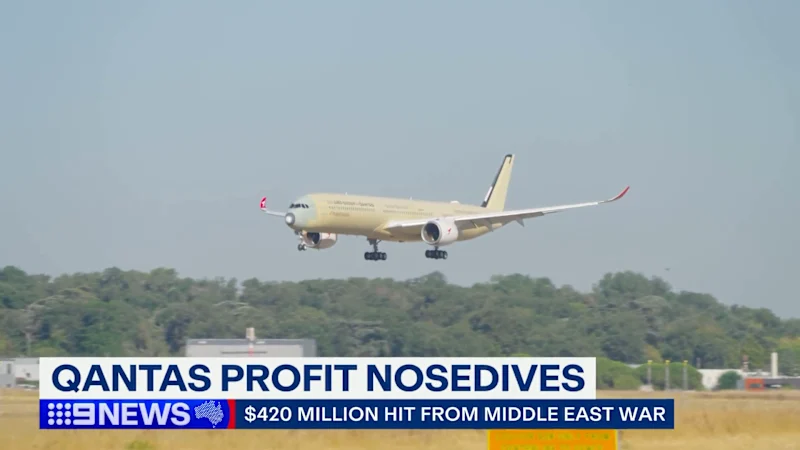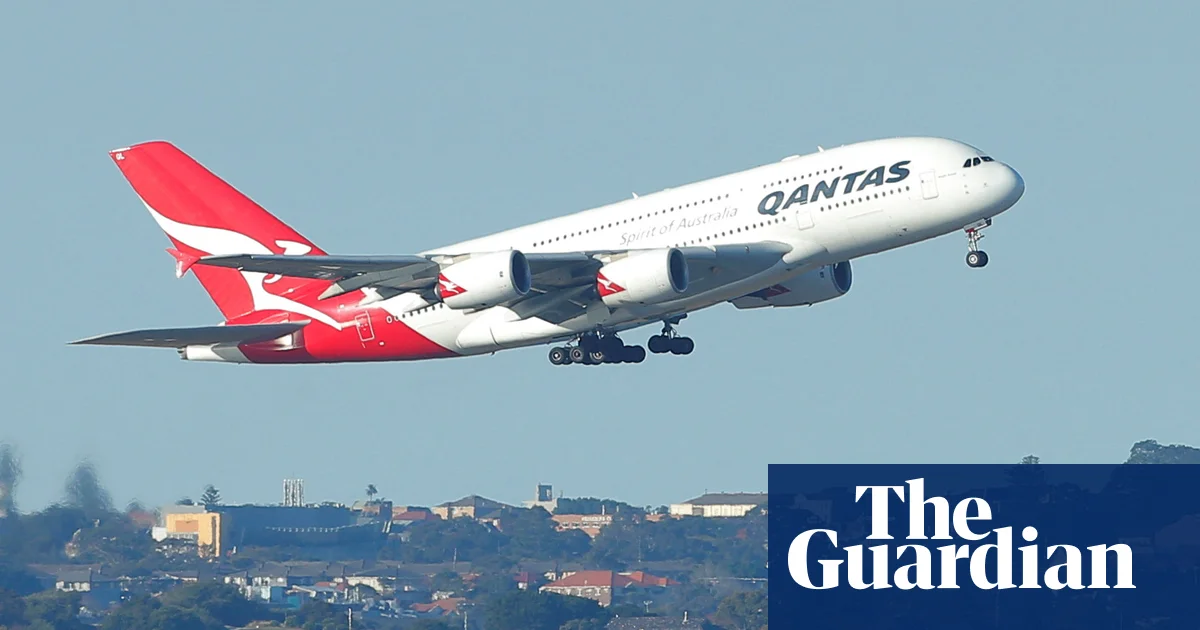
Qantas has recorded its lowest pre-tax profits in four years, at $2.06bn, after the US war on Iran pushed up its fuel costs by $610m.Australia’s national airline also announced it would phase out its Airbus A380 models as it prepares to add new planes to its fleet, handing down annual results on Thursday.Two days before the US struck Iran in February, Qantas had delivered a record $1.46bn pre-tax profit for the six months to December, as passengers shrugged off cost-of-living pressures to travel within and outside Australia.The year to June figure was just $600m higher, $330m below the year before.The airline said the Middle East conflict had cost it $420m on net, with rising jet fuel costs partly offset by an extra $190m in earnings from customers who switched to Qantas after cancellations on other airlines.International flights contributed $650m in underlying earnings, falling from the year before thanks to higher fuel costs. Qantas international revenue grew 8%, mostly from increased capacity, while Jetstar International grew its capacity by 11% and brought in a 14% revenue increase.Qantas and Jetstar domestic generated a combined $1.44bn in underlying earnings. The company said Qantas’ unit (or per-flight) revenue increased 5% from March to June as leisure customers and the Western Australian resources businesses kept booking flights, though government and big business cut back bookings.Jetstar’s domestic flight capacity increased 4% but revenue rose by 11% as the airline attracted “value-conscious customers”, the company said.Half of Jetstar domestic customers paid under $150 per flight, it said. In 2022, close to the same share of customers paid under $100 for their fares.The company last month announced it would add a carry-on luggage charge from next year, with basic tickets to only include one “under seat bag”, such as a backpack, handbag or laptop bag.Vanessa Hudson, the Qantas chief executive, declined to say how the change was expected to boost Jetstar revenue or affect ticket sales, when asked by reporters on Tuesday.skip past newsletter promotionafter newsletter promotion“Unbundling and enabling those customers to have that choice, we think is incredibly important,” Hudson said.Qantas said its loyalty scheme had grown its underlying earnings by 12% in the year, to $625m, with a 6% growth in active members. Uber was the fastest-growing source of points.Banks have reformed their credit cards rewards schemes ahead of the ban on card surcharges, which is expected to affect Qantas’ frequent flyer points scheme. The company said it still believed the points business would earn at least 5% more in the coming financial year and meet company targets of $800m in earnings by 2030.Qantas’ share price rose 2.49% in early trading on Thursday, adding $300m to its market value, which reached $14.3bn.
Qantas profits dip to lowest in four years as jet fuel costs climb after Iran conflict
Airline declines to predict impact of new carry-on luggage charge on Jetstar revenue or ticket sales, saying it is offering customers ‘choice’
446 words~2 min read