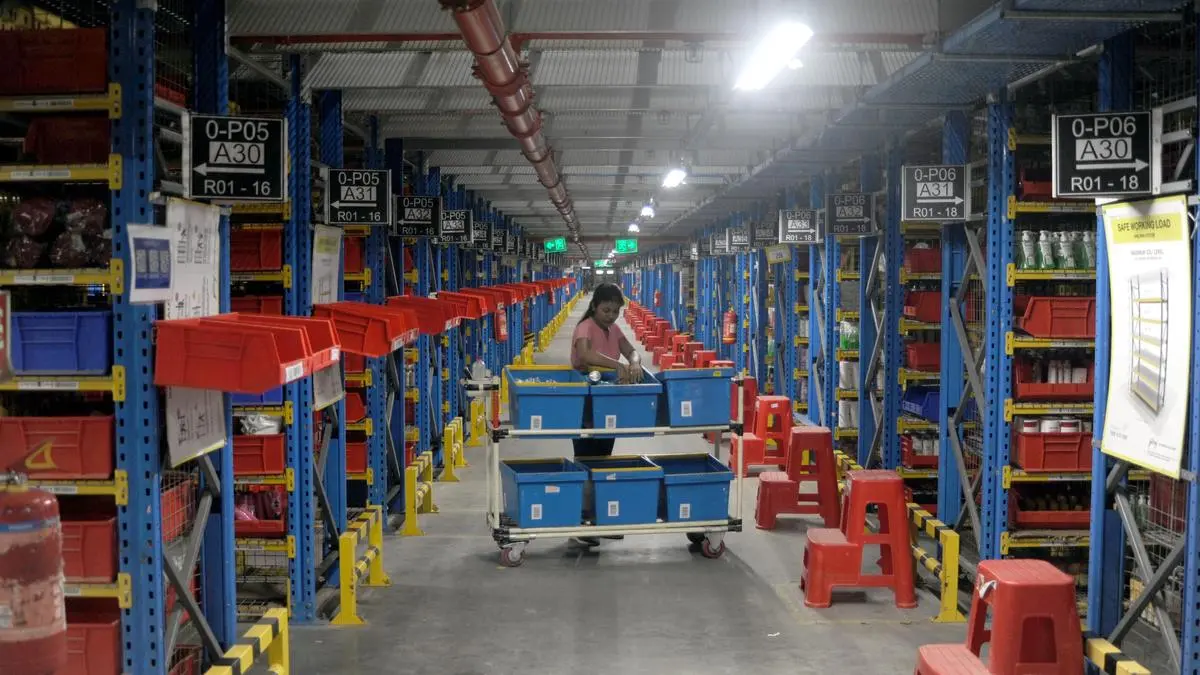
India’s experiment with cross-border e-commerce has reached an important stage. In my earlier article, ‘E-commerce warehouses, a bad idea’ (businessline, November 27, 2025), I had raised concerns that allowing large e-commerce entities to procure goods from Indian sellers, hold them as inventory and export through overseas warehouses could fundamentally alter the relationship between India’s small producers and global consumers.The concern was never about warehouses. Warehousing, fulfilment centres, faster delivery and efficient reverse logistics are essential if India wants to become a serious player in global e-commerce. The concern was whether this ecosystem might transfer pricing power, customer ownership and market intelligence from millions of Indian artisans, manufacturers and MSMEs to a handful of large intermediaries.Notification 27/2026-27 and Public Notice No. 25/2026-27, both dated August 5, issued by Directorate General of Foreign Trade (DGFT) are therefore a significant and welcome development. It operationalises the Inventory-based Cross-Border E-Commerce Facilitation Framework while introducing important safeguards. It recognises two distinct participants: the Exporter-on-Record (EOR), which undertakes the export and manages inventory, and the Seller-on-Record (SOR), whose goods are procured for export. This distinction acknowledges that the logistical exporter and the economic creator of the product need not be the same entity.Boosting transparencyPerhaps the most important safeguard is the requirement that the EOR maintains a digital repository linking procurement records, GST invoices and export documents with individual SORs. Every seller must have access to information relating to its goods, including final overseas sale price, order status, shipment tracking and destination country. The identity of the manufacturer or brand owner — and, where relevant, the SOR — is also to be disclosed to the overseas buyer.Knowledge of where a product is sold, at what price and in which market is itself an economic asset. Without such information, an MSME remains dependent upon the intermediary; with it, the enterprise gradually understands international demand, consumer preferences and the true value of its product. The Public Notice also ensures that seller-attributable export benefits reach the seller. The administrative charge retained by the EOR cannot exceed 10 per cent of export rebates and refunds, while attributable benefits must be transferred to the SOR within 30 days of receipt. Independent compliance certification and preservation of records for five years further strengthen accountability. The dispute-resolution mechanism is equally welcome. Disputes can be taken to the concerned DGFT Regional Authority, with jurisdiction linked to the SOR’s place of business. Importantly, the rights of micro and small enterprises under the MSMED Act, including access to the MSE Facilitation Council, remain unaffected. Regulation cannot equalise the size of a small producer and a global platform, but it can equalise their rights, access to information and ability to enforce contracts.Strengthening the modelThe pilot phase should address a few critical issues First, there should be a model EOR-SOR agreement, particularly for micro and small enterprises. A small artisan cannot negotiate a complex agreement with a multinational platform on equal terms. The model agreement should specify procurement price, commissions and deductions, treatment of returns, discounts, damaged inventory and circumstances in which goods may be rejected.Second, there should be prohibition on retrospective price reductions/deductions after goods have been accepted into export inventory. Once goods have passed agreed quality checks, the seller’s liability should ordinarily be confined to defects or non-conformity attributable to it. Commercial markdowns, excessive overseas inventory and promotional discounts should normally remain risks of the EOR unless specifically agreed otherwise. An MSME should not become the insurer of every commercial risk undertaken by the platform.Third, the data should empower the producer. Sellers should periodically receive a simple electronic dashboard showing units exported, destinations, realised price ranges, returns, discounts and seller-attributable export benefits. Customer ratings and reasons for returns could also be shared without compromising consumer privacy or sensitive platform data. Such intelligence can help Indian producers improve designs, quality, pricing and market strategy. We should not merely export more through e-commerce but should use e-commerce to create more knowledgeable exporters.Fourth, Indian brands and intellectual property need stronger protection. MSMEs should be safeguarded against unauthorised rebranding, copying of designs or registration of their trademarks by intermediaries overseas. Where goods carry the seller’s registered brand, the EOR should not alter or suppress that identity without explicit consent. This is especially important for handicrafts, handlooms, GI products and artisan-made goods, where provenance itself can command a premium.A partnershipSeller protection should not make the EOR model commercially unattractive. The EOR aggregates consignments, invests in warehousing and technology, manages marketplaces and customer acquisition, handles logistics and returns, and assumes destination-country regulatory responsibilities. These services have a cost and deserve a reasonable commercial return.The objective should not be to regulate the EOR’s profit, but to ensure transparency and fairness throughout the value chain. Let the platform earn for logistics, technology, fulfilment, marketing and market access; let the producer earn for innovation, manufacturing, craftsmanship and the intrinsic value of the product.India needs neither an unrestricted warehouse model nor regulation so onerous that platforms lose interest in investing. It needs a partnership in which the EOR provides scale, technology, logistics and global reach, while the SOR retains timely payment, export benefits, brand and intellectual-property protection, market visibility and meaningful information about product performance.The DGFT has moved decisively in this direction. The pilot should now be used to perfect the balance. If we get the architecture right, e-commerce warehouses can become shared export infrastructure, enabling thousands of micro and small enterprises to acquire the reach of large exporters without surrendering their economic identity.The ultimate test should therefore be not merely how much India exports through e-commerce warehouses, but how many small Indian sellers become stronger, more profitable and more globally capable because of them.The writer is Director General and CEO, FIEOPublished on August 27, 2026
Safeguarding small sellers in the e-comm space
DGFT seeks to strengthen small producers’ rights, their access to information and ability to enforce contracts
949 words~4 min read