Why Rate Limiting Matters
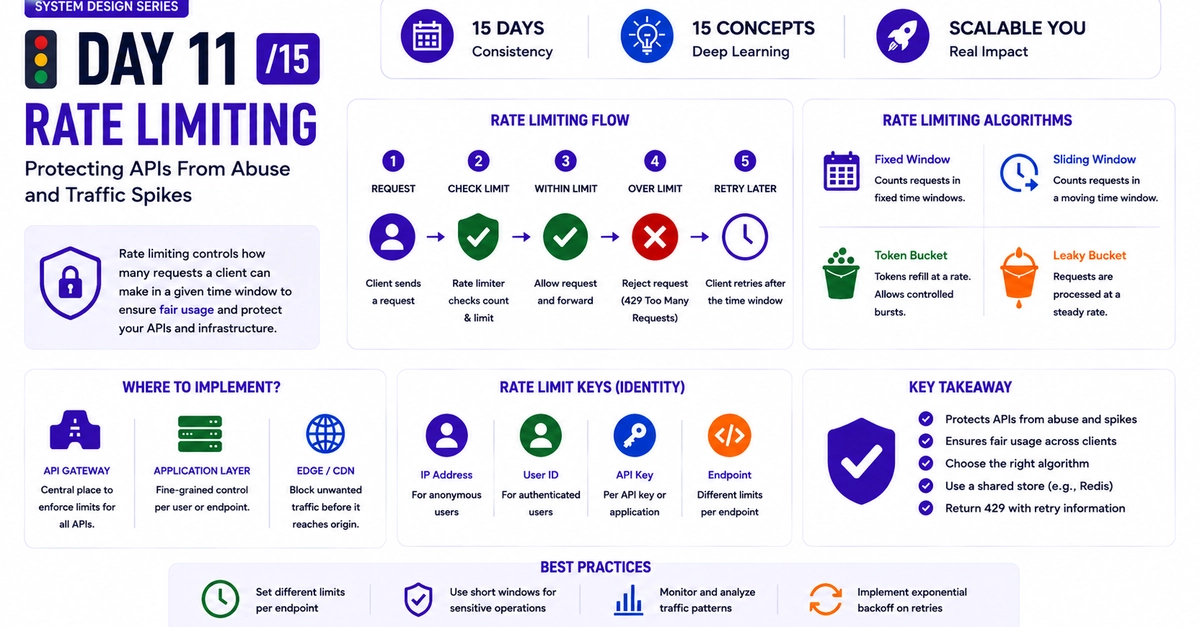
Every public API eventually faces abuse. It could be a malicious script hammering your endpoints, a misconfigured client retrying in a loop, or just a sudden spike in traffic. Without rate limiting, your backend can get overwhelmed, leading to slow responses or crashes. Rate limiting protects your service, keeps costs predictable, and ensures fair usage among all consumers.
I remember my first production incident: a client accidentally sent thousands of requests per second to a search endpoint. The database CPU spiked to 100%, and the whole app became unresponsive for minutes. A simple rate limit would have prevented that entirely.
What Is Rate Limiting?
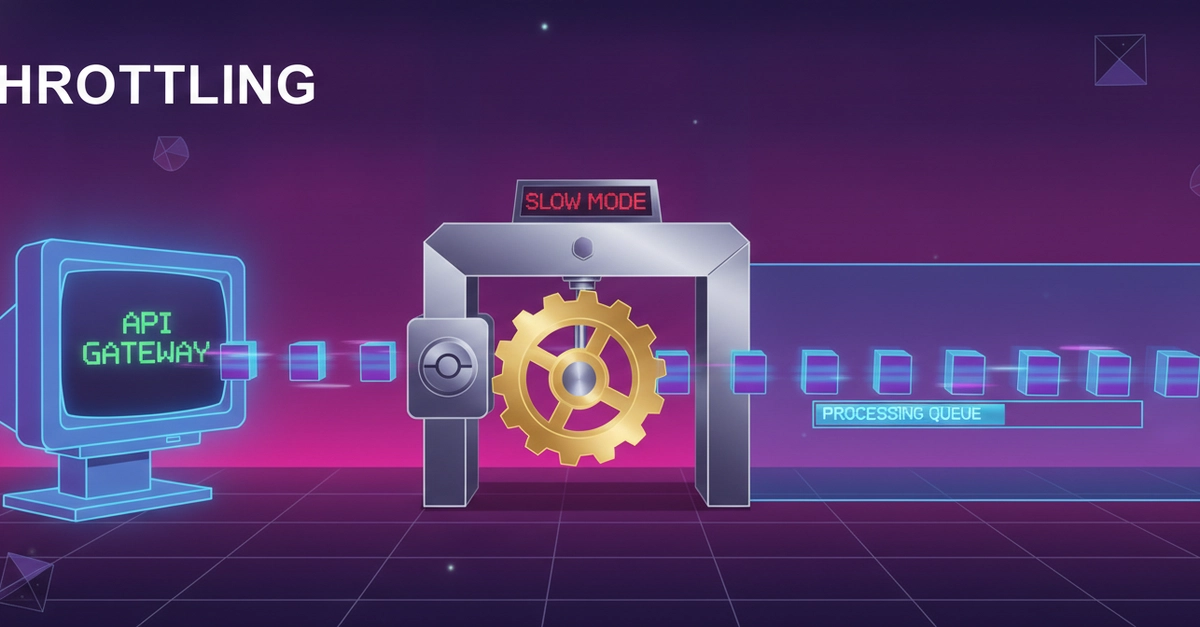
Rate limiting controls how many requests a client can make within a given time window. It's a policy that defines a threshold and an action when the threshold is exceeded. Common actions include rejecting the request with 429 Too Many Requests or delaying it.