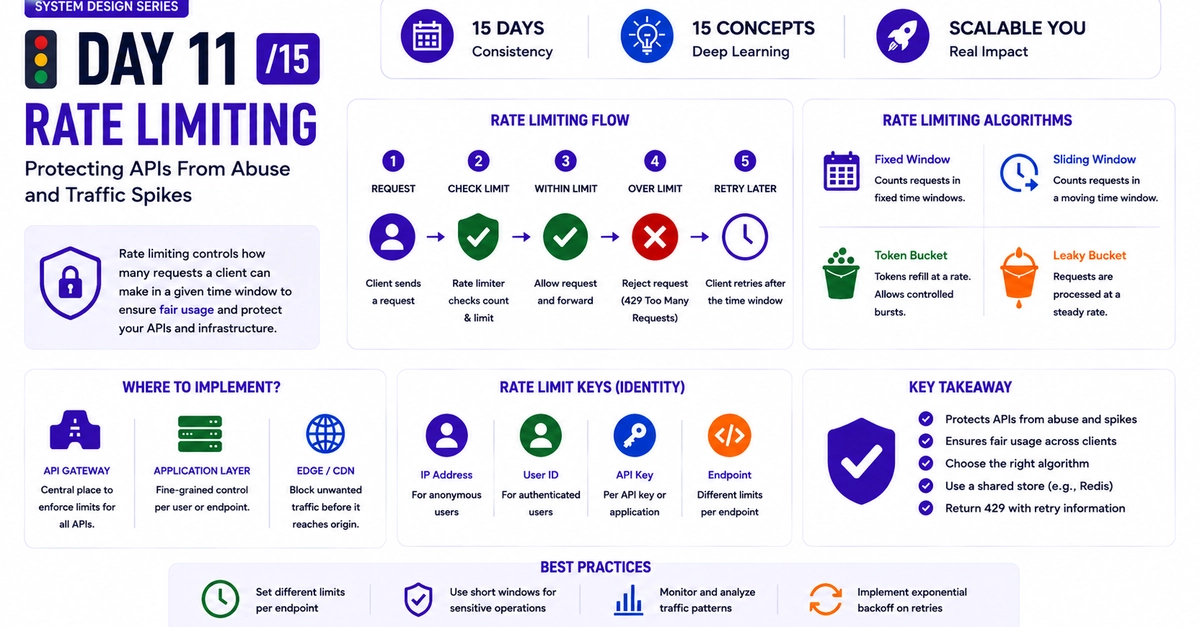
If you run a public API without rate limiting, it's only a matter of time before a runaway client, a misconfigured retry loop, or a well-intentioned load test brings your service to its knees. .NET 7 shipped a first-class rate-limiting API — no third-party middleware required. This post walks through every knob you can turn.
Prerequisite: the built-in rate limiter lives in System.Threading.RateLimiting and the ASP.NET Core middleware in Microsoft.AspNetCore.RateLimiting. Both ship in the box from .NET 7 onwards.
Why rate limiting matters
Rate limiting protects three things simultaneously: your infrastructure from overload, your downstream dependencies from fan-out abuse, and your legitimate users from a noisy neighbour hogging capacity. It also plugs a class of denial-of-service vectors that auth alone can't stop.
The four built-in algorithms