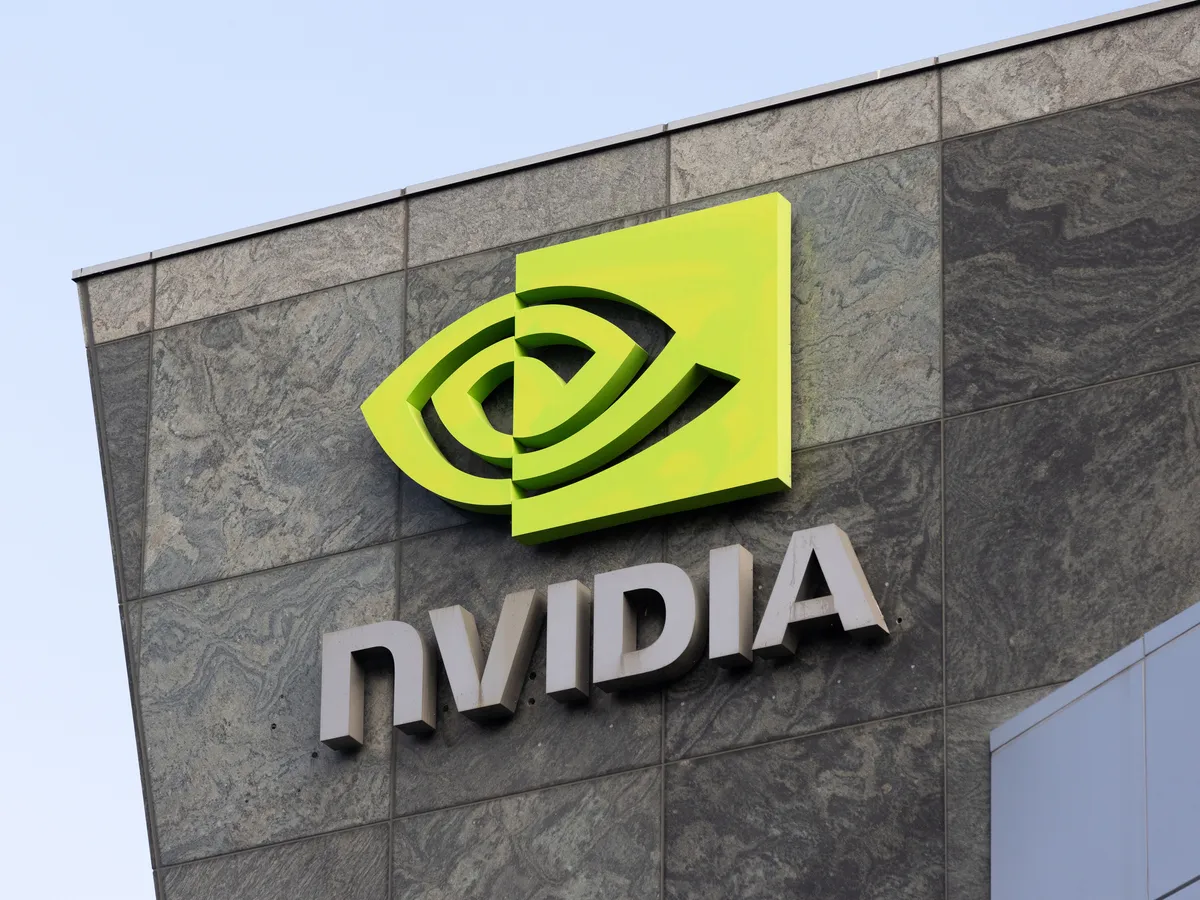
Skip to Content News Archives Economy Energy Oil & Gas Renewables Electric Vehicles Mining Commodities Agriculture Real Estate Mortgages Mortgage Rates Finance Banking Insurance Fintech Cryptocurrency Work Wealth Smart Money Wealth Management Investor Personal Finance Family Finance Retirement Taxes High Net Worth FP Comment Executive Women Puzzmo Newsletters Financial Times Business Essentials More Innovation Information Technology FP500 Podcasts Small Business Lives Told Tails Told Shopping Financial Post Store Obituaries Place a Notice Advertising Advertising With Us Advertising Solutions Postmedia Ad Manager Sponsorship Requests Classifieds Place a Classifieds ad Working Profile Settings My Subscriptions My Offers Newsletters Customer Service FAQ News Economy Energy Mining Real Estate Finance Work Wealth Investor FP Comment Executive Women Puzzmo Newsletters Financial Times Business Essentials HomeInvestorNewsNvidia’s estimate-topping forecast fails to impress investorsRevenue in the current period will be US$108 billion, plus or minus 2%, the company saidAuthor of the article:Nvidia Corp. headquarters on Aug. 26, 2026 in Santa Clara, California. Photo by Benjamin Fanjoy/Getty ImagesNvidia Corp., the chipmaker at the heart of the artificial intelligence boom, delivered a sales forecast that fell short of the highest estimates, adding to investor concerns that AI spending is poised for a slowdown.Subscribe now to read the latest news in your city and across Canada.Exclusive articles from Barbara Shecter, Joe O'Connor, Gabriel Friedman, and others.Daily content from Financial Times, the world's leading global business publication.Unlimited online access to read articles from Financial Post, National Post and 15 news sites across Canada with one account.National Post ePaper, an electronic replica of the print edition to view on any device, share and comment on.Daily puzzles, including the New York Times Crossword.Subscribe now to read the latest news in your city and across Canada.Exclusive articles from Barbara Shecter, Joe O'Connor, Gabriel Friedman and others.Daily content from Financial Times, the world's leading global business publication.Unlimited online access to read articles from Financial Post, National Post and 15 news sites across Canada with one account.National Post ePaper, an electronic replica of the print edition to view on any device, share and comment on.Daily puzzles, including the New York Times Crossword.Create an account or sign in to continue with your reading experience.Access articles from across Canada with one account.Share your thoughts and join the conversation in the comments.Enjoy additional articles per month.Get email updates from your favourite authors.Create an account or sign in to continue with your reading experience.Access articles from across Canada with one accountShare your thoughts and join the conversation in the commentsEnjoy additional articles per monthGet email updates from your favourite authorsSign In or Create an AccountorRevenue in the current period will be US$108 billion, plus or minus two per cent, the company said in a statement Wednesday. Though analysts had estimated US$105.2 billion on average, some projections exceeded US$110 billion, according to data compiled by Bloomberg.Shares of the company fell about one per cent in late trading after the report was released.Canada's best source for investing news, analysis and insight.By signing up you consent to receive the above newsletter from Postmedia Network Inc.A welcome email is on its way. If you don't see it, please check your junk folder.The next issue of Investor will soon be in your inbox.We encountered an issue signing you up. Please try againThe tepid reaction to a generally strong outlook underscores the skepticism around the AI frenzy. After years of runaway growth, some investors have become concerned about a potential bubble. Nvidia’s myriad investment pacts with companies in the AI economy also have sparked fears that circular deals will leave the industry on shakier ground.“Even extraordinary growth can fail to satisfy investors as scrutiny of AI spending and its financing intensifies,” Emarketer analyst Jacob Bourne said in a note.In the report, Nvidia chief executive Jensen Huang said demand is only accelerating. He also touted the rollout of the company’s latest chip line, Vera Rubin.“The AI infrastructure build-out is at full steam,” he said. “Vera Rubin, now in full production, was built to power exactly this moment.”Nvidia, the world’s most valuable company, is the leading provider of AI accelerators, a key component for training and running artificial intelligence models. That status has turned its quarterly earnings into a barometer on the state of the broader industry.Gross margin, the percentage of sales remaining after deducting the cost of production, will be roughly 74 per cent in the current quarter.In the second quarter, which ended July 26, sales more than doubled from a year earlier to US$96.2 billion. Profit was US$2.22 a share, excluding certain items. Analysts had projected revenue of US$92.5 billion and earnings of US$2.09 a share.Nvidia’s all-important data center division had revenue of US$89 billion, compared with an average estimate of US$85.8 billion. A group known as hyperscalers, which includes Amazon.com Inc. and Alphabet Inc.’s Google, accounted for much of those sales.Nvidia has sought to expand its customer base, aiming to show that it’s less dependent on a small group of tech giants for much of its sales.Investors, meanwhile, have gotten harder to impress. Nvidia has now delivered sales above Wall Street estimates for 16 quarters in a row. But that hasn’t always helped its stock, with shareholders taking its rapid growth and outperformance as a given. The stock has fallen the day after five of its last six earnings reports.The only companies in the semiconductor industry that rival Nvidia’s revenue run-up are the memory-chip makers: Samsung Electronics Co., SK Hynix Inc. and Micron Technology Inc. Training and running AI software requires a massive amount of computer memory, which has fueled growth but also placed a huge strain on their factories. While they’re expanding capacity, the companies don’t expect to catch up with demand for years. The shortages have caused the price of memory chips to soar.The memory crunch is affecting Nvidia too because memory is packaged with its chips. It has notified customers that it’s raising prices of its products to account for the growing costs.At the same time, a stampede of would-be rivals is eyeing Nvidia’s lucrative market. And the company’s own customers are increasingly developing in-house chips, potentially reducing their reliance on Nvidia in the long run.Just this week, ChatGPT maker OpenAI said its new Jalapeno processor performed better than Nvidia’s current lineup during testing.Nvidia has spent much of the past year lining up investment deals with major AI companies, including both developers of software and the infrastructure that supports it. Those agreements — and the promised financial backing — have, in theory, put Nvidia on the hook for tens of billions of dollars of liabilities.The company has said such deals will speed the adoption of AI, something that will create even more demand for its products. But critics have voiced concern that circular financing will foster artificial demand.The company is also still fighting for greater access to the world’s biggest market for semiconductors: China. It’s been given limited scope by Washington to sell some of its AI chips in that country, but Beijing has held up the process by keeping a tight rein on purchases.For the company — and its investors — building a foothold in China is seen as both a pathway to growth and a way to ensure that the country’s homegrown chipmakers don’t get too powerful. Join the Conversation This website uses cookies to personalize your content (including ads), and allows us to analyze our traffic. Read more about cookies here. By continuing to use our site, you agree to our Terms of Use and Privacy Policy.
Nvidia’s estimate-topping forecast fails to impress investors
Nvidia Corp. delivered a sales forecast that left some investors underwhelmed, adding to concerns about the momentum of AI spending. Read on
1,237 words~6 min read