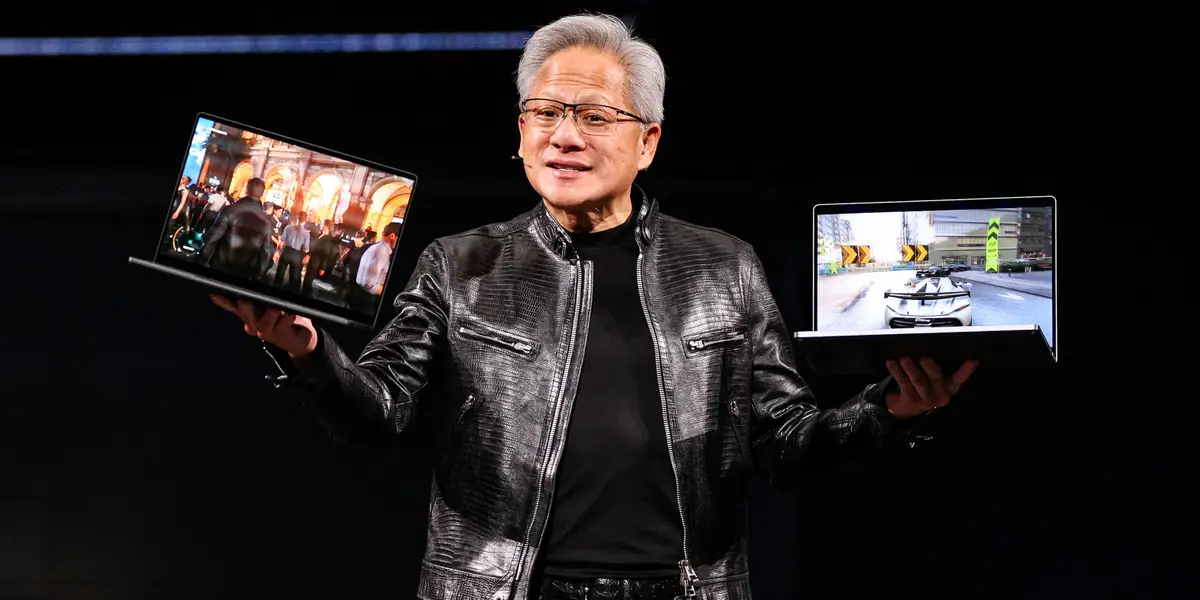
Skip to Content News Archives Economy Energy Oil & Gas Renewables Electric Vehicles Mining Commodities Agriculture Real Estate Mortgages Mortgage Rates Finance Banking Insurance Fintech Cryptocurrency Work Wealth Smart Money Wealth Management Investor Personal Finance Family Finance Retirement Taxes High Net Worth FP Comment Executive Women Puzzmo Newsletters Financial Times Business Essentials More Innovation Information Technology FP500 Podcasts Small Business Lives Told Tails Told Shopping Financial Post Store Obituaries Place a Notice Advertising Advertising With Us Advertising Solutions Postmedia Ad Manager Sponsorship Requests Classifieds Place a Classifieds ad Working Profile Settings My Subscriptions My Offers Newsletters Customer Service FAQ News Economy Energy Mining Real Estate Finance Work Wealth Investor FP Comment Executive Women Puzzmo Newsletters Financial Times Business Essentials HomeInvestorNvidia earnings give investors a barometer for state of AI tradeWall Street expects Nvidia to deliver stellar results for the fiscal second quarter, which ended July 31Author of the article:The big questions from investors are how much of Nvidia’s revenue is being driven by its own financing and if it’s creating or bringing forward demand. Photo by Samuel Boivin/NurPhoto via Getty ImagesWall Street is eagerly anticipating Nvidia Corp.’s earnings on Wednesday afternoon, not so much for what the numbers will say about the chip giant, but for what they mean to artificial intelligence investors and the market itself.Subscribe now to read the latest news in your city and across Canada.Exclusive articles from Barbara Shecter, Joe O'Connor, Gabriel Friedman, and others.Daily content from Financial Times, the world's leading global business publication.Unlimited online access to read articles from Financial Post, National Post and 15 news sites across Canada with one account.National Post ePaper, an electronic replica of the print edition to view on any device, share and comment on.Daily puzzles, including the New York Times Crossword.Subscribe now to read the latest news in your city and across Canada.Exclusive articles from Barbara Shecter, Joe O'Connor, Gabriel Friedman and others.Daily content from Financial Times, the world's leading global business publication.Unlimited online access to read articles from Financial Post, National Post and 15 news sites across Canada with one account.National Post ePaper, an electronic replica of the print edition to view on any device, share and comment on.Daily puzzles, including the New York Times Crossword.Create an account or sign in to continue with your reading experience.Access articles from across Canada with one account.Share your thoughts and join the conversation in the comments.Enjoy additional articles per month.Get email updates from your favourite authors.Create an account or sign in to continue with your reading experience.Access articles from across Canada with one accountShare your thoughts and join the conversation in the commentsEnjoy additional articles per monthGet email updates from your favourite authorsSign In or Create an Accountor“Nvidia is the best barometer for AI spending,” said Rob Conzo, chief executive of the Wealth Alliance, which owns Nvidia shares in several portfolios. “It will help determine if hyperscalers are still accelerating, from an infrastructure perspective, or if they’re becoming more disciplined.”The company’s shares have been on a wild ride this year, sinking through the winter, then soaring through the spring, and bouncing around all summer. They’re coming off a seven-day losing streak, matching the longest since 2019, in which they lost 7.5 per cent. And that follows a 19 per cent leap from late July through mid-August.Canada's best source for investing news, analysis and insight.By signing up you consent to receive the above newsletter from Postmedia Network Inc.A welcome email is on its way. If you don't see it, please check your junk folder.The next issue of Investor will soon be in your inbox.We encountered an issue signing you up. Please try againAll told, Nvidia is up 14 per cent in 2026, a decent showing but still a far cry from its past performance. At this time last year, the stock had gained 34 per cent, and in 2024 it was soaring more than 150 per cent. The reason is hardly a secret, with investors increasingly cautious about the durability of the AI trade with inflation remaining high, interest rates rising and geopolitical risks all over the place, whether it’s the United States’s military and economic war with Iran or its trade war with Canada.The tech-heavy Nasdaq 100 Index suffered its worst month in more than a year in July, falling 6.6 per cent as investors dumped the shares of companies exposed to the AI buildout amid concerns about how much longer the heavy spending would last. But since its July 29 trough, the index has regained much of that lost ground, led by memory and storage companies like Sandisk Corp. and chipmakers such as Marvell Technology Inc.Wall Street expects Nvidia to deliver stellar results for the fiscal second quarter, which ended July 31. Analysts project that revenue nearly doubled from a year ago, which would be the fastest pace in two years, as did net income, according to data compiled by Bloomberg.That, however, isn’t what the market is focused on. Rather, investors want to hear what chief executive Jensen Huang has to say about capital spending by its biggest customers, future demand and a spate of new financing deals that involve Nvidia. Price increases will also be top of mind after some of the company’s customers were told that the cost of servers with its AI chips will rise more than 15 per cent in some cases, due to surging memory costs.“This will be a very interesting report, but it isn’t so much about the numbers,” Conzo said. “The forward guidance discussions will be far more in view.”Earlier this month, Nvidia said it’s partnering with Wall Street firms including Goldman Sachs Group Inc., BlackRock Inc. and Apollo Global Management Inc. to provide US$500 billion in financing for AI infrastructure. Nvidia also agreed to spend as much as US$105 billion to back a data centre campus in Ohio that will be leased by OpenAI.“They’re going to need to discuss those two big partnerships or agreements in good detail and sort of calm the market’s fears around the circularity of financing,” said Shaon Baqui, a senior equity analyst at Janus Henderson, which holds a substantial position in Nvidia.The big questions from investors are how much of Nvidia’s revenue is being driven by its own financing and if it’s creating or bringing forward demand. Huang’s comments alone likely won’t be enough to resolve some of the issues the market is having with AI investments at the moment, according to Daniel Pilling, portfolio manager at Sands Capital Management, which owns the stock.“It’s going to be a really important quarter for them, not because of what they’re doing on the balance sheet, but what they’re doing off the balance sheet,” said Brian Mulberry, chief market strategist at Zacks Investment Management, which holds Nvidia shares. “It effectively makes Jensen Huang kind of like the pope of AI. He gets to bless any of these deals.”Even with a market capitalization of more than US$5 trillion, the biggest in the world, Nvidia’s equity valuation has been steadily eroding this year. At roughly 19 times earnings expected over the next 12 months, the stock is close to the cheapest it has been since late 2018, before AI exploded and when the chipmaker’s market value was less than US$100 billion.“Nvidia isn’t the most exciting part of the market, or even the AI trade, anymore,” said Randy Hare director of equity research at Huntington National Bank, which owns the stock. “Right now the tightness is in the memory space, the optical area, energy. Momentum is shifting from semis to other parts of infrastructure, and from there it could shift to hyperscalers again.”In terms of trading into the earnings, Nvidia shares haven’t performed well after its results over the last few quarters, falling the day after five of its last six reports, according to data compiled by Bloomberg. The options market is pricing in a roughly five per cent swing in either direction.Of course, the shares could get a boost from a strong report and forecasts that calm investors’ nerves, potentially reinvigorating the broader AI trade. Wall Street will be listening for updates on Nvidia’s Vera Rubin and Blackwell chip sales as well as its outlook for gross margins.“Their stock in my view is at a bit of a nexus, like a bit of a turning point,” said Melissa Otto, head of technology, media and telecommunications research at Visible Alpha. “We’re going to get a lot more visibility, hopefully, and commentary around Rubin and the performance of Blackwell.”—With assistance from Subrat Patnaik and David Watkins. Join the Conversation This website uses cookies to personalize your content (including ads), and allows us to analyze our traffic. Read more about cookies here. By continuing to use our site, you agree to our Terms of Use and Privacy Policy.
Nvidia earnings give investors a barometer for state of AI trade
Wall Street is anticipating Nvidia Corp.’s earnings, not for what they say about the chipmaker, but what they mean to the AI trade. Read on
1,454 words~7 min read