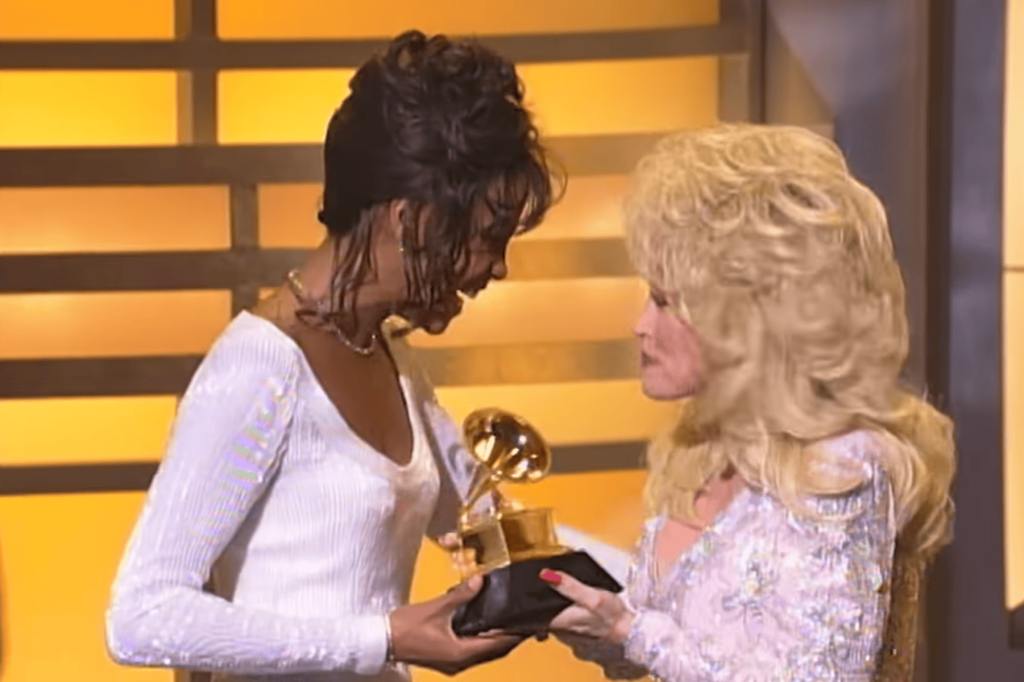
Dolly Parton, the legendary country singer, songwriter and actress who died Tuesday at 80, left behind a legacy that extended far beyond music. Her philanthropy supported literacy, disaster relief, medical research and communities in need, reflecting the rural Tennessee poverty that shaped her early life.One of the most striking examples of how Parton used her success came from the enormous impact of Whitney Houston’s version of Parton’s “I Will Always Love You.”Parton invested royalties from Houston’s iconic recording in an office complex in a predominantly Black neighborhood in Nashville, Tennessee. She later explained that the decision was closely connected to Houston and the community surrounding the property.“I just thought, ‘This was great. I’m going to be down here with her people, who are my people as well.’”Parton discussed the investment during an appearance on Watch What Happens Live With Andy Cohen, explaining that the property was a strip mall largely used by Black families and residents.You Might Also Like:“And so I just love the fact that I spent that money on a complex. And I think, ‘This is the house that Whitney built.’”The story traces back to a song Parton wrote in 1972. “I Will Always Love You” became one of her signature compositions, but Houston’s 1992 recording for The Bodyguard transformed it into a global pop phenomenon.Houston starred in The Bodyguard alongside Kevin Costner, and her powerful rendition introduced Parton’s song to a massive new audience. According to Forbes, Houston’s version generated roughly $10 million in royalties for Parton during the 1990s.Rather than simply treating those earnings as a personal windfall, Parton chose to put some of the money into a Nashville property in a neighborhood connected to Houston’s community.You Might Also Like:The investment also carried a personal meaning for Parton. She admired Houston’s voice and once said she wished the two singers had been given the opportunity to perform the song together.“I would’ve loved that,” Parton said.She also acknowledged that sharing the song with Houston would have been a daunting prospect.“But I don’t think I could’ve come up to snuff with her though. She’d have outsung me on that one for sure.”Houston’s rendition remains one of the most celebrated recordings in popular music, while Parton’s original composition continues to be closely associated with both artists.Parton had also written “Jolene” on the same day she wrote “I Will Always Love You,” creating two songs that would become enduring parts of her musical legacy.The Nashville property ultimately became a physical reminder of the unusual journey of the song—from Parton’s songwriting, to Houston’s extraordinary performance, to the wealth generated by that recording and finally to an investment in a local community.For Parton, calling it “the house that Whitney built” captured the connection perfectly: Houston’s voice had transformed a song Parton wrote into a cultural phenomenon, and Parton chose to turn some of the resulting success into something that would remain tied to Houston’s legacy.
In the 1990s, Dolly Parton earned $10 million from Whitney Houston’s ‘I Will Always Love You’ — then invested the royalties in a Black Nashville neighborhood
Dolly Parton has utilized royalties from Whitney Houston's legendary rendition to invest in a Nashville complex that benefits a predominantly Black community, showcasing the deep roots connecting the two artists. Houston's 1992 interpretation turned Parton's 1972 song into an international masterpiece. This property now stands as a testament to the song's extraordinary legacy, with Parton calling it 'the house that Whitney built' to honor their lasting influence.
483 words~2 min read