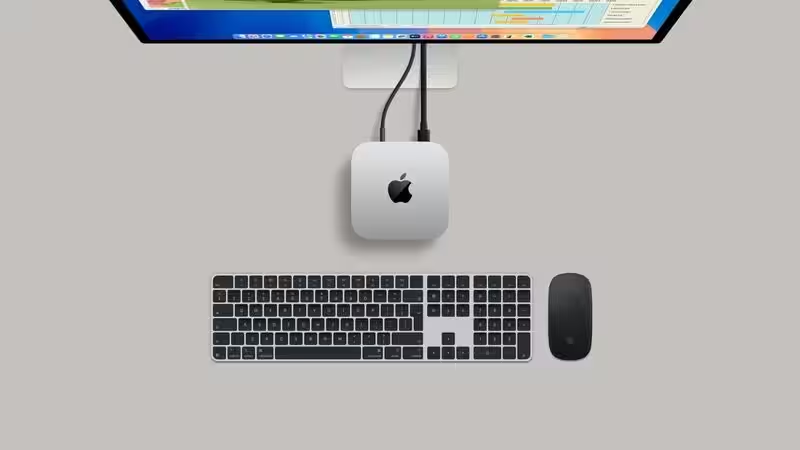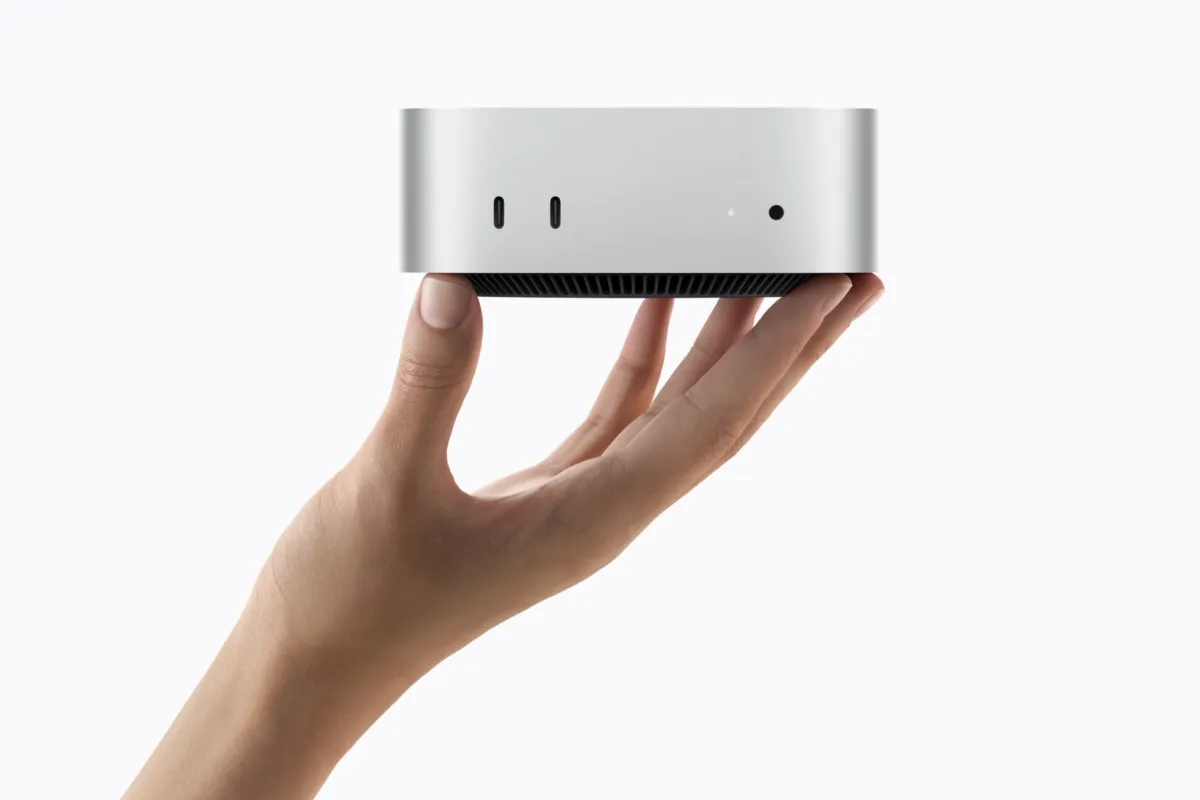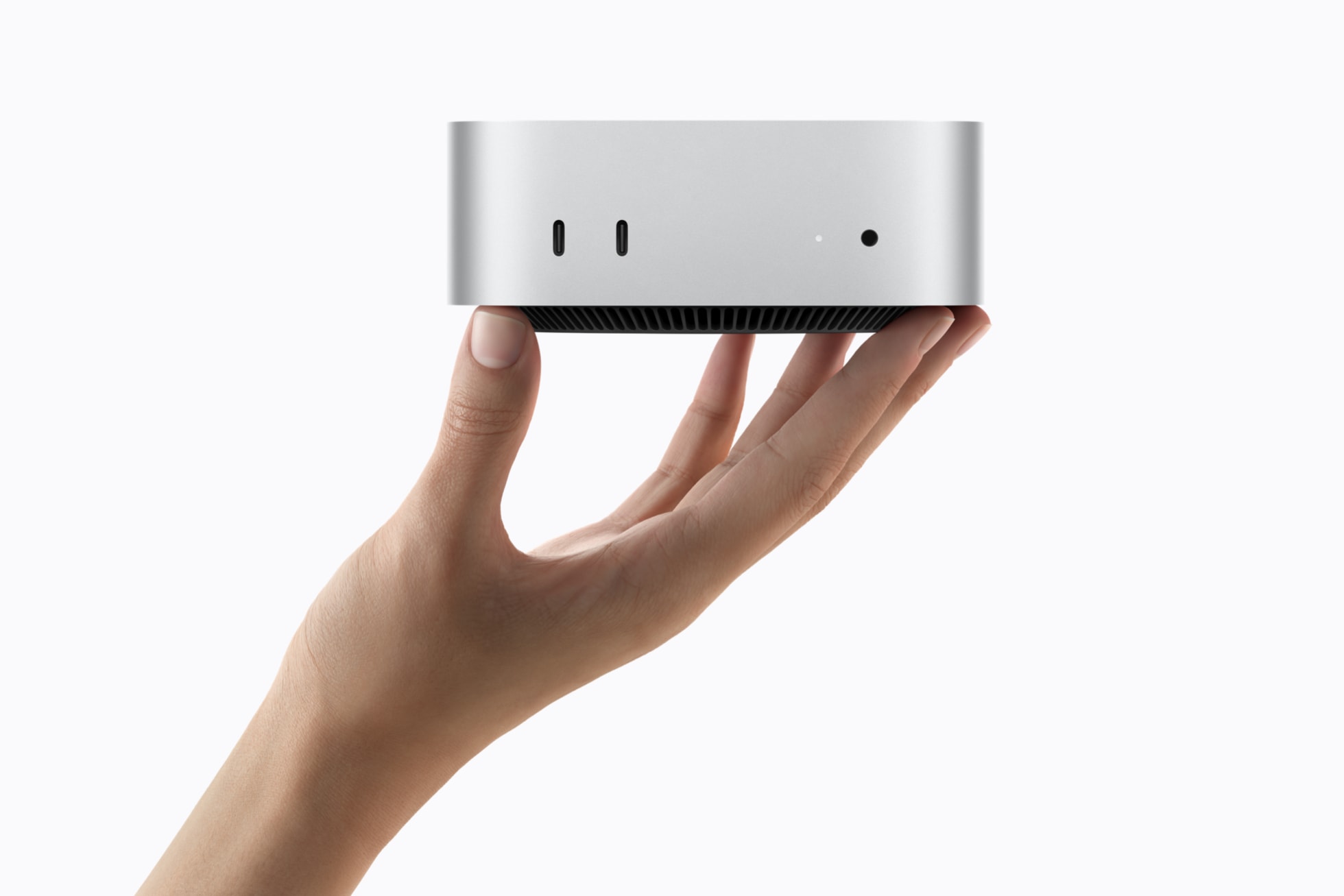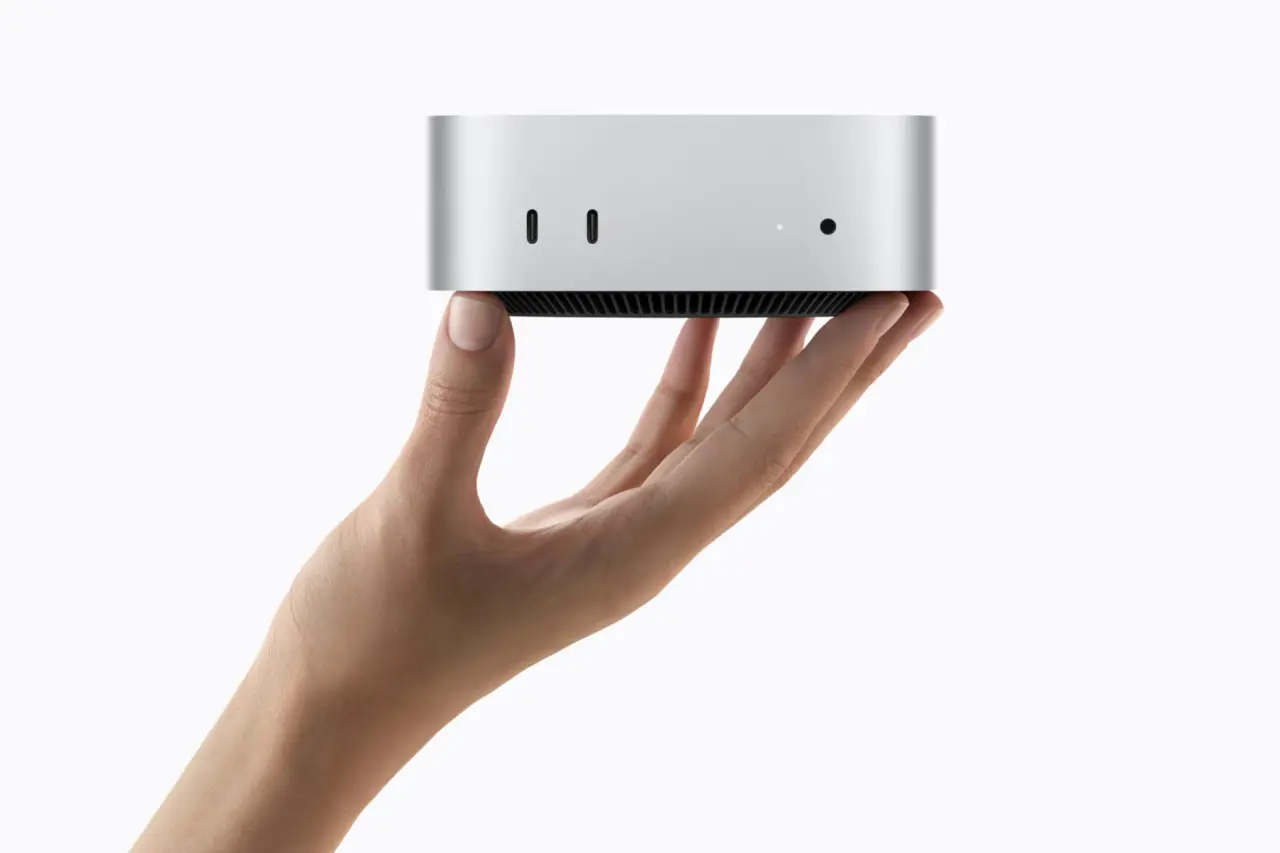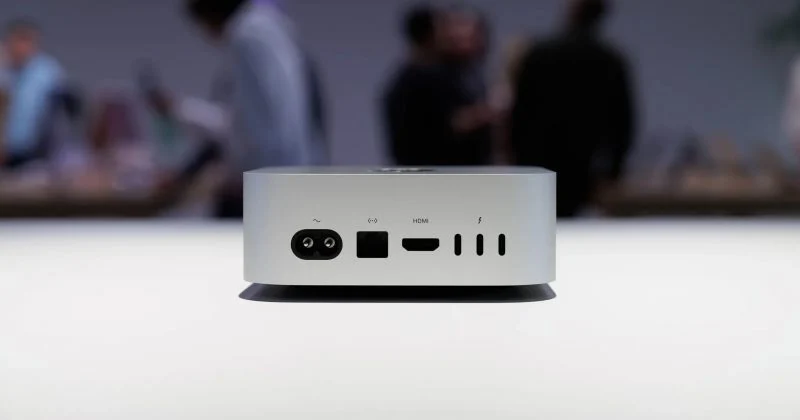
Key Highlights Mac mini with M6 starts at Rs 99,900 with 16GB of memory, and handles AI models up to about 30 billion parameters when you pay for 32GB. Apple's figures for the last Mac mini show 4W when idle and 65W at full tilt, which works out to under Rs 200 a month of Delhi electricity for round-the-clock AI work. The Rs 99,900 model has Thunderbolt 4 ports, so the multi-machine trick Apple is promoting needs the Rs 2,09,900 version instead.One line in Apple's Mac mini announcement deserves more attention than the spec sheet it came with. Johny Srouji, the company's chief hardware officer, described it as a machine people use as a home computer, a studio workhorse, or an always-on AI device. That third one is new. Apple is telling you to put a Rs 99,900 box in a corner, leave it switched on, and let AI software work on its own while nobody is watching the screen.Everything inside the M6 supports that description of the machine. The chip carries two rather than one, a small AI accelerator built into every graphics core, and a wider path between the chip and its memory. Apple says the machine handles AI prompts 13.5 times faster than the M1 Mac mini and 4.8 times faster than the M4. Those are the numbers a company publishes when it expects the machine to spend its day answering, rather than waiting for you to click something.About The AuthorJournalist and a writer with a strong interest in news, culture, technology, and human-interest stories. Passionate about making complex topics accessible and engaging.What "Always-On AI" Means in plain English An AI agent is different from a chatbot in one way that decides what hardware you need. A chatbot answers when you ask it something. An agent works through a job on its own, in steps, reading files and deciding what to do next, often for several minutes at a stretch. Think of the difference between asking a colleague a question and handing them an errand to finish while you get on with something else.Because each step waits for the one before it, small delays pile up across a whole task. A machine that sits at a few watts and wakes up fast when work arrives suits that pattern. That is a very different job from the one a laptop does, where a person is sitting in front of it the whole time. It also explains why Apple keeps mentioning the word overnight.There is a privacy payoff sitting alongside all of this. A model running on the box under your desk keeps every file on that box, which matters when you handle client work, medical records, legal papers or anything unreleased. Apple names this use, describing private AI tasks that stay on the machine. For a freelancer or a small studio in India, that removes a recurring bill and a compliance headache in the same move.How the M6 Divides Its Work: A Kitchen AnalogyA processor is easier to picture as a kitchen than as a diagram. The M6 has twelve cores, which are its cooks, and Apple has split them into three ranks for the first time. Two super cores are the head chefs, the ones you put on the single hardest dish. Four performance cores are the line cooks who handle volume when a big order lands. Six efficiency cores are the kitchen porters, doing prep and washing up in the background for a few watts.Older Apple chips had only two ranks, head chefs and porters. Adding a middle tier lets the kitchen match the cook to the job with more precision, which is why Apple claims the fastest single-threaded performance of any chip, meaning the best head chef. Alongside them sits a separate station that only makes one thing but makes it very fast, and the M6 has two of these stations rather than one. Apple calls them Neural Engines, and system software can run both at the same time.Memory works like the counter space in that same kitchen. A big recipe needs a big counter, and a dish too large for the counter stays uncooked. Memory bandwidth is how fast a helper fetches ingredients from the store room. A huge counter with a slow helper still makes for a slow kitchen, which is why both numbers matter and why Apple keeps quoting 170GB/s alongside the 32GB figure.More articles by AuthorTrending StoriesWhich AI Models Fit In 16GB and 32GBCounter space decides what you can cook at all, and fetching speed decides how fast it comes out. Those two numbers should drive this purchase ahead of anything else on the spec sheet. The M6 offers 16GB as standard and 32GB as a paid upgrade, with the same fetching speed either way. Memory is soldered to the chip, so the choice you make at checkout is permanent.AI models are measured in parameters, which you can think of as how many recipes the cook has memorised. More parameters tends to mean better answers and a bigger memory footprint. Models are also compressed before they run, in the same way a photo can be saved at lower quality to shrink the file. The common setting is called four-bit, and it cuts the size a long way while losing a little detail.The rough guide below is worth committing to memory before you order. A four-bit model needs about 0.6GB for every billion parameters, plus room for your conversation and for macOS itself.Model sizeMemory neededFits 16GBFits 32GB8 billion4.8GBYesYes14 billion8.4GBYesYes20 billion12GBTightYes30 billion18GBNoYes70 billion42GBNoNoPay for 32GB if local AI is the point of the purchase. The Rs 99,900 machine runs an 8 or 14 billion model alongside your normal work with room to spare, which covers coding help, summarising, cleaning up transcripts and most agent jobs. Moving to 32GB opens the 20 and 30 billion tier, where answers get sharper on anything involving reasoning. These are estimates from the standard calculation rather than measurements on shipping machines.What It Costs to Leave Switched OnElectricity decides whether always-on is a slogan or a plan you can afford. Apple publishes power figures for every Mac mini, and the M4 model with 16GB drew 4W when idle and 65W flat out. For scale, a ceiling fan uses about 70W. Outside testers measured 2.6W idle and about 62.5W at peak on the same machine, and the M6 should improve on that.Delhi electricity is charged in slabs: Rs 3.00 a unit for the first 200 units, Rs 4.50 up to 400, Rs 6.50 up to 800 and Rs 8.00 above that, before surcharges and tax. Use Rs 8 a unit as an all-in figure for a household already past the subsidy limit, and the sums come out like this. Households inside the 400-unit subsidised band pay a good deal less. Rates outside Delhi vary by state, so adjust the figures to your own bill.What it is doingPowerUnits a monthCost a monthSitting idle, waiting5W3.6Rs 29Light AI work15W10.8Rs 86Steady AI work30W21.6Rs 173Flat out, 24 hours65W46.8Rs 374Under Rs 200 a month covers a machine doing real work around the clock. Compare that with what the same volume of AI usage costs on a paid subscription or a metered service, and the case makes itself for anyone using AI a great deal. The break-even depends on how much you use it, and the machine repays its price faster the harder you push it. That is the opposite of how most computers behave. These costs use the M4 power figures until Apple publishes M6 ones.The Port You Need to Check Before BuyingOne detail on the back of the machine cuts against the story Apple is telling. The Rs 99,900 M6 model has three Thunderbolt 4 sockets, while the Rs 2,09,900 M5 Pro model steps up to Thunderbolt 5. Only the newer standard lets you link several Mac minis together so they share their memory, the way you push two tables together to lay out a bigger spread. Anyone buying into Apple's own multi-machine pitch therefore starts at the higher price.That gap matters more than the port numbers make it look. Linking machines is how you get past the 32GB ceiling short of buying a Mac Studio, and it is the answer to the 70 billion question the table above leaves open. The cheaper machine handles a 30 billion model on its own and stops there. For most buyers that ceiling sits well above anything they will ever load.Everything else about the connections improved with this year's model. Both versions get Wi-Fi 7, Bluetooth 6 and faster 2.5Gb Ethernet as standard, with a 10Gb option worth taking if you shift large files across a home network. Two USB-C ports and a headphone socket sit on the front, and the headphone socket now drives high-impedance headphones as intended. A feature called genlock arrives as well, which keeps a screen and a professional camera in exact step, including an iPhone 17 Pro.Mac Mini M6 or M5 Pro: Which One To BuyApple is selling two machines under one name, and the numbering will mislead people. The M6 is the newer chip on the newer manufacturing process, and the M5 Pro is the faster computer by a wide margin. Somebody treating the number as a ranking will spend Rs 99,900 and wonder why the reviews describe a different machine. The table sets the two side by side.SpecificationMac mini M6Mac mini M5 ProCooks (CPU cores)12: two head chefs, four line cooks, six portersUp to 18Graphics cores12 with AI acceleratorsUp to 20 with AI acceleratorsAI enginesTwoOneMemory16GB standard, 32GB option24GB standard, up to 64GBFetching speed170GB/s307GB/sPorts3x Thunderbolt 43x Thunderbolt 5Storage256GB to 2TB512GB to 8TBIndia priceRs 99,900Rs 2,09,900Take the M6 for a main desktop, for students, for coding, for a first Mac, and for AI models up to 30 billion parameters. Take the M5 Pro when 64GB of memory, the faster fetching speed, Thunderbolt 5 linking or 8TB of storage answer a problem you already have. On Apple's figures the M5 Pro reaches 8.5 times an M2 Pro Mac mini on the same AI test and four times an M4 Pro. Photo work in Affinity comes in at 2.1 times an M2 Pro.One caution applies to the M5 Pro listing before you order. Apple's headline quotes up to 18 cooks and 20 graphics cores, while Indian retail listings put the entry version at 15 and 12. Check the configuration page rather than trusting a headline figure. Core counts on Apple chips change with the version you pick, so the name alone tells you little.Should You Upgrade from an M1, M2 or M4 Mac MiniUpgrade sums changed this year, and the answer depends on which machine you already own. Apple puts the M6 Mac mini at four times the AI performance of the M4 model, twice the graphics, twice the storage speed and 40 per cent faster general work. Against the M1 it quotes AI prompts 13.5 times faster and spreadsheets 2.3 times faster. Those two comparisons describe two very different decisions.M1 and M2 owners have the clearest reason to move this year. Five years of progress, two and a half times the fetching speed, more than eight times the AI muscle in the graphics part, and AI engines those machines lacked altogether all arrive at once. Anyone using an M1 mini as a home server or a light desktop gets a computer that does a whole category of work the old one would refuse. Resale values on five-year-old minis also hold up well enough to soften the bill.M4 owners face a harder call than anyone else here. The gains are real, though the M4 mini stays a capable desktop for everything short of running AI models on the machine itself. The case for moving rests on memory speed and the second AI engine rather than raw pace, which means it holds for people running agents and fades for people editing photos. The Rs 300-equivalent price rise on the sticker also weighs on this one.Intel Mac owners should treat this upgrade as long overdue. Anyone still on a 2018 Mac mini gets a machine that idles at a few watts instead of tens, runs silent under load, and supports macOS 27 with Apple Intelligence and the new Siri. That upgrade decides itself. Trade-in credit through Apple covers Intel machines as well.Why the M6 is Slower than the M5 ProA buying ladder that held since 2020 broke on Tuesday morning. Every Apple chip generation until now shipped a basic version first, then Pro, Max and Ultra versions of the same family, so a higher number always meant a newer and better machine. Apple sold M6 and M5-family chips on the same day, and the higher number went to the cheaper box. Apple's naming leaves that reversal unflagged.Manufacturing explains the reversal better than any marketing story does. The M6 uses a brand-new 2nm process, which works well for a small chip made in huge numbers, and Apple spent the gain on two extra cooks, two extra graphics cores and a second AI engine in a smaller space. Bigger chips need bigger slabs of silicon, and big slabs on a brand-new process are expensive and wasteful while the process is young. So Apple put its newest technique under its smallest chip.Leaks suggest that the split will widen further rather than close. Apple appears to have dropped the M6 Pro, Max and Ultra versions, moving those tiers to an M7 generation with faster memory. If that holds, the M6 family will be a single chip, and the number on the box will describe a manufacturing process rather than a rung on a ladder. Treat the memory and speed figures as the specs that decide the purchase.What the 2nm Label MeansChip processes carry names that stopped describing any physical measurement years ago, so treat 2nm as a generation label rather than a size. What it means in practice is smaller handwriting. Writing smaller lets you fit more words on the same page, and shrinking transistors lets a chipmaker fit more of them on the same piece of silicon. More transistors in the same space means more work done, and each one uses less power doing it.That is why a Rs 99,900 desktop carries Apple's newest chip while the Rs 6,29,900 Mac Studio carries an older family. The Mac mini is the first ordinary computer anyone can buy with a 2nm chip inside, which is a genuine first rather than a marketing line. Phones and servers have used newer processes ahead of desktops for years, so this is a reversal worth noting. Apple tends to save a new process for the iPhone before anything else.The graphics side improved on the same schedule as the rest. Each of the twelve graphics cores now carries a small AI accelerator, worth about 30 per cent more AI muscle than the M5 and more than eight times the M1. Apple also cites better shaders, improved caching and hardware ray tracing, quoting twice the ray-traced gaming performance of the M4 Mac mini in Cyberpunk 2077. Gaming stays a side use for this machine, though the gap over the M4 is wide.Why the Price Went UpApple moved the Mac mini from $599 to $899 in the United States, a rise of 50 per cent, and India starts at Rs 99,900. Memory is the reason. AI data centres have bought up so much of the world's memory supply that prices have hit records, and the memory in a Mac sits on the same package as the chip. Apple buys that memory itself, so the increase lands straight on the price tag.J.P. Morgan Global Research estimates memory prices will have risen more than 400 per cent between the start of 2024 and the end of 2026. Omdia raised its forecast for semiconductor revenue growth this year to 62.7 per cent, with real relief held back until well into 2027. IDC expects global PC shipments to fall 11.3 per cent this year, and Jitesh Ubrani, a director at IDC, expects the squeeze to last to the end of 2027. Every PC maker is passing the same costs on.Omdia's sharpest figure explains Apple's pricing better than anything else. Machines under $500 will fall about 28 per cent this year, to around 62.1 million units, while machines above $900 hold steady. Apple's new Mac mini starts at $899, one dollar under that line. Ye Maosheng, Omdia's chief analyst, cautions against treating the strength of the expensive end as good news.How It Compares with Windows AlternativesA whole category has grown around the same idea, so the Mac mini has real competition. AMD's Ryzen AI Max+ 395 offers up to 128GB of shared memory at 256GB/s in small PCs from about $1,600. Nvidia's DGX Spark carries 128GB at 273GB/s for $4,699. Snapdragon X2 laptops arrive with 48GB or 64GB at 228GB/s.Against those, the Mac mini trades counter space for price and running cost. An AMD box holds a 70 billion model that the Mac mini has to skip, and it runs Windows and Linux as native systems. What the Mac mini answers with is a Rs 99,900 entry price, single-digit watts when idle, near-silent operation and the most settled software for running models on a personal machine. Power draw is the quiet difference on a computer meant to stay switched on.The comparison flips above 32GB and stays with Apple below it. For anyone whose models fit inside 30 billion parameters, the Mac mini wins on purchase price, running cost and software. For anyone who needs 70 billion on their own hardware, the choice moves to a 128GB Windows box, a Mac Studio, or two linked M5 Pro minis. Each of those routes costs at least twice the entry Mac mini.What Comes NextDeliveries begin on 22 September, and pre-orders have been open in 30 countries including India since 25 August. macOS 27 arrives this autumn with the new Siri, Apple Intelligence features across everyday apps, and a framework that lets developers run and adjust AI models on the machine. A new iMac using the same M6 chip is expected before the end of the year.M7 is the main reason to think about the timing here. Leaks place it with faster memory and the Pro, Max and Ultra tiers the M6 skipped, which makes it the generation to wait for if you want a higher tier. Anyone who needs the memory today has a weaker case for waiting, because memory contracts look set to stay tight into 2027 and prices are likelier to rise than fall. Waiting a year may cost more than buying now.One caveat belongs on every performance figure in this article. All of them come from Apple's own testing in July and August 2026, and outside reviewers get their machines around the shipping date. The specs are firm; the speed claims wait for checking. Review units land around 22 September.What Apple has changed here is the question the Mac mini answers. For twenty years it was the cheapest way into a Mac, a machine you bought because you wanted macOS and little else. It is now sold as a second computer that earns its keep by working while you sleep, and the price, the ports and the chip all follow from that. Whether buyers accept a Rs 99,900 appliance as a normal purchase will decide how many more of these Apple builds. FAQsWhat is the Mac mini M6 price in India?Rs 99,900 for the version with 16GB of memory and 256GB of storage, or Rs 88,990 with education pricing. The M5 Pro version starts at Rs 2,09,900. Pre-orders opened on 25 August 2026 and deliveries begin on 22 September.Can the Mac mini M6 run AI models on its own?Yes. With 16GB it handles models up to about 14 billion parameters alongside your normal work. With 32GB it reaches about 30 billion. Apple says it processes AI prompts 13.5 times faster than the M1 Mac mini and 4.8 times faster than the M4.How much does it cost to leave a Mac mini running all day?Using Apple's M4 figures of 4W idle and 65W maximum, a machine sitting idle costs about Rs 29 a month at Rs 8 a unit in Delhi, and steady AI work about Rs 173. Running flat out for 24 hours a day reaches about Rs 374.Should I buy the M6 or the M5 Pro Mac mini?Take the M6 for a desktop, coding, study and AI models up to 30 billion parameters. Take the M5 Pro if you need 64GB of memory, faster memory speed, 8TB of storage, or Thunderbolt 5 to link several machines. The M5 Pro is faster despite the lower number.Is 16GB enough for the Mac mini M6?For everyday use, study and AI models up to about 14 billion parameters, yes. Pick 32GB if running AI models is the reason you are buying, since it opens the 20 and 30 billion tier where answers improve. Memory is soldered, so decide when you order.Why did the Mac mini get more expensive?AI data centres have bought up much of the world's memory supply, pushing prices to records through 2026. J.P. Morgan estimates memory prices rose more than 400 per cent between early 2024 and the end of this year. Every PC maker has raised prices; Apple raised the Mac mini by $300.end of article
Apple Built The Mac Mini To Run AI Agents While You Sleep
Apple launched the Mac mini with M6 on 25August 2026 at Rs 99,900, its first 2nm chip in an ordinary desktop. JohnySrouji called the machine suited to always-on agentic computing, which means asecond computer left running AI models. Deliveries begin on 22 September.
3,543 words~16 min read