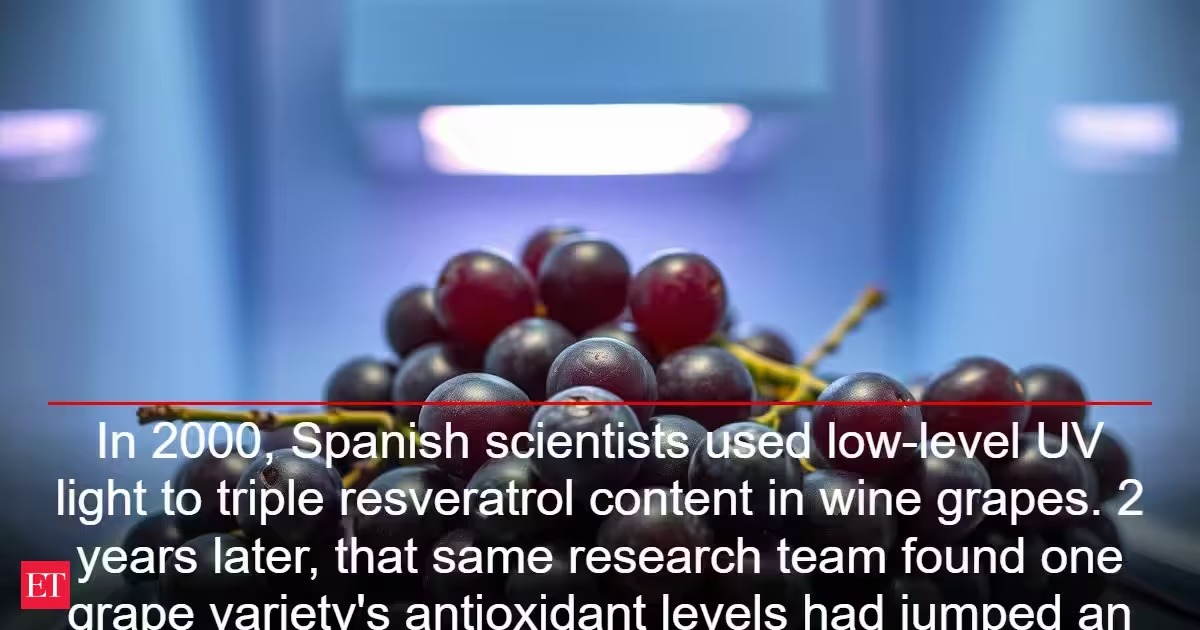
A glass of red wine was already associated with resveratrol, a compound found in grape skins that has antioxidant and anticancer properties. But research published in 2000 suggested that the grapes themselves could be treated before winemaking to increase the amount of this potentially beneficial compound.Spanish researchers found that low levels of ultraviolet irradiation could significantly increase resveratrol in grapes. Refrigerating the fruit after harvesting could further stimulate the enzymes involved in producing these compounds.The findings were reported in the Journal of Agricultural and Food Chemistry, a peer-reviewed journal of the American Chemical Society. (American Chemical Society. "Irradiation, Refrigeration Can Add To Beneficial Effects Of Wine Grapes." ScienceDaily. ScienceDaily, 2 November 2000.)How did UV treatment affect the grapes?The researchers examined ripe, post-harvest grapes exposed to two types of ultraviolet light with different wavelengths. According to Francisco Tomas-Barberan, the lead researcher from the Spanish Council for Scientific Research in Murcia, the treatment appeared to activate a natural protective system within the grapes.That response helped preserve or increase compounds such as resveratrol.You Might Also Like:The research suggested that irradiation could raise resveratrol levels from about one milligram per glass of wine to more than three milligrams. In other words, the treatment could make the grapes a considerably richer source of the compound."By using our treatment, you can increase considerably the resveratrol content of table grapes," he said. "These results show that refrigerated storage and ultraviolet irradiation of grapes can be beneficial in terms of increasing the content of potentially health-promoting compounds."The researchers said similar protective effects had previously been observed in apples, cherries and corn.Could refrigeration make the effect stronger?The Spanish team found that refrigeration after the grapes were picked could further stimulate the enzymes responsible for producing the health-related compounds.You Might Also Like:The researchers studied a Spanish grape variety known as Napoleon table grapes. Although the experiments focused on that variety, Tomas-Barberan said the findings could apply to other grapes used in winemaking.The research was particularly relevant to red wine because elevated resveratrol levels are generated during fermentation. Because of that, the additional effect of irradiation was considered less significant for grapes destined for white wine and grape juice.Why was resveratrol important?Resveratrol is found in grape skins and was described in the research as having antioxidant and anticancer properties. Antioxidants such as resveratrol help protect the body against damaging effects associated with oxygen and nitrogen.The research linked high antioxidant levels with protection against effects associated with high cholesterol, heart disease and Alzheimer's disease.You Might Also Like:However, the study was specifically examining how irradiation and refrigeration could alter the levels of potentially health-promoting compounds in grapes.The researchers reported that the irradiation used in their experiments had no known side effects.The findings also challenged an earlier study that had used higher levels of irradiation and grapes that had been harvested before they were fully ripe. Tomas-Barberan said the earlier results were therefore not directly consistent with the findings from the Spanish team's work.The research was funded through grants from the Spanish government.The study was led by Francisco Tomas-Barberan, Ph.D., a researcher in the Department of Food Science and Technology at the Spanish Council for Scientific Research in Murcia, Spain. Its central finding was that treating ripe grapes with low levels of ultraviolet light, followed by refrigerated storage, could substantially increase their resveratrol content before they were turned into wine.FAQsCan UV light increase resveratrol?Yes. The study found that low-level UV irradiation could substantially raise resveratrol levels.Does refrigeration help grapes?You Might Also Like:Yes. Refrigeration after harvest could further stimulate enzymes linked to beneficial compounds.
Spanish Researchers Boost Resveratrol in Wine Grapes by 2,315% With UV Light
Discover how Spanish scientists tripled the resveratrol content in wine grapes using low-level UV light and refrigeration, enhancing the health benefits of red wine significantly.
589 words~3 min read