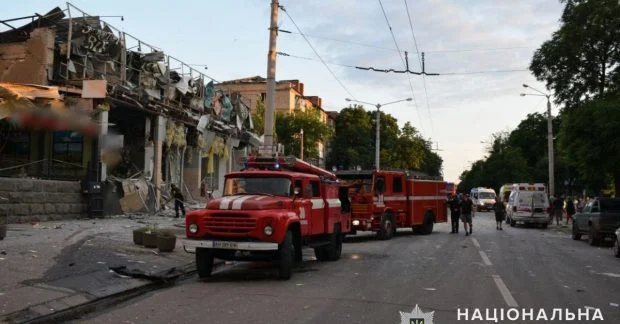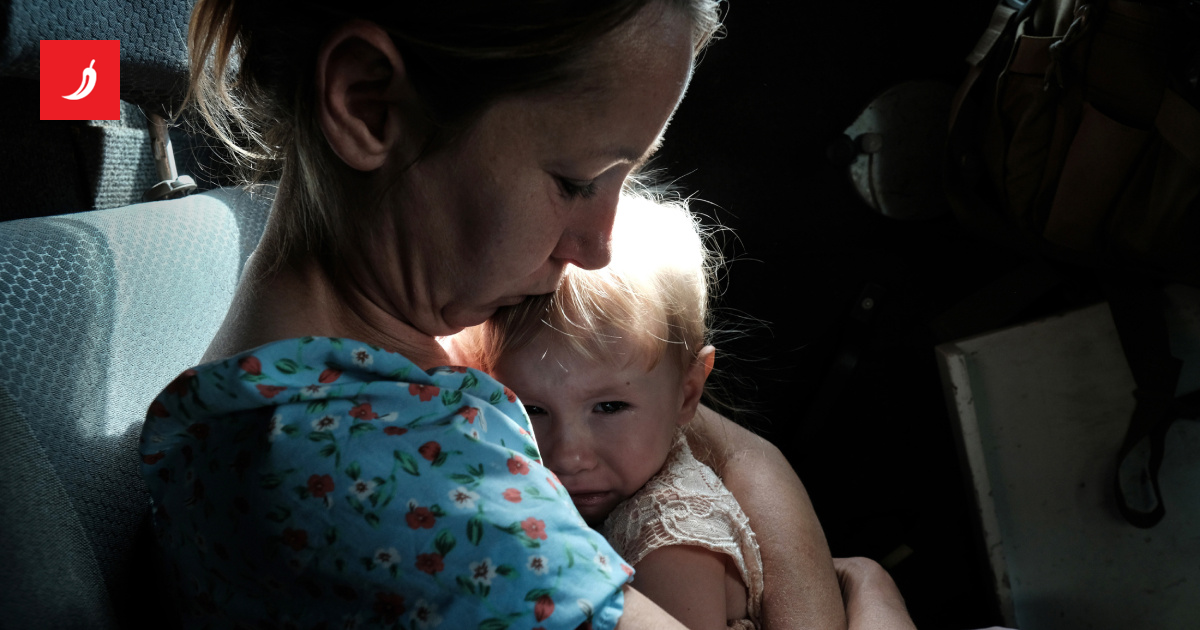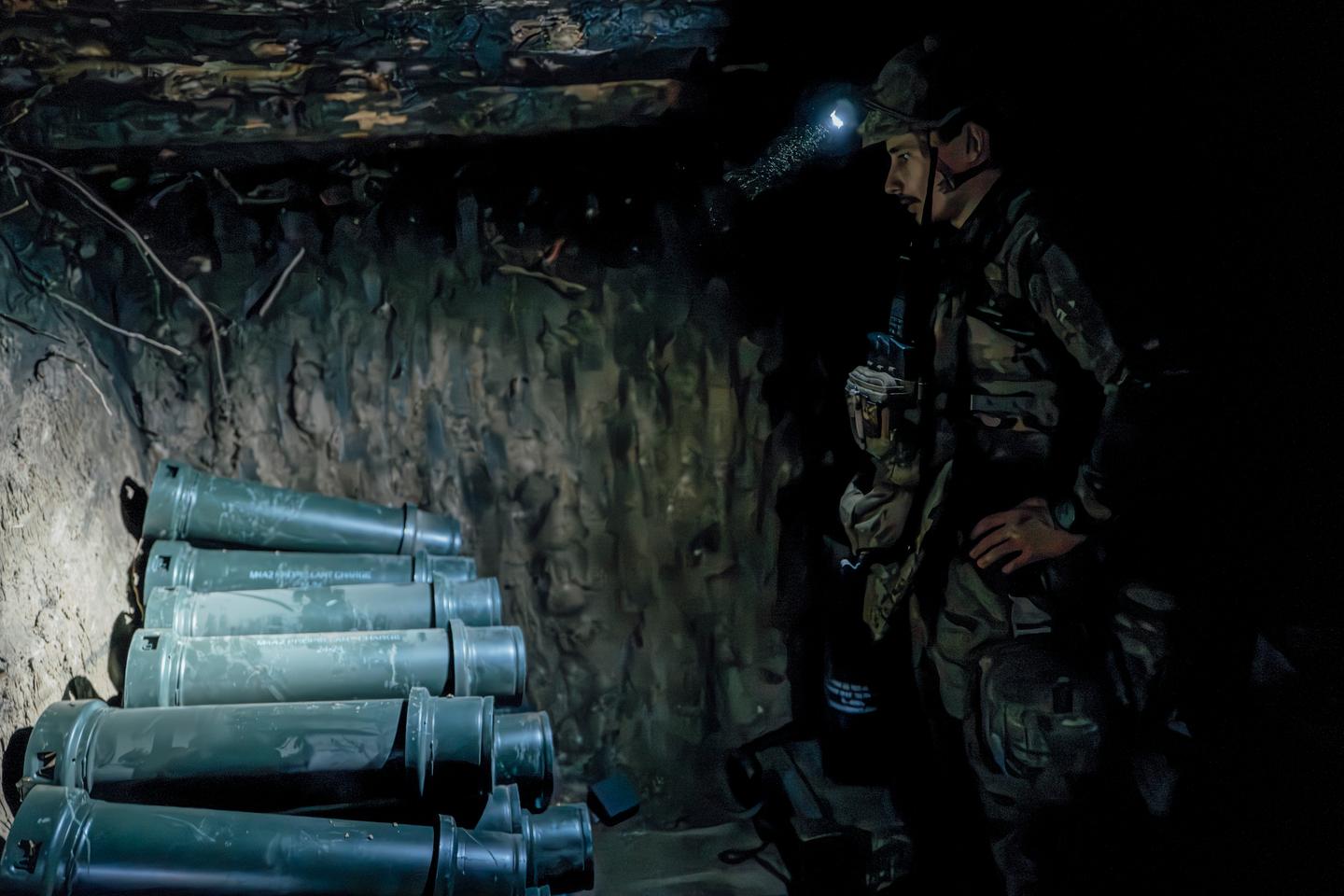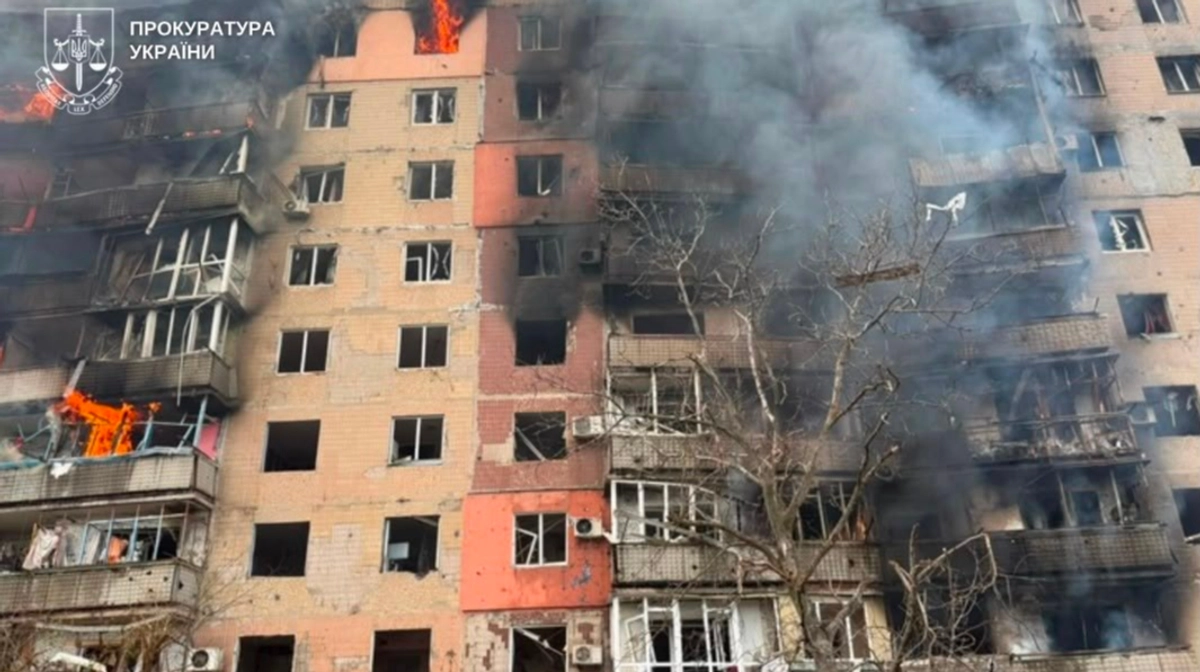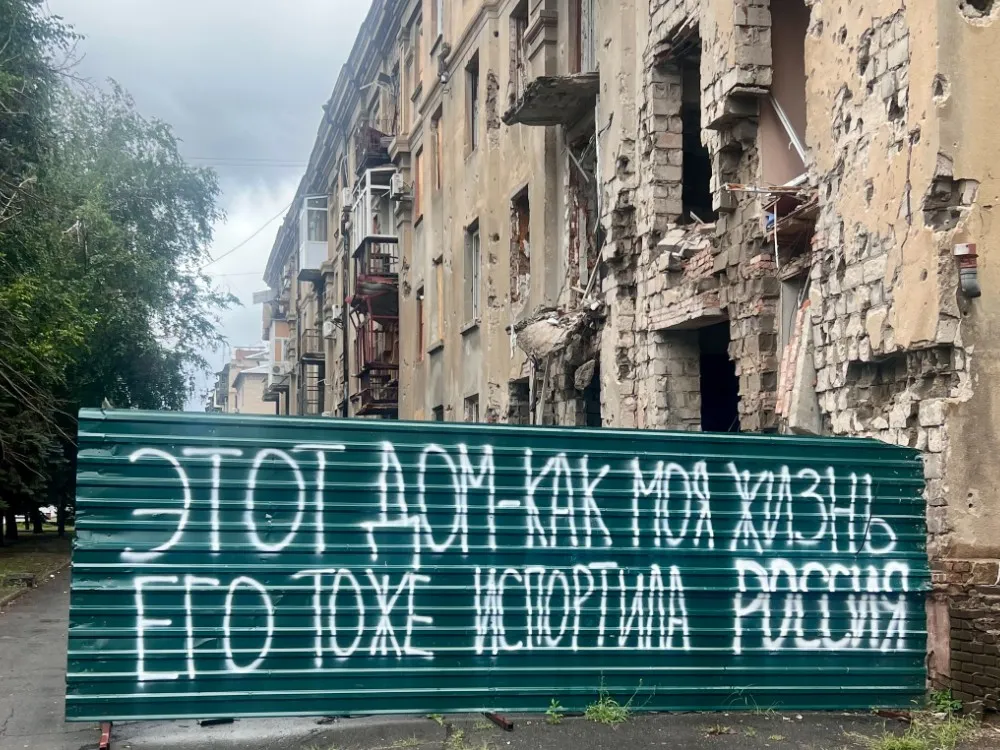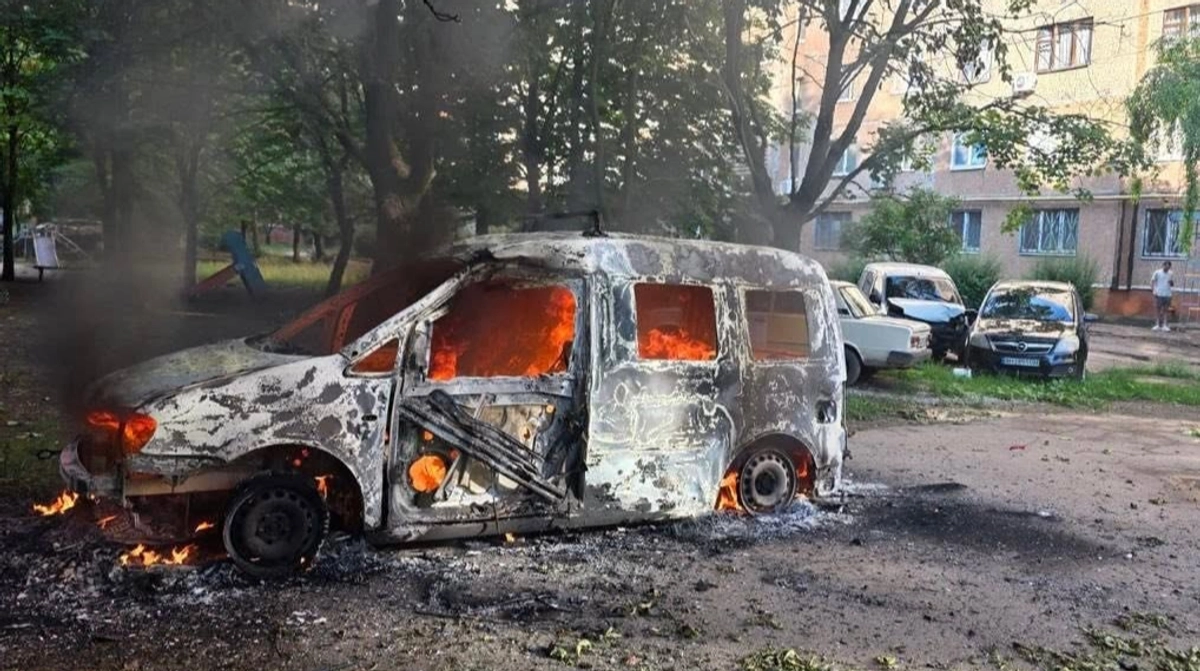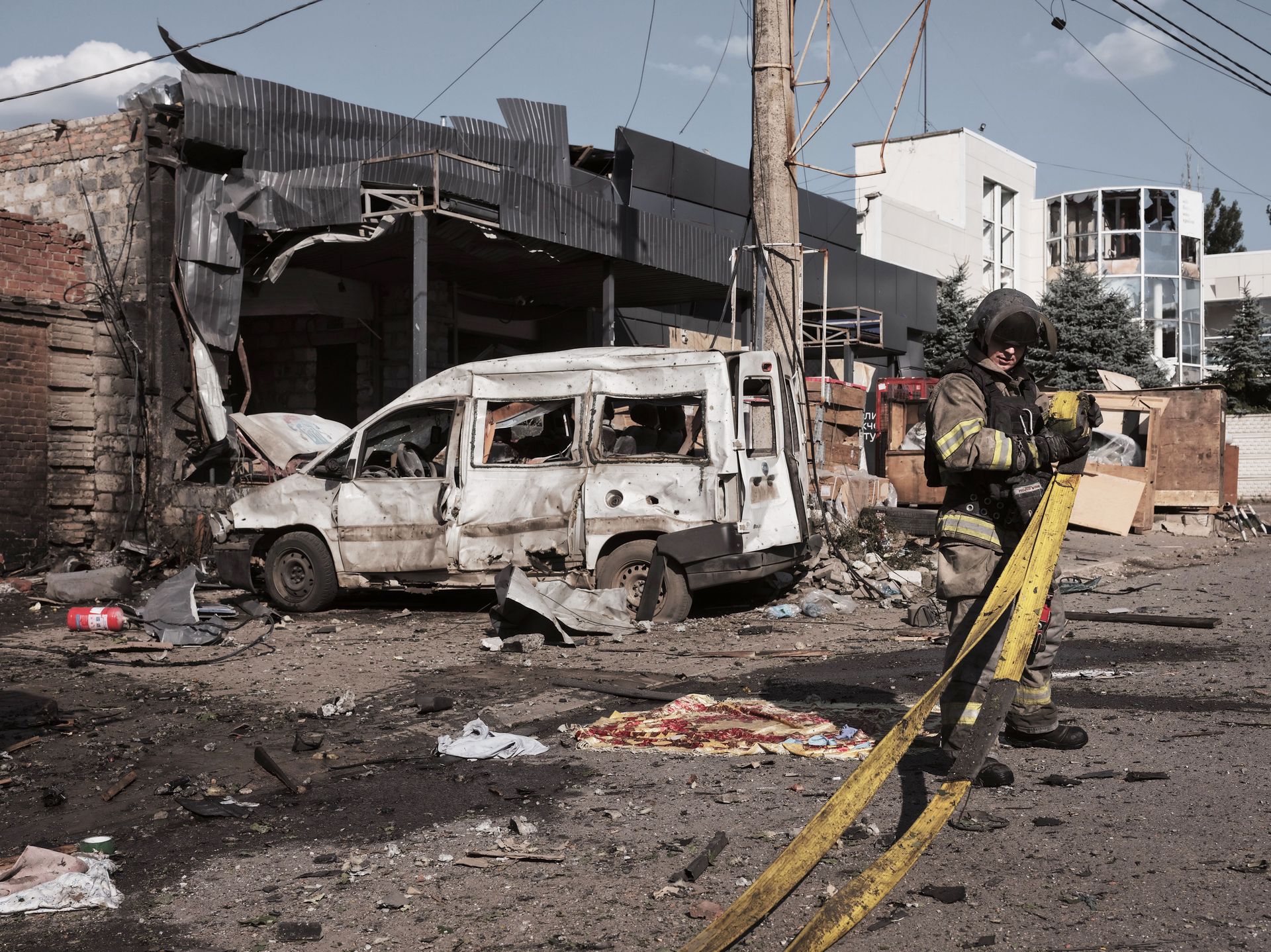
A rescuer deals with the aftermath of a Russian attack in Kramatorsk, Donetsk Oblast, Ukraine, on Aug. 16, 2026. (Lisa Bukreyeva / The Kyiv Independent)KRAMATORSK, Donetsk Oblast — Morning sunlight settles over a narrow street in Kramatorsk, lined with vendors selling their homegrown vegetables and meat at what used to be a bustling market. Intensified Russian attacks on the front-line city, which had long served as a key logistics hub tucked away in the rear of eastern Donetsk Oblast, have driven most potential customers away. But the vendors still need to make a living and arrive at around 6 a.m., enduring constant power and water outages in a city that is gradually emptying. Among the vendors is Serhii, a tanned, short-haired 54-year-old man with a touch of gray, standing behind a foldable picnic table bearing two whole chickens. Visibly unbothered by the buzzing of a first-person view (FPV) drone flying above the market, he is trying to sell his last remaining two chickens so he can go home. "See, it flies away, and no one even flinches anymore because people have already gotten used to bad things," Serhii, who asked to only be identified by his first name for security reasons, told the Kyiv Independent on a Sunday morning. "We can't do anything about it anyway."Serhii, 54, a market vendor, in Kramatorsk, Donetsk Oblast, Ukraine, on Aug. 16, 2026. (Lisa Bukreyeva / The Kyiv Independent)Even as Russia scales up its attacks using glide bombs (KABs) and drones against Kramatorsk, the vendors at the market try not to talk about the ongoing situation, Serhii says. Seeing familiar faces at the market brings comfort to the vendors, many of whom have been working there for years — 15 in Serhii's case. He says there is a concrete shelter at the market, but no one takes cover there, even when there are explosions.A middle-aged woman with her gray-streaked blonde hair tied back in a ponytail approaches Serhii's stand to inspect the chicken. After a short back-and-forth, she decides to buy one for the price of 150 UAH ($3.40) per kilogram. "Have a nice, wonderful day. Good luck," Serhii says, after packing the chicken into a plastic bag, as an explosion echoes in the distance. As Russian troops gradually advance toward Kramatorsk, which has become the de facto regional capital since cities in the Donbas has significantly worsened over the summer. The local authorities formally designated Kramatorsk, along with its surrounding villages and Sloviansk, as areas of active hostilities in an administrative order that came into effect on Aug. 21. The classification by the Regional Development Ministry allows local authorities to make decisions on civilians safety and evacuation, as well as regulate social benefits and provide state aid.White anti-FPV nets cover the city's roads in Kramatorsk, Donetsk Oblast, Ukraine, on Aug. 16, 2026. (Lisa Bukreyeva / The Kyiv Independent)As of noon on Aug. 26, at least 13 people have been killed, and about 150 others have been wounded in Kramatorsk this month, according to the Donetsk Oblast Military Administration. Just over 10 kilometers (six miles) away from Russian troops, the city now faces a heavy barrage of FPV drones, particularly in the morning and at night. Local residents told the Kyiv Independent they are trying to limit movement around the city, leaving their homes only for work or necessary errands during the day. But now the glide bombs are becoming increasingly frequent during the daytime. White and green anti-FPV nets cover most of the city's roads, offering some protection from drones — but not glide bombs — for both military and civilian vehicles driving beneath them. "Kramatorsk is increasingly suffering the fate of other cities in the Donbas as Russian forces inch closer," military analyst Michael Kofman, a senior fellow in the Russia and Eurasia Program at the D.C.-based Carnegie Endowment for International Peace, told the Kyiv Independent. "The city is becoming unsafe for civilians with Russian drones operating in the eastern parts, and daily bombardment from glide bombs."A civilian house stands destroyed after a Russian attack in Kramatorsk, Donetsk Oblast, Ukraine, on Aug. 16, 2026. (Lisa Bukreyeva / The Kyiv Independent)Before the full-scale war, Kramatorsk was a major industrial hub, home to the Starokramatorsk Machine-Building Plant, dating back to 1896, and other giant factories manufacturing mining equipment and metal products. When Russia invaded Donbas in 2014, Kramatorsk endured a three-month occupation before Ukraine liberated it in July of that year. Despite some large-scale attacks on Kramatorsk since 2022, such as a Russian missile strike on the train station that killed 61, the city had enjoyed relative calm until 2025. In the late afternoon of that Sunday in August, a Russian drone attack hit a Nova Poshta branch, killing one person and injuring seven others, local authorities said. The regional police rushed in to document the aftermath of the strike before hiding under the trees and then driving off quickly due to the threat of a double-tap attack. A Nova Poshta branch employee was killed after a Russian attack on Kramatorsk, Donetsk Oblast, Ukraine, on Aug. 16, 2026. (Lisa Bukreyeva / The Kyiv Independent)As conditions worsen in Kramatorsk, locals remain divided on whether to flee or stay, despite knowing the situation is unlikely to improve. Life in Kramatorsk goes on for now, with many restaurants, cafes, and shops remaining open — though some have begun to close their doors. At the busy Chudo Market supermarket in the city center, 50-year-old clerk Lyudmila Drovko assists customers at the self-checkout, wearing a bright orange uniform. She had previously worked at another branch in the city for three years, until a Russian attack destroyed it on Aug. 3. A few days later, on Aug. 20, a Russian glide bomb attack destroyed her new workplace.
'The city is dying' — Ukrainians in Kramatorsk brace for worst as Russian forces inch closer
KRAMATORSK, Donetsk Oblast — Morning sunlight settles over a narrow street in Kramatorsk, lined with vendors selling their homegrown vegetables and meat at what used to be a bustling market. Intensified Russian attacks on the front-line city, which had long served as a key logistics hub tucked away in the rear of eastern Donetsk Oblast, have driven most potential customers away. But the vendors still need to make a living and arrive at around 6 a.m., enduring constant power and water outages in
2,032 words~9 min read