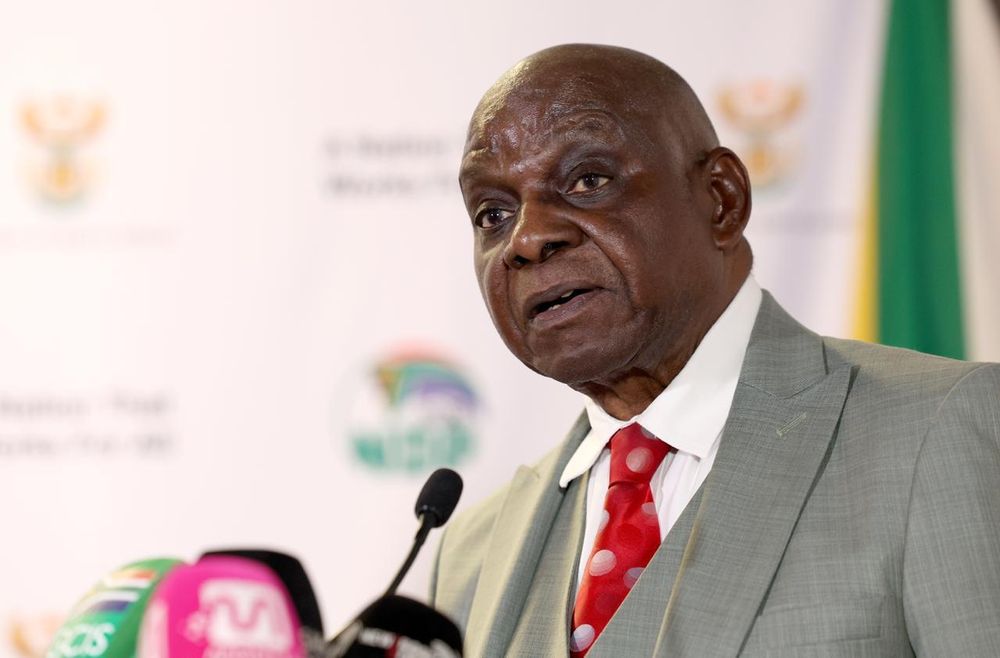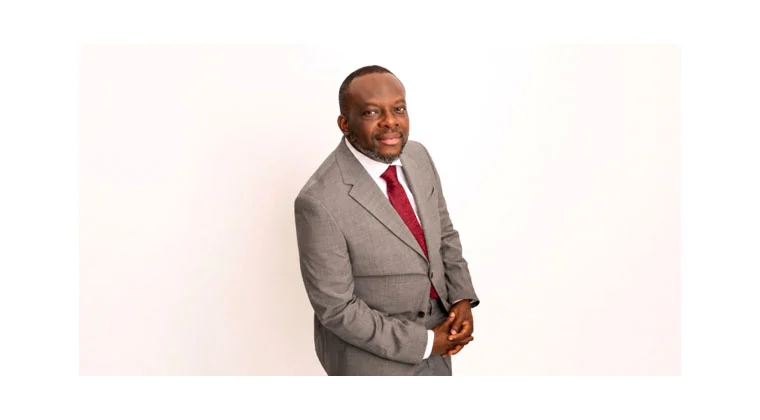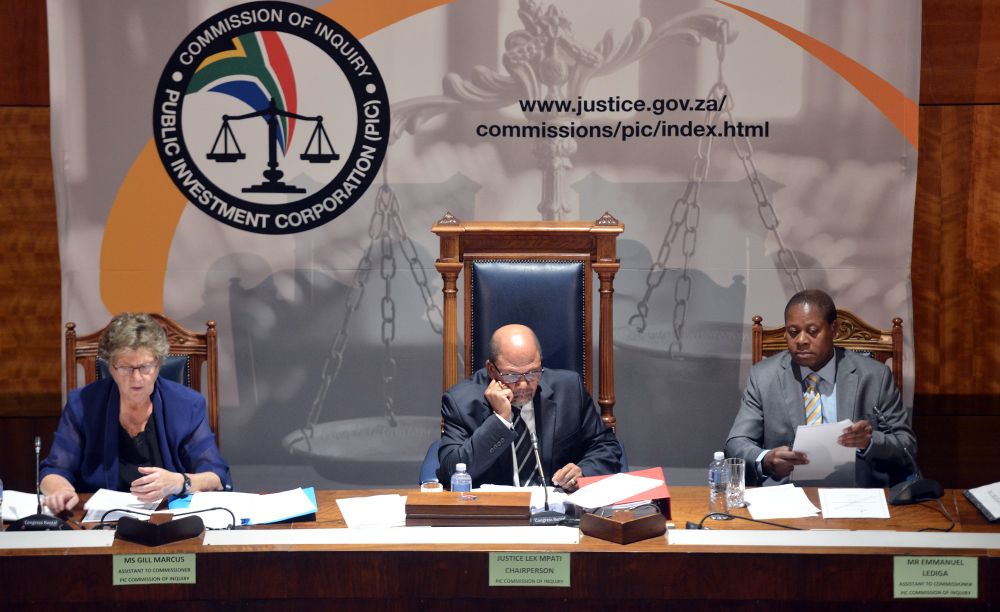
South Africans probably no longer need much persuading that political influence over the appointment of state-owned entity boards carries serious risks, because the Zondo state capture commission, parliamentary inquiries, court judgments and a succession of forensic reports have already shown how easily appointment processes can become entangled with patronage, factional interests and weak oversight. The more useful question is why governance failures continue to recur even after those lessons have been documented so extensively. The recent turmoil at the Public Investment Corporation (PIC) offers a useful place to begin. The resignation of deputy finance minister David Masondo as board chair, the suspension of the CEO, whistle-blower allegations and the National Treasury’s subsequent reconstitution of the board may each have their own explanation, but when they occur in close succession it becomes difficult to see them merely as unrelated personnel events. Taken together they seem to suggest that the governance system itself may be more fragile than the formal structures around it imply. That matters because the PIC is not an ordinary public entity. It manages more than R3-trillion in public funds, including the retirement savings of government employees, which means instability in its leadership inevitably raises questions beyond the personalities involved. The issue is not simply whether one chair should have remained in office or whether one executive acted properly but whether an institution entrusted with such a large pool of public savings has sufficiently durable mechanisms to identify problems early, respond credibly and maintain confidence when disputes emerge. Yet whenever a crisis of this kind surfaces attention tends to return quickly to the board itself: who appointed its members, who should resign, who should replace them and whether the next group will be more independent than the last. Those are legitimate questions, though they are not enough because replacing a board can create the appearance of renewal without necessarily changing the conditions that allowed governance to weaken in the first place. A board appointment happens at a particular moment, whereas governance unfolds continuously and often quietly over several years. Directors may be carefully selected and still preside over weak governance if challenge gradually becomes muted, if committee oversight becomes procedural rather than substantive, if uncomfortable issues are repeatedly deferred or if poor performance carries little consequence. The weakness in South Africa’s governance debate is therefore that too much attention is paid to how directors enter the boardroom and too little to what happens once they are there. This matters because governance failure seldom begins with a spectacular collapse. More often it seems to develop through smaller accommodations: unanswered questions, incomplete reports, repeated exceptions, unresolved concerns and decisions whose implications become visible only much later. By the time a problem reaches parliament, an annual report, the courts or the front page, the underlying weakness may already have been developing for months or years. Which raises an uncomfortable question: are public institutions failing because warning signs do not exist, or because boards and shareholders are too slow to act on them? The PIC case is particularly instructive because it follows the Mpati commission, which had already examined concerns about investment governance and oversight at the institution. One might therefore have expected those findings to create a stronger institutional memory, yet the latest events suggest that commissions and inquiries may not, on their own, change the habits of governance. Findings are published, recommendations are accepted and reforms are announced, but the more difficult work begins afterwards, when public attention shifts and institutions must decide whether those lessons become part of everyday practice. A similar pattern appears across a number of public entities, where crisis is followed by inquiry, inquiry by recommendations, recommendations by partial implementation and, eventually, another crisis. It may be tempting to describe this simply as an implementation problem but the deeper difficulty is that accountability is so dispersed that it becomes hard to establish who was expected to act, by when, and with what consequence if they did not. South Africa certainly does not lack scrutiny after something has gone wrong. The auditor-general audits, parliament interrogates, regulators investigate and courts intervene when disputes become sufficiently serious. What seems less developed is the earlier stage, where boards themselves are expected to recognise deterioration before it becomes scandal. The warning signs are often already present in board papers, committee discussions, internal audit findings, whistleblower reports and performance reviews. The problem is not that institutions lack information but that they lack reliable mechanisms for turning that information into action and, ultimately, accountability. If so, then the familiar call for “independent appointments”, while important, may be too narrow. Greater independence at the point of appointment can reduce the risk of overt political influence, but independence alone does not guarantee curiosity, courage, diligence or effective oversight once a director is on the board. A more serious reform agenda might therefore begin with appointments without ending there. Major state-owned enterprises and public financial institutions could have transparent, skills-based processes in which competency criteria are published in advance and shortlisted candidates are subjected to greater scrutiny. Ministers may remain the formal appointing authority but the legitimacy of those appointments would be stronger if the processes preceding them were more visible and less dependent on discretion. There is also the question of what happens afterwards. Annual independent board evaluations could test whether directors understand the institution, whether committees are working, whether management is being challenged and whether the board has the skills required for the risks it oversees. Publishing meaningful summaries might also allow weaknesses to be identified before they become impossible to conceal. Individual accountability deserves similar attention. Collective responsibility is central to board governance — but should it always be enough to say that “the board” failed when particular oversight responsibilities were clearly assigned? Perhaps there should be circumstances in which directors are expected to explain what they knew, what they did and why they believed their response was adequate. The chairmanship of systemically important public financial institutions raises a related question. Even where no improper conduct is established, can a serving member of the executive branch convincingly be perceived as independent while chairing an institution that may have to navigate politically sensitive decisions? The difficulty may be as much about institutional confidence as formal authority, because independence has to be visible as well as legally defensible. None of this is particularly novel, which may be the point. South Africa does not seem to suffer from a shortage of governance principles or frameworks; the harder question is why institutions can repeatedly fall short of them without the consequences becoming sufficiently predictable to change behaviour. The PIC controversy should therefore be read less as an isolated episode than as a test of how South Africa understands governance reform. If the response is simply to replace one board with another, our country may again solve the visible problem while leaving the deeper architecture largely untouched. The question is no longer only whether South Africa can appoint better directors. It is whether the country can become equally serious about what happens after they are appointed. Until then, we should be cautious about treating every reconstituted board as evidence of reform. Sometimes the names change while the governance system remains much the same. Mahlangu is a risk management specialist and a member of the strategic advisory board of The DaVinci Institute. Business Day
NTOKOZO MAHLANGU | Appointment is not governance — the real crisis in SA’s state boards
Fragile oversight and dispersed accountability fuel repeated failures
1,224 words~6 min read