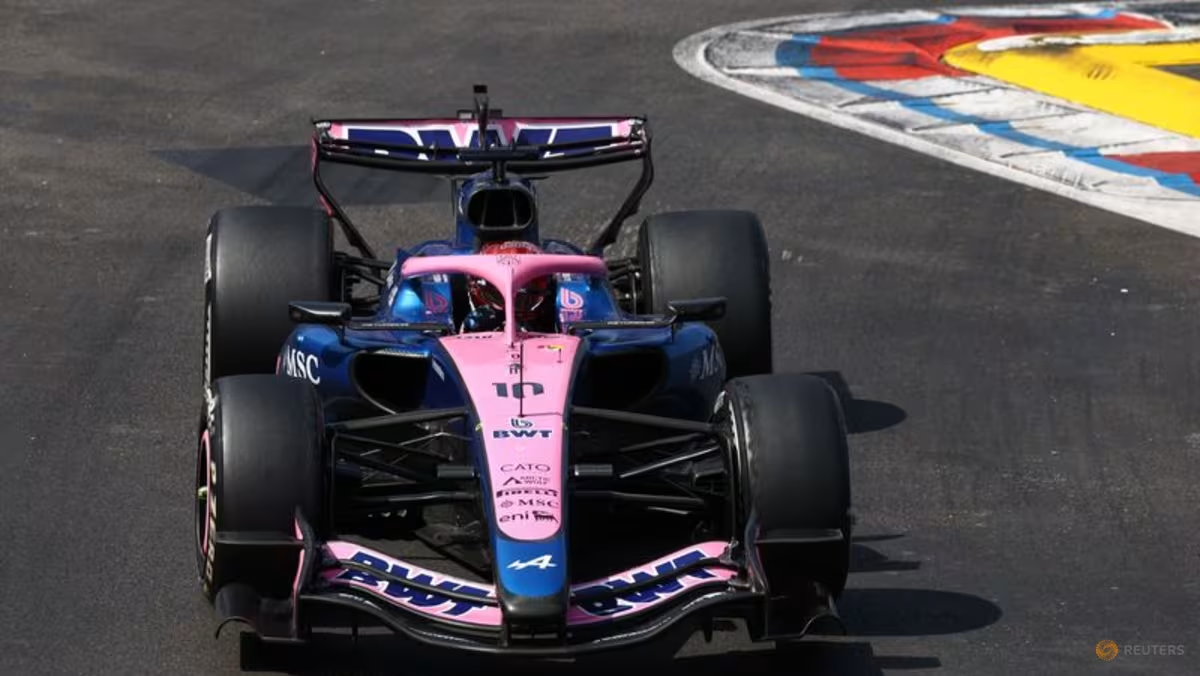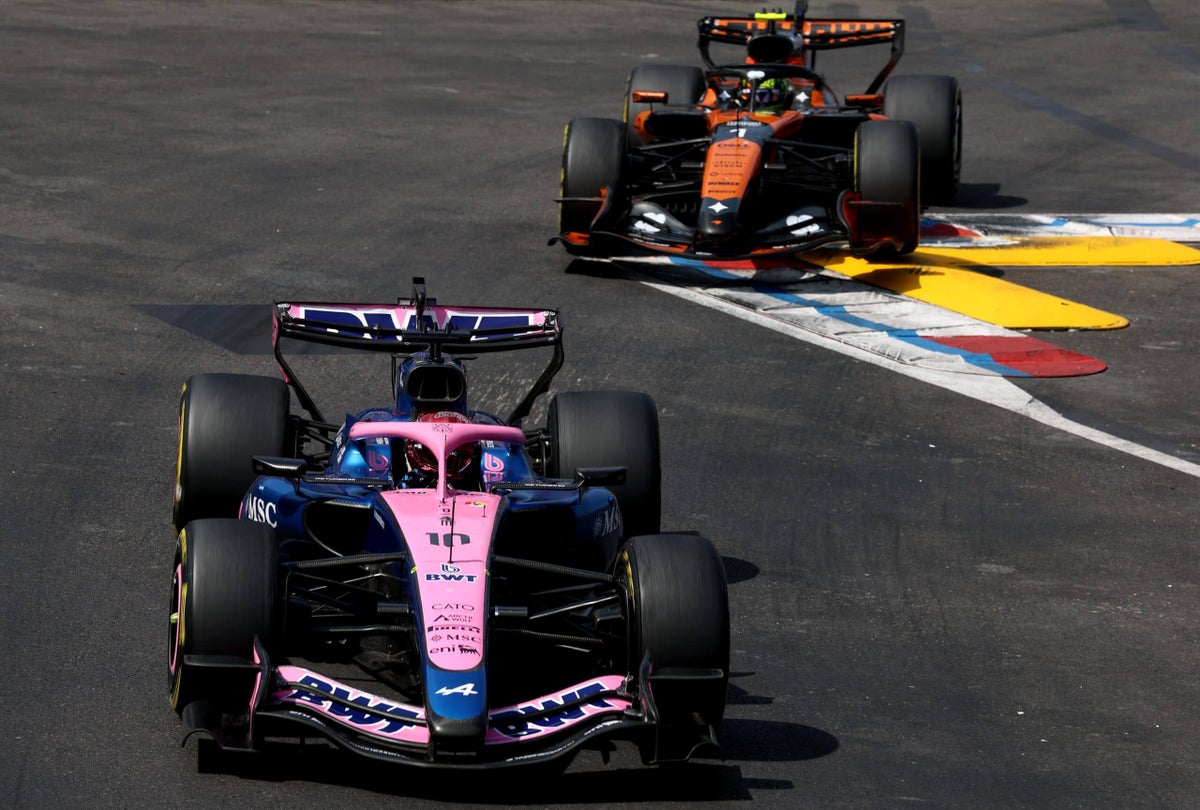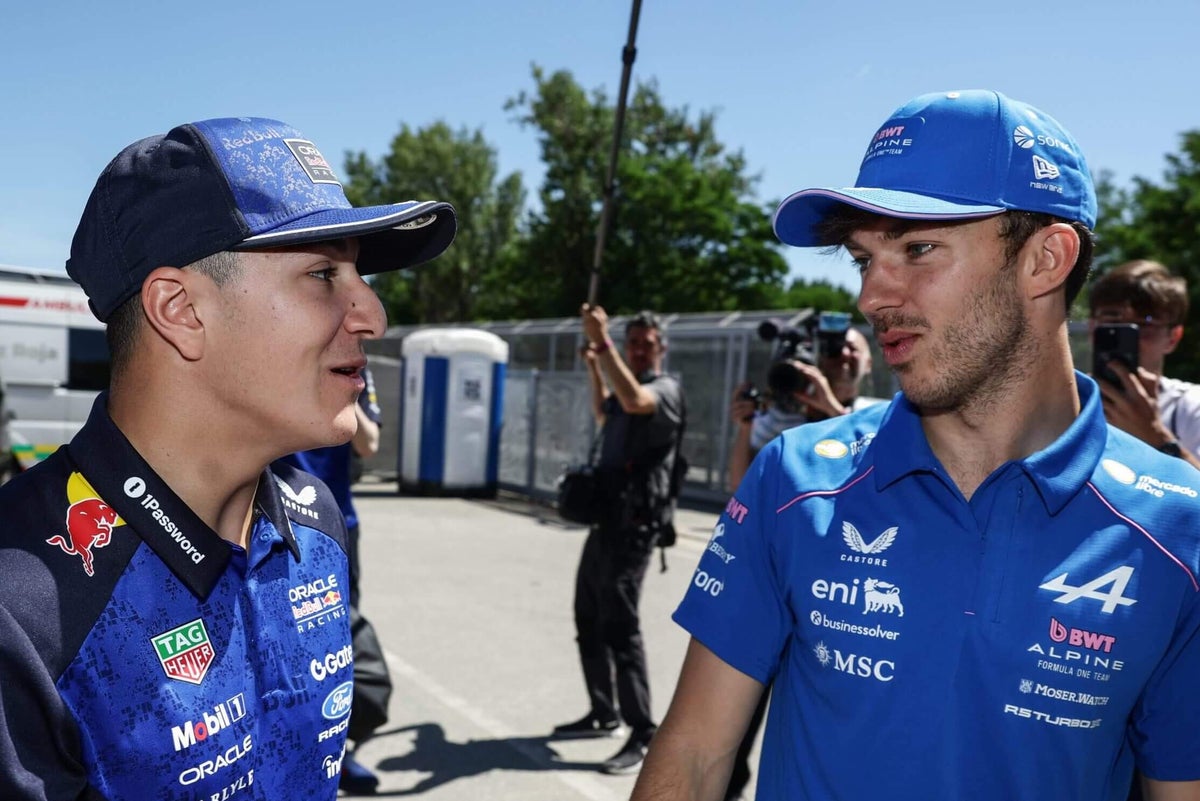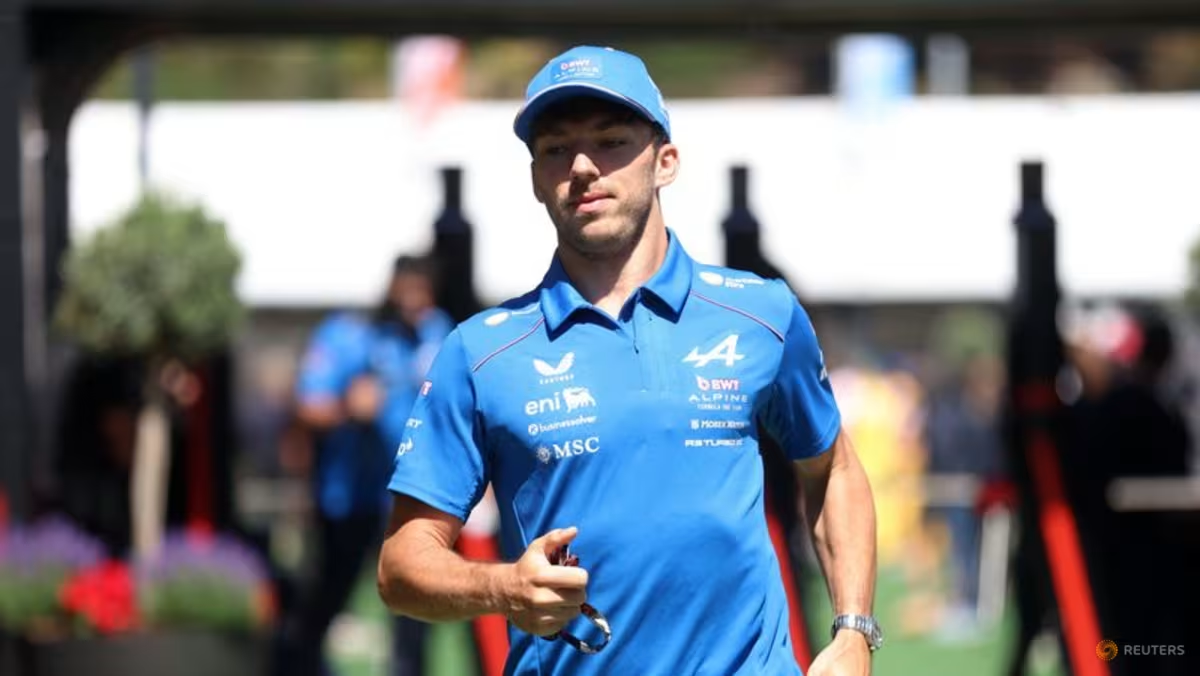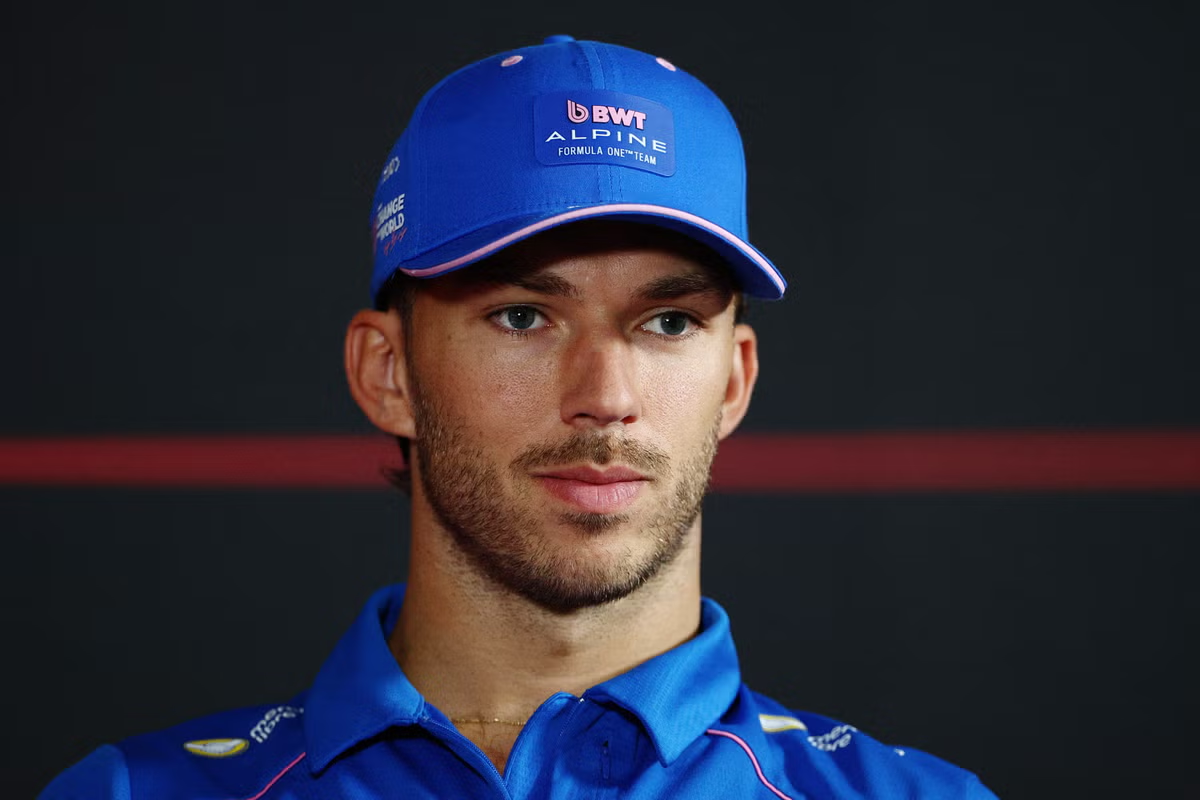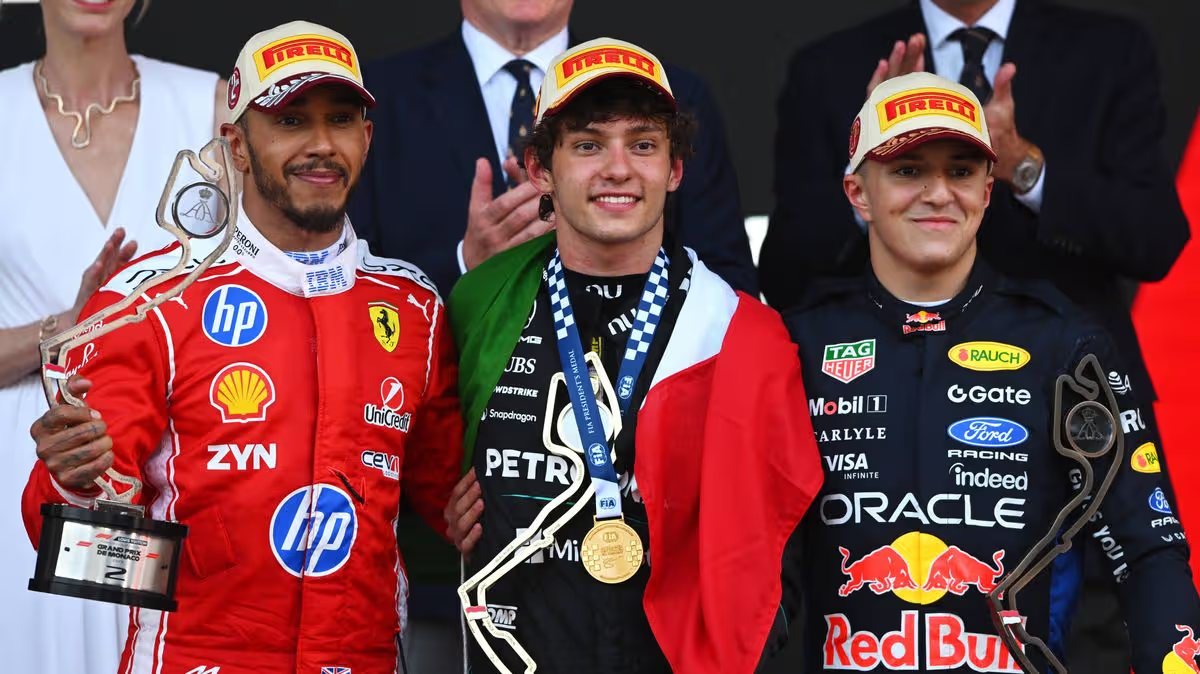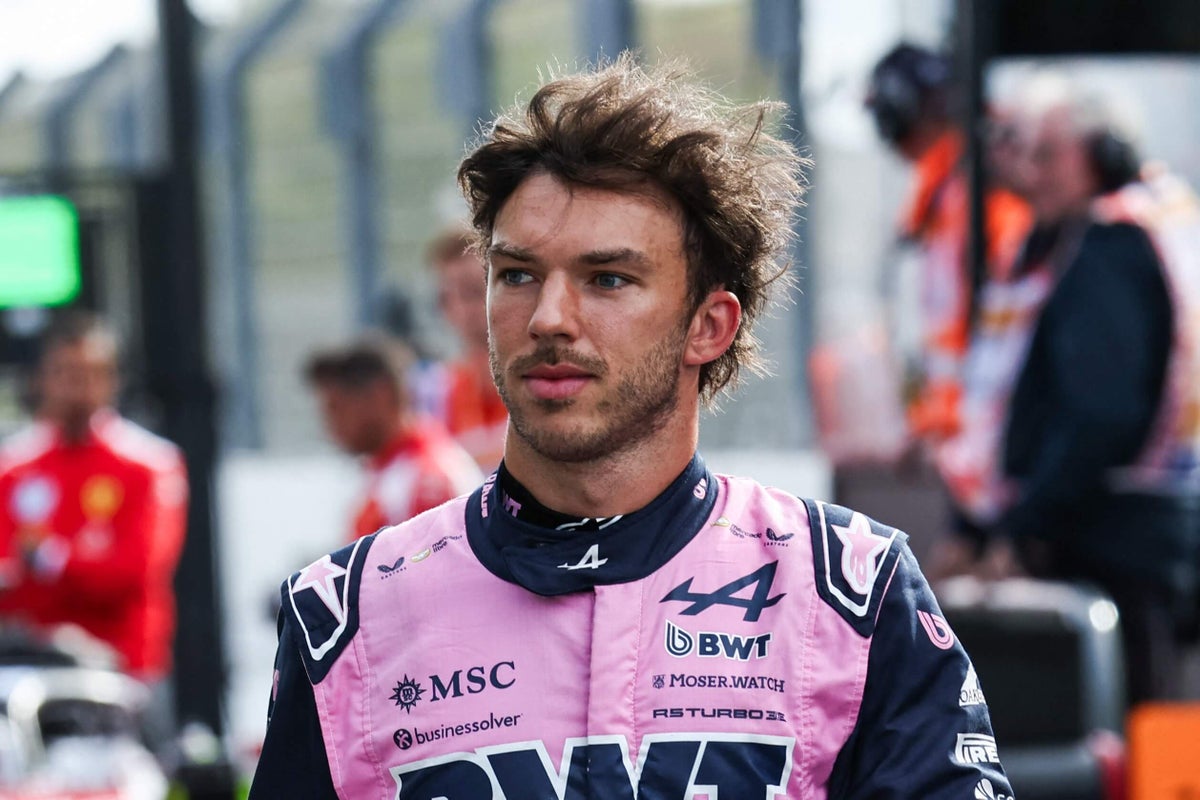
The outcome of McLaren and Red Bull’s appeal against the decision to overturn Pierre Gasly’s time penalty at June’s Monaco Grand Prix may not be known for another two to three weeks.Alpine Formula 1 driver Gasly initially lost his third-place finish in Monaco after receiving two five-second time penalties for speeding in the pit lane, only for the team to successfully appeal the sanction after it emerged the pit lane length had been measured incorrectly.Following the stewards’ decision to overturn the penalty, McLaren and Red Bull moved to appeal the ruling by taking the case to the FIA’s International Court of Appeal (ICA) which sits above the FIA-appointed stewards.Red Bull driver Isack Hadjar was initially promoted to third place, with the decision to remove the penalty costing him a first podium finish for the team, while McLaren’s Oscar Piastri also dropped from fourth to fifth as a result of it being overturned having already served his own penalty for pit lane speeding.The ICA held a hearing on Tuesday to discuss the matter, which was attended by representatives from Alpine, Red Bull and McLaren, as well as officials from the FIA and F1. The remaining teams have also been engaged with the case as observants.But sources have indicated to The Athletic, speaking on condition of anonymity to protect relationships, that the judges overseeing the hearing informed those in attendance there may not be a decision on their findings for another two to three weeks.Should it be toward the end of that time frame in mid-September, it would only provide closure on the final result for the Monaco GP more than three months since the race took place on June 7.Following the hearing, which lasted all day on Tuesday, the judges require time to fully consider all of the evidence and arguments submitted before writing up their findings and issuing a final decision.Hadjar had initially stood on the podium in Monaco (Rudy Carezzevoli/Getty Images)The complexity of the case became clear in the immediate aftermath of the race, in which there was an unusually high number of pit lane speeding penalties being awarded to drivers.Besides Gasly and Piastri, Lewis Hamilton, Franco Colapinto and George Russell also received penalties for exceeding the pit lane speed limit of 60 km/h, which works as an average speed check across the distance of the pit lane. Five of the six sanctions were only 0.1 km/h over the limit.Russell’s race was ruined by the penalty after he was forced to serve it in the pits following a red flag, causing him to tumble down the order and finish the race outside of the points. Piastri, Hamilton and Colapinto also served their penalties in-race by waiting five seconds in the pits before their mechanics could service the car.Unlike the other four drivers, Gasly had not been able to serve his penalties before the checkered flag, meaning 10 seconds was applied to his final finishing time which dropped him from third on the track to seventh, leaving the Frenchman distraught after the race.Alpine was successfully able to fight the case against Gasly’s penalty by launching a ‘Right of Review’ against the stewards’ decision, in which it emerged there was a 77cm discrepancy between the recorded distance of the pit lane used by the timekeeper and the actual distance that was measured by Alpine manually after the race. By removing Gasly’s penalties, he was reinstated to the podium.The other penalties, however, could not be appealed as they had already been served.Four days after Gasly’s penalty was overturned, McLaren announced it would be appealing the decision.Speaking to reporters at the Dutch GP last weekend, McLaren team principal Andrea Stella said there was a “double intent” for the team going into the ICA hearing, relating to not just the team’s own bid to regain some points but also ensuring the process of applying and reviewing F1 penalties is done in a fair way.“We think that the process that happened after the race in Monaco is a process that needs to be reviewed because from fairness for all competitors the fact that the penalty was removed introduces some significant elements of concern,” Stella explained.“There’s obviously more related to this case. It can go into the technical aspects of how the pit limiter speed was calculated. But for me, at high level, it is more the fairness and the principle that needs to be clarified and possibly reinstated, because I think what happened sets some significant concerns.”
McLaren and Red Bull face further wait on outcome of Pierre Gasly penalty appeal
Gasly initially lost his third-place finish in Monaco after receiving two five-second time penalties, but it was subsequently reinstated.
758 words~3 min read