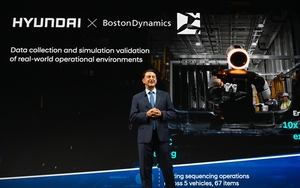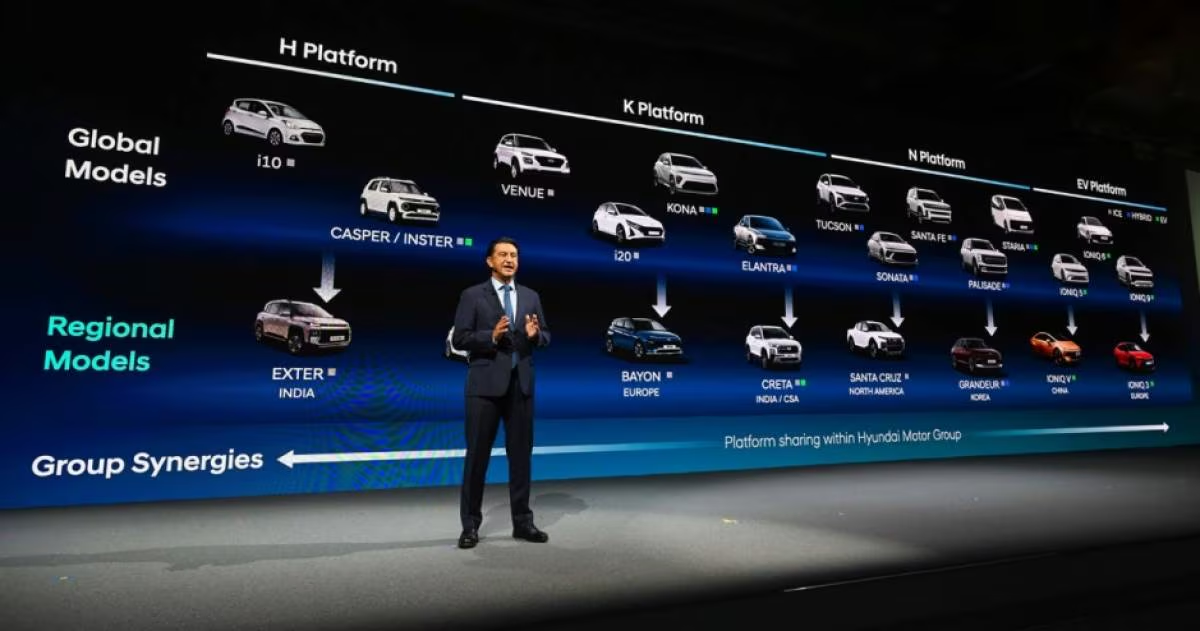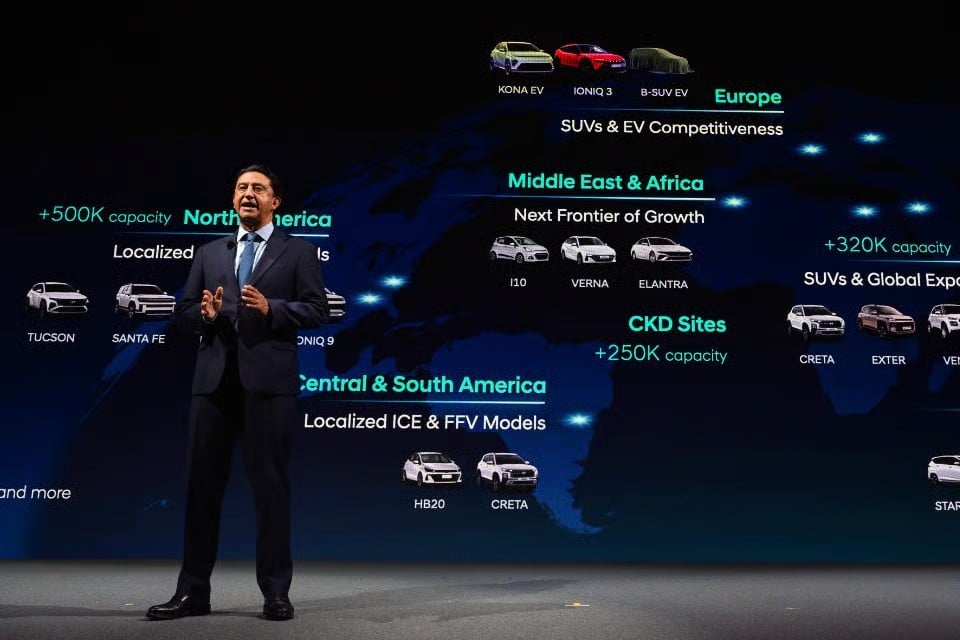
Hyundai has outlined its refined roadmap for the coming years during its CEO Investor Day. Hyundai Motor Company announced plans to launch or revise more than 100 vehicle models worldwide by 2030. However, the company did not specify how many of these will be battery-electric vehicles. It merely reiterated its overarching target of achieving a 60 per cent share of electrified vehicles in its sales mix by 2030 – up from 23 per cent in 2025. This figure is expected to include full hybrids. Importantly, the entire strategy and these figures apply only to the Hyundai and Genesis brands, not Kia. Although Kia is a subsidiary of Hyundai Motor Group, it plans its roadmap independently.
The new outlook does not include specific global battery-electric vehicle sales targets for Hyundai and Genesis. The company last addressed this in its 2024 outlook, when it announced a goal of selling two million all-electric vehicles annually by 2030. Since then, Hyundai has explicitly expanded its focus to include full hybrids. Additionally, the introduction of its first range-extender model (EREV) is set to further diversify its electrified powertrain offerings. More details on this are provided below.
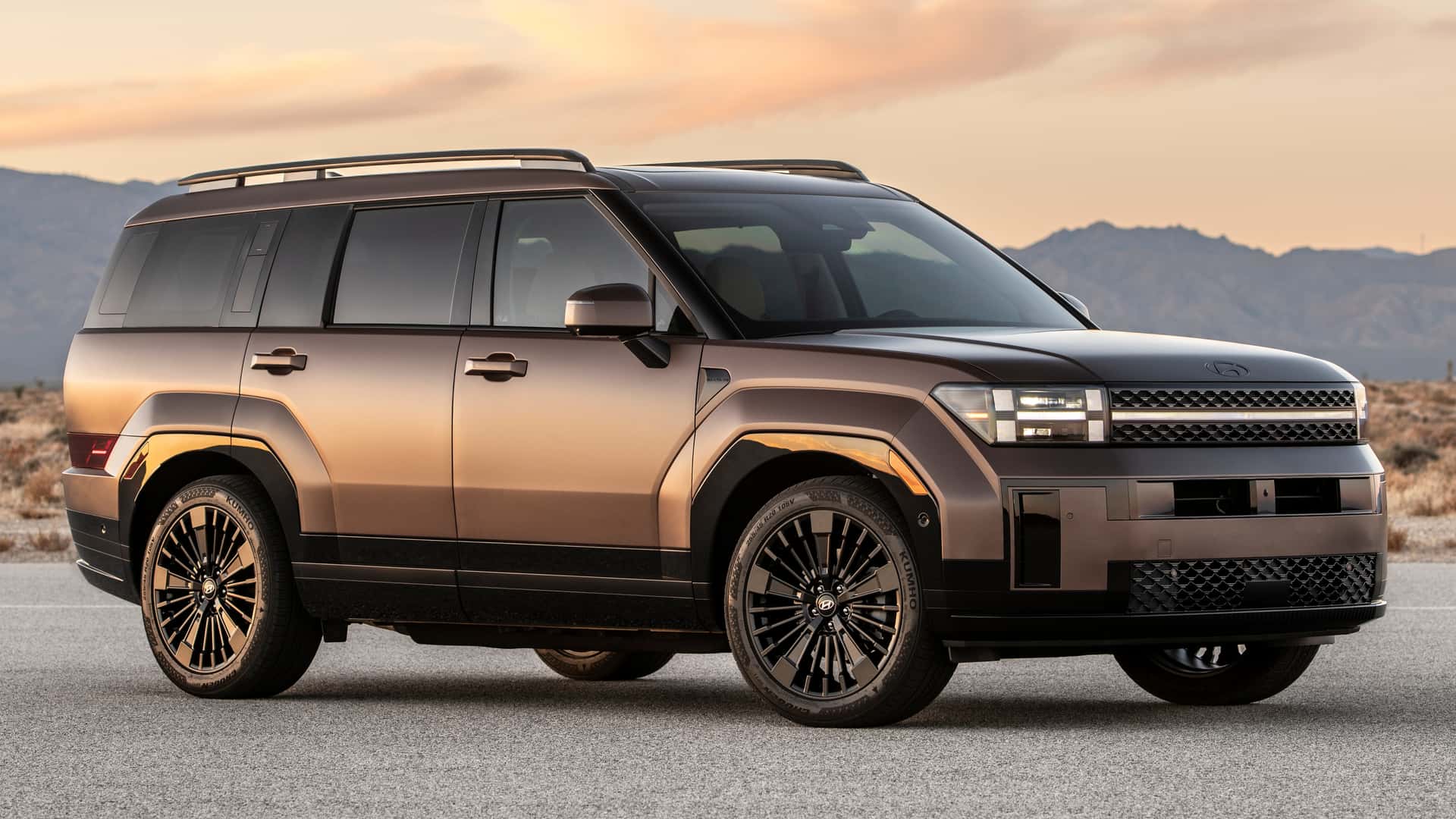
Hyundai’s product offensive is focused on North America and Korea: of the roughly 100 new or revised models planned by 2030, 58 are allocated to North America and 49 to Korea, followed by Europe (41), India (26) and China (22). “Many of these will be all new products or entries into new market segments,” Hyundai stated. Within the next eight months alone, seven new vehicles are set to launch, including the Ioniq 3 in Europe, as well as an A-segment electric SUV for India and the brand’s first range-extender model (EREV), the Santa Fe EREV, for North America.