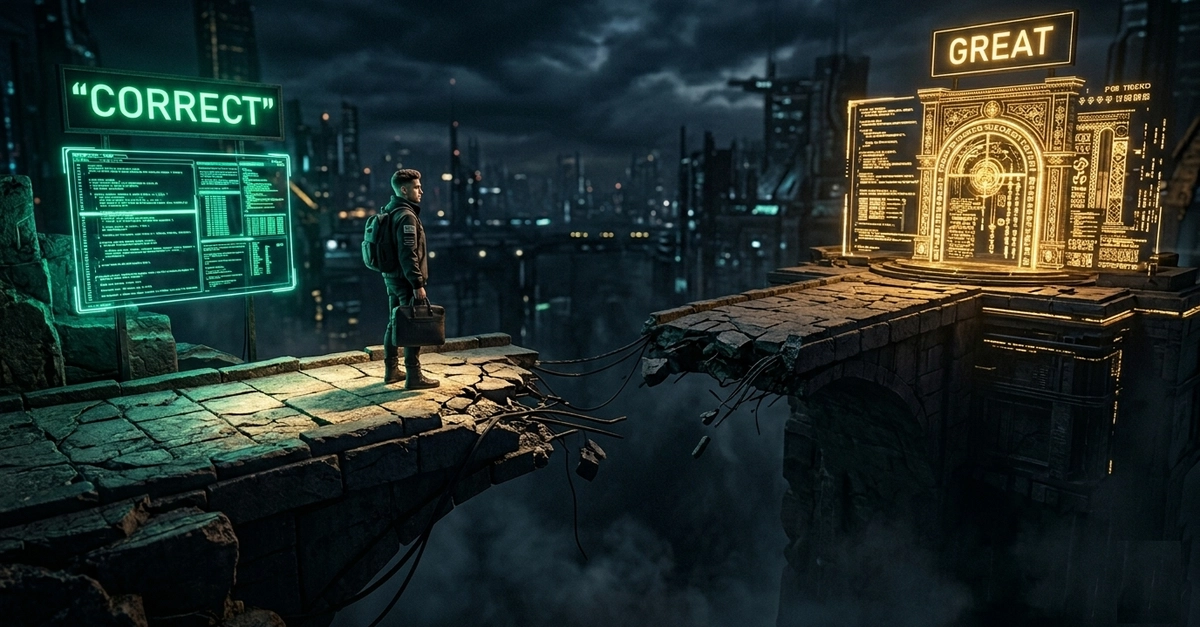
A program can produce the right answer and still contain work that does not help it reach that answer. Tests pass, the output looks correct, and unnecessary computations survive because they appear harmless.
This becomes easier to miss in AI-generated code. A model can produce a plausible implementation in seconds, but plausible code often includes variables, conversions, or branches that the requirement never asked for.
An intent alignment review adds one question to the usual correctness check:
Does every instruction help achieve or explain the stated goal?
This does not require a formal proof or an exhaustive line-by-line exercise. The useful result can be concise.