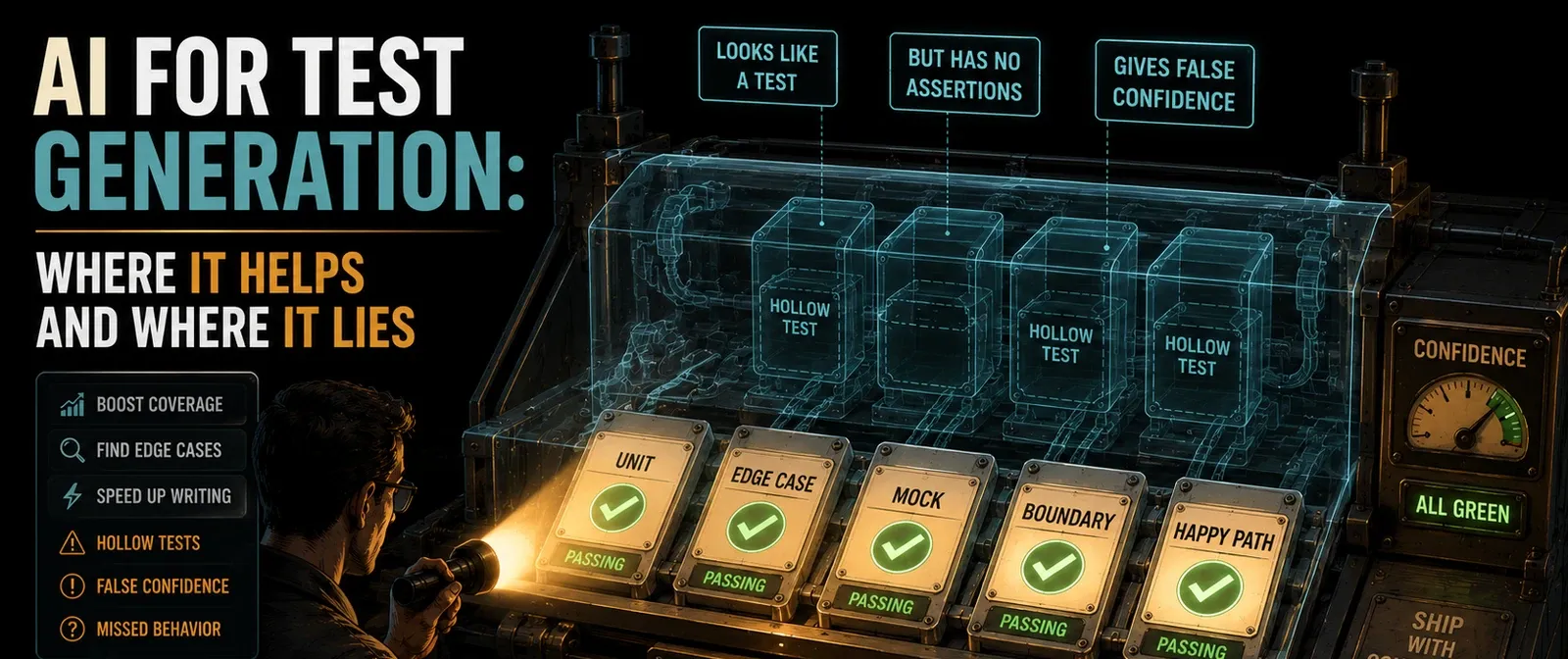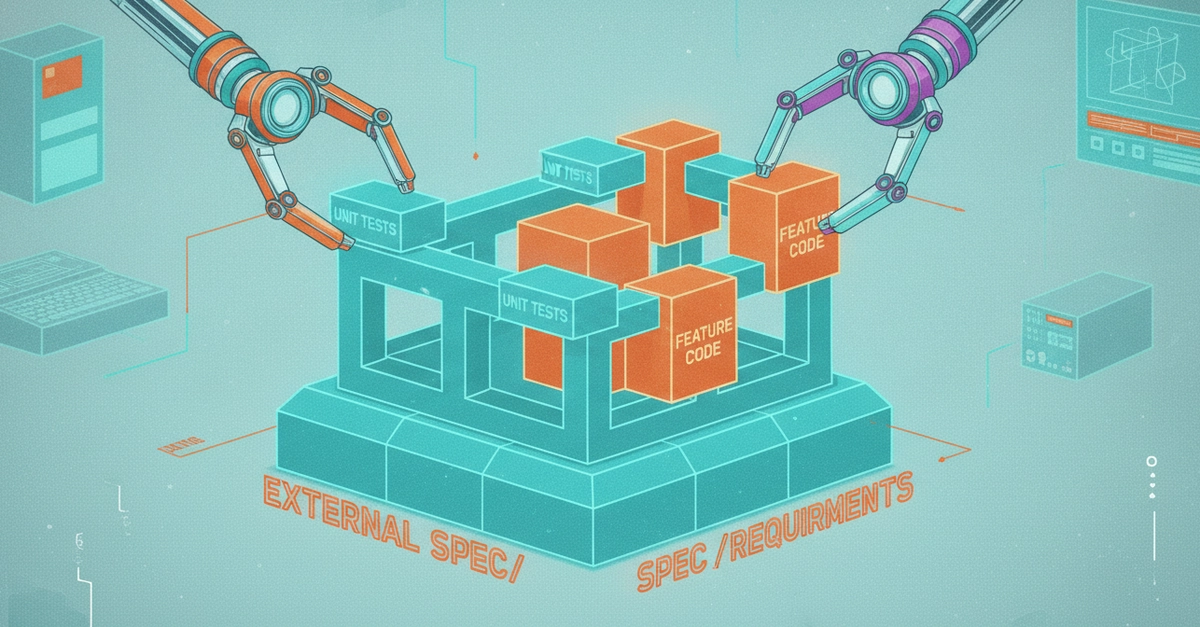
Margarita Simonova is the founder of ILoveMyQA.com.gettyAI can now write a feature, generate the tests for it and explain why those tests passed. That sounds efficient. It can also create a serious quality problem. If the same AI system creates both the code and the tests, it may repeat the same assumptions in both. The tests pass because they validate the logic the AI already used, not because they independently prove that the feature is correct.The result can look convincing. The code is clean. The test suite is green. The report says the expected behavior was verified. But who checked whether the original assumption was right? This is becoming an important question for QA teams.AI Can Be Consistently WrongTraditional testing is supposed to challenge development. A developer builds a feature based on one interpretation of the requirement. QA approaches it from another direction. Testers ask what happens when the data is incomplete, the user behaves unexpectedly or the business rule conflicts with another part of the system.That difference in perspective is valuable. When AI writes both the implementation and the tests, that independence can disappear.For example, imagine a requirement that says customers can receive a discount after spending $500. An AI coding tool may interpret that as $500 before tax. It then generates tests confirming that customers receive the discount when their subtotal reaches $500. The code and the tests agree. Everything passes. But the business may have meant $500 after tax, or $500 within a calendar year, or $500 excluding gift cards. The system is technically consistent and still wrong. A passing test does not prove that the requirement was understood correctly. It may only prove that the same misunderstanding was applied twice.Generated Tests Can Look More Complete Than They AreAI-generated tests often look impressive. They are organized. They include positive and negative scenarios. They may cover different inputs, error conditions and edge cases. They can create more test cases in minutes than a person could write in hours.But volume can hide weakness. Twenty generated scenarios may all be based on the same narrow interpretation. The tests may check whether the code behaves as written without asking whether the behavior makes sense for the customer or the business. This is especially risky when requirements are vague. AI does not fix unclear requirements. It scales them.If a user story is incomplete, the generated code may fill in the missing details. The generated tests may then validate those invented details as if they were approved decisions. The team ends up with strong-looking coverage around an assumption nobody consciously made.QA Must Provide Independent ProofThis does not mean teams should stop using AI to write code or tests. AI can save significant time. It can generate useful starting points, identify obvious scenarios and reduce repetitive work. The problem begins when generated tests are treated as independent proof.QA still needs to challenge the logic from outside the system that created it. That means asking questions such as:• What business rule is this test proving?• Who confirmed that the expected result is correct?• Does the test represent real customer behavior?• What requirement or production risk does it connect to?• What would prove the implementation wrong?The last question is particularly important. Good testing is not only about confirming that a feature works. It is about actively looking for evidence that it does not work under the conditions that matter. If AI writes a test only to confirm its own implementation, it is not truly challenging the product.Separate Creation From EvaluationLeaders should create some distance between AI-generated output and release approval. The same tool can still help with both development and testing, but the evaluation process should include independent inputs. Those inputs might include past production incidents, customer support tickets, analytics, known edge cases, regulatory requirements or test scenarios written by someone who did not create the feature.Teams can also ask a different AI system to review the assumptions, but human judgment should still remain part of the process. Using two AI tools does not automatically create independence if both receive the same incomplete requirement.A practical rule is simple: AI can generate the first draft. QA should challenge the final meaning. The QA team needs to understand what the tests assume, what they miss and whether they reflect the actual risk.What Leaders Should AskLeaders do not need to review individual test cases, but they should understand how AI-generated code is being verified.Before accepting a green result, they should ask:• Were the tests generated from the same requirement and by the same tool as the code?• Did anyone independently review the expected outcomes?• Were real customer scenarios included?• Were previous defects used to challenge the feature?• Did QA add tests specifically designed to disprove the implementation?• Can the team explain what remains uncertain?These questions are more useful than asking how many tests were generated. A large test suite can still be built around the wrong assumption. A smaller set of carefully chosen tests may provide much stronger evidence.The New Value Of QAAs AI produces more code, QA becomes more important, not less. The value of QA is no longer limited to executing tests. It is providing an independent point of view. QA connects implementation to customer expectations, business rules and real-world risk. It questions what the code assumes. It checks whether the tests are meaningful. It identifies where confidence is real and where it is only repeated agreement.When AI writes both the answer and the exam, someone still needs to check the question. That is the role QA must protect. AI can make software development faster. It can also make incorrect assumptions spread faster. The goal is not to reject generated code or generated tests. The goal is to make sure they are not validating themselves. A green test suite should mean the product was challenged. Not simply that the code and the tests agreed.Forbes Technology Council is an invitation-only community for world-class CIOs, CTOs and technology executives. Do I qualify?
When AI Writes Both The Code And The Tests, Who Checks The Assumptions?
AI can make software development faster. It can also make incorrect assumptions spread faster.
993 words~5 min read