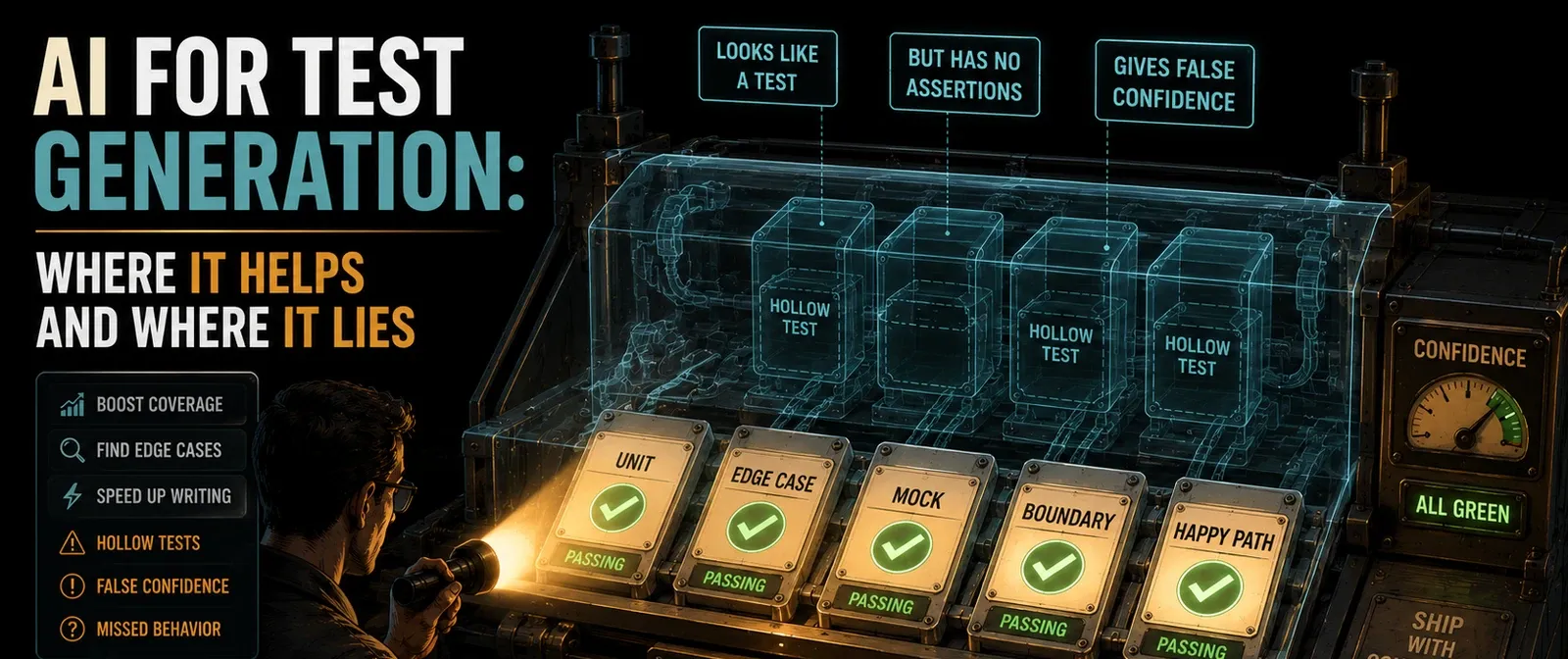
AI is great at writing tests fast, and good at writing tests that look real but verify the wrong thing. Here's the line between useful scaffolding and confident-sounding test theater, told through unit tests, edge cases, and brittle mocks.
You've been there. You finish a function, paste it into the AI, and ask for tests. Thirty seconds later you have twelve of them. They run. They pass. The coverage badge nudges up by a percent. You feel like you did something useful, and on most days, you did.
Then a bug hits prod, and you scroll back through those twelve tests and realize none of them would have caught it. Some of them couldn't have. A few were testing the implementation rather than the behavior, and the implementation changed in a way that broke the contract but left the tests passing. One of them was mocking the very thing it was supposed to verify. The coverage badge was telling the truth: about coverage. Not about correctness.
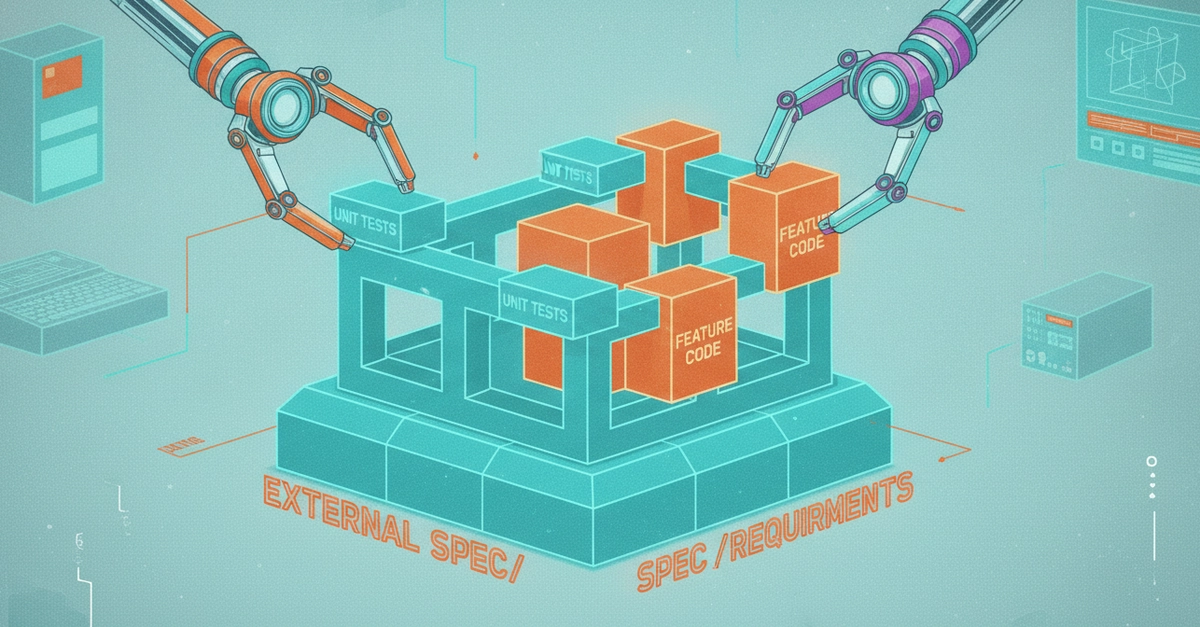
This piece is the part of the AI-for-testing story that doesn't fit in the marketing slides. AI is genuinely useful for generating tests. It's also genuinely good at producing tests that look like tests but don't actually verify what you wanted verified. The whole game is knowing which kind you just got.