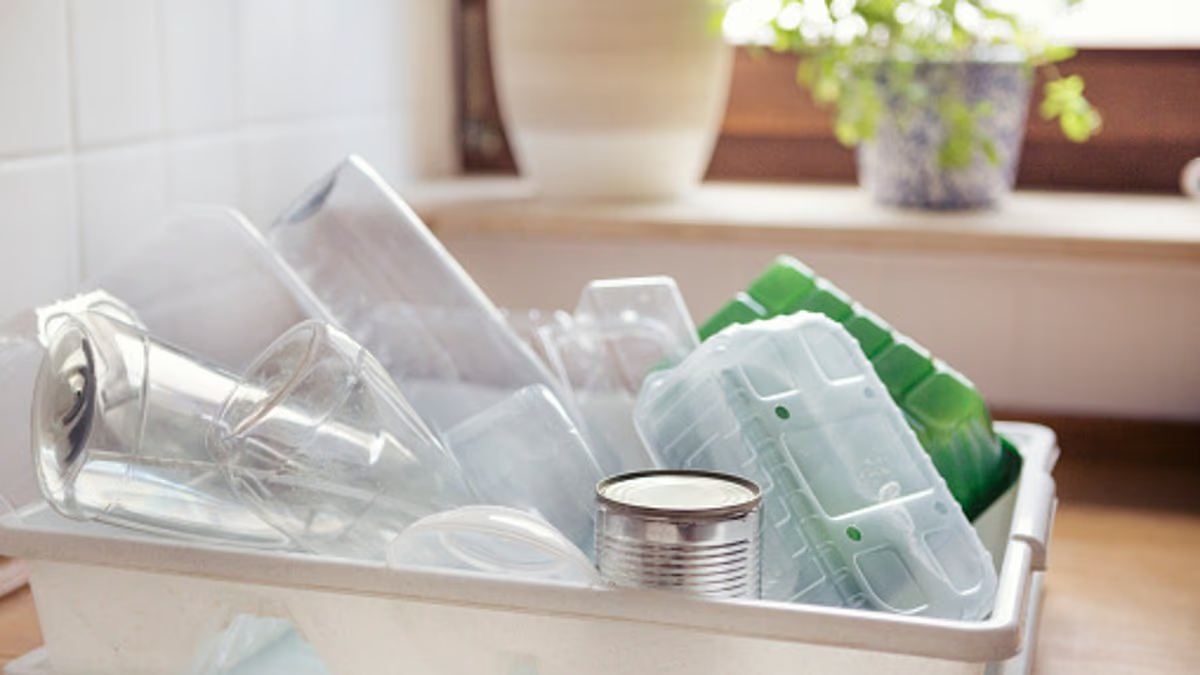
With concern about the amount of plastic entering our bodies growing, many of us are turning our attention to household items. Could everyday appliances and products actually be doing us harm? The trend for reducing plastics in the home is now mainstream, but what else should we be looking out for? Dr Sudarson Vishnu Kollimuttathuillam is a medical oncologist and haematologist who has worked and studied across two continents. He says: ‘There are some things I personally don’t keep in my home, or that I generally avoid, but that doesn’t mean every item has been proven to cause cancer. For some, the evidence is clear; for others, research is still evolving. When there’s an easy way to reduce an unnecessary exposure, I think it’s a reasonable precaution.’ Dr Kollimuttathuillam discusses the items he doesn't have in his home. 1. Plug-in air fresheners and other highly fragranced products‘I generally avoid plug-in air fresheners and try to minimise heavily fragranced household and personal care products. Some scented products release volatile organic compounds, or VOCs, into indoor air, and researchers continue to study the potential health effects of long-term exposure to some of these chemicals. Plug-in air fresheners can produce harmful chemical compounds into the air.‘The evidence linking normal use of these products directly to cancer remains limited, so I don’t think people should be alarmed if they use them. I simply prefer to reduce an exposure I don’t really need. Opening a window, improving ventilation or choosing less heavily fragranced products are easy alternatives.’2. Older or damaged plastic food containers‘I don’t continue using plastic food containers that are scratched, cloudy, warped or otherwise damaged. When reheating food, I make sure a container is specifically intended for that purpose, or choose glass or ceramic instead. When plastic containers become damaged or warped, plastic can migrate into food.‘Small amounts of chemicals can migrate from plastic packaging and containers into food, but there’s no reliable evidence that storing food in plastic containers causes cancer in people. For me, replacing an old or damaged container and using glass or ceramic when practical are simple precautions that don’t make everyday life more complicated.’3. Naphthalene mothballs ‘I don’t keep traditional mothballs containing naphthalene in my home. Naphthalene turns into a vapor at room temperature, meaning people can be exposed by breathing the air where the products are used. It has been classified as possibly carcinogenic to humans based largely on animal studies, although evidence linking it to cancer in people remains limited. Dr Kollimuttathuillam suggests using non-chemical alternatives to naphthalene mothballs.‘For me, it’s an unnecessary exposure when there are other ways to protect clothing from moths, such as keeping closets and storage areas clean, washing clothing before storing it and using non-chemical alternatives. In the UK, naphthalene mothballs are no longer permitted for household use.’4. Unnecessarily strong household cleaners and chemicals ‘Most household cleaning products are considered safe when used as directed, but stronger isn’t necessarily better. Some cleaners and solvents can release chemicals into the air or irritate the skin, eyes and respiratory system, particularly when they’re used frequently or in poorly ventilated spaces. Some cleaners can release chemicals into the air, affecting skin, eyes and the respiratory system.‘The greatest health concerns are generally associated with repeated or occupational exposure rather than typical household use. At home, I choose the simplest product that will do the job, follow the instructions carefully and make sure there’s good ventilation. I also never mix cleaning products unless the label specifically says it’s safe to do so.’5. Pesticides and insecticides I don’t need ‘I try to minimise unnecessary use of pesticides and insecticides in and around my home. Some pesticides have been studied for possible associations with cancer, although the strongest concerns generally involve people with higher or repeated exposures, including occupational exposure.‘That doesn’t mean people need to be afraid of using an appropriate pest-control product when it’s necessary. I prefer to start with non-chemical approaches when practical and use pesticides only when I need them. If I do use one, I follow the directions carefully and avoid using more than necessary.’ Dr Kollimuttathuillam prefers to use non-chemical alternatives in order to minimise risk to health.Dr Kollimuttathuillam says that while steps can be taken to minimise risk to health, it is important not to fear everyday products, which are rigorously regulated in the UK and must always include essential safety information on the label.He says: ‘Most importantly, I encourage people to keep these potential exposures in perspective. Not smoking, maintaining a healthy weight, exercising regularly, limiting alcohol, protecting your skin from excessive UV exposure and keeping up with recommended cancer screenings are far more important for reducing cancer risk than worrying about every product in your home.’
The five household products I never have in my home as a cancer expert
With concern about the amount of plastic entering our bodies growing, many of us are turning our attention to household items. Could everyday appliances and products actually be doing us harm?
786 words~4 min read