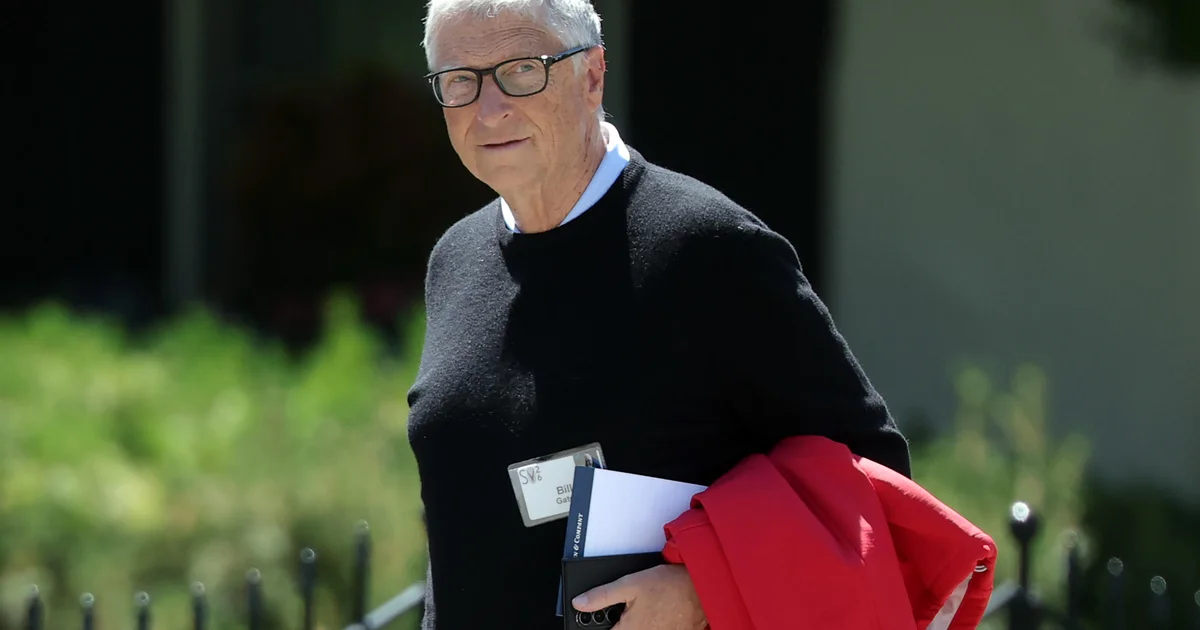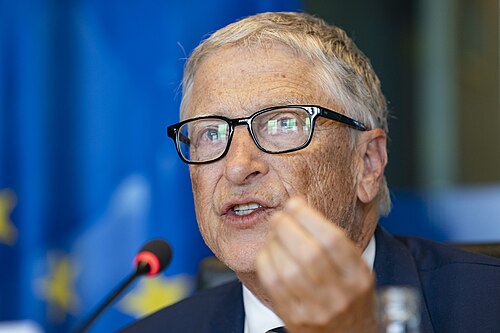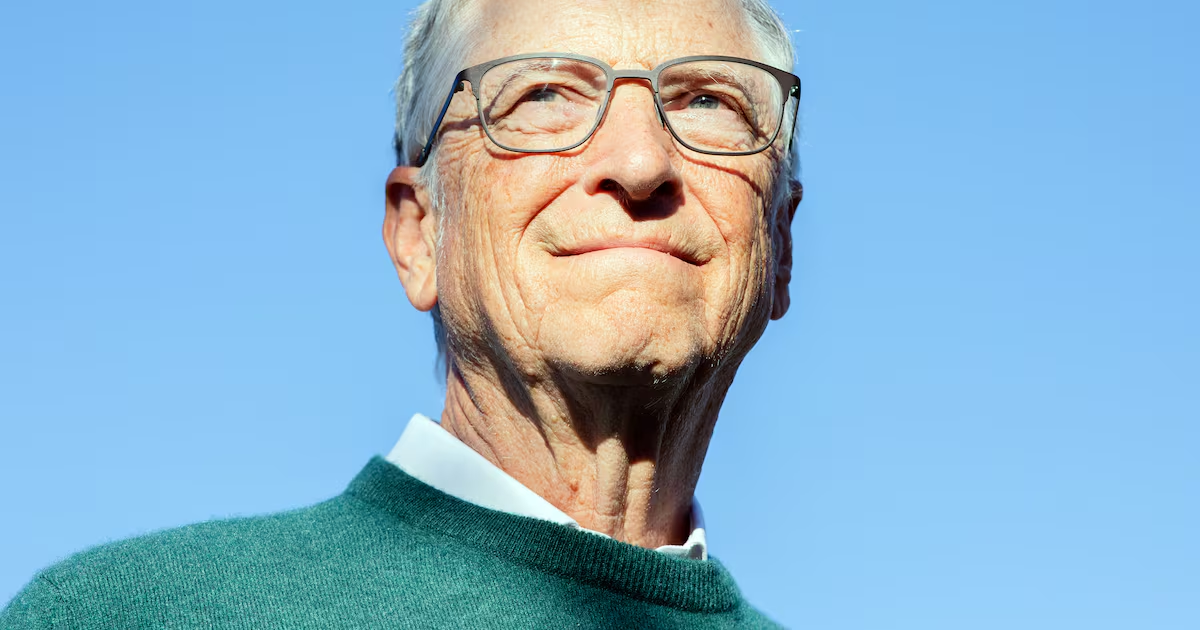
Certain jobs should be designated as “human reserved” to stop them being replaced by artificial intelligence (AI), Bill Gates has said, warning that governments are not prepared for the “turbulent times” that the technology will bring.In a 6,000-word essay, Microsoft’s co-founder on Wednesday warned world leaders are not doing enough to respond to AI, which he said would impact nearly every area of policy and require a bigger government response than the institutional changes focused on national security after the terror attacks of September 11th, 2001.Gates warned “many jobs will disappear forever” but policymakers could “set aside certain things for only people to do”, partly as a measure to protect groups of workers “who can’t easily change jobs”.“I like the phrase human reserved because it makes me think of nature reserves – places where we could put buildings and roads but we choose not to because the loss would be too great,” he wrote.“In health, for example, imagine a robot giving you the awful news that you have an incurable disease. There’s no technical reason why it couldn’t. Yet it shouldn’t.”Wednesday’s essay marks one of Gates’s first major public forays since being embroiled in the Jeffrey Epstein scandal, which also brought the Gates Foundation’s association with the convicted late child sex offender under scrutiny.[ Ireland creating AI jobs at up to three times pace of neighbouring countriesOpens in new window ]He has remained chair of his $89 billion (€76.3 billion)) charitable foundation and has not been accused of involvement in Epstein’s crimes. Gates previously said he regretted “every minute” he spent with Epstein, in what he said was the misguided belief the financier could arrange charitable donations from rich people.Gates’s intervention on AI comes amid growing concern over its impact on economies and society. OpenAI and Anthropic, two leading AI developers, have also warned that governments will need new policies to govern the technology’s risks and to address economic disruption.How many new homes does Ireland really need? Listen | 42:23The billionaire’s essay called for global co-ordination, including with China, noting that difficult issues will arise over who decides which jobs to reserve for humans and how to respond if certain countries permit more automation.He outlined sweeping concerns around the labour force and AI empowering bad actors in areas such as cyber security as well as young people’s development.Gates wrote about his own youth. “When I was growing up in Seattle, I didn’t have that many friends aside from a few other boys who were like me,” he said, reflecting on the “hard work . . . to develop my social skills”.“I doubt I would have put in the same work if I had had an AI companion back then,” he said, noting the potential for highly agreeable chatbots to become addictive.He expressed worries about AI’s impact on education, citing early indications that it can affect critical thinking.Gates also joined AI companies including Anthropic and OpenAI to call for radical changes to taxation, including a levy on robots and on “tokens”, the units of data processed by AI systems.“Right now, if you’re an employer and you hire someone, you pay payroll taxes on their earnings. But if you buy a robot, you can usually write it off right away as a business expense. The tax system nudges you toward replacing people with machines,” he said.“AI will either be the greatest equaliser ever invented or the worst source of injustice. The challenge is monumental,” Gates wrote. “Unfortunately, right now we are not preparing for it. I don’t see evidence that leaders, experts and communities are confronting the challenges adequately.” – Copyright The Financial Times Limited 2026
‘Many jobs will disappear forever’: Bill Gates urges leaders to protect workers from AI
Tech billionaire publishes 6,000-word essay calling for certain jobs to be ‘human reserved’ amid profoundly turbulent times
604 words~3 min read