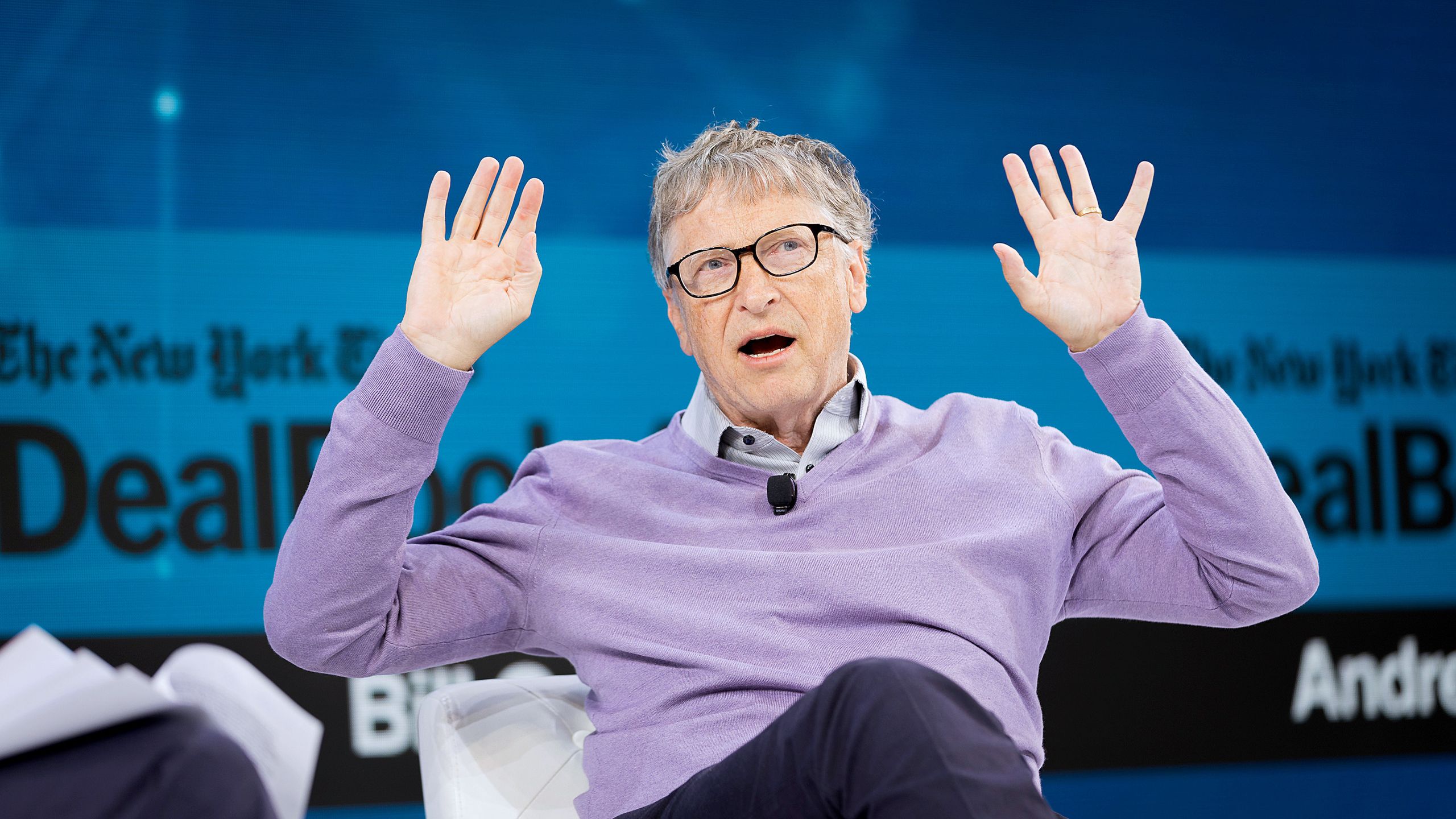
Bill Gates says that some jobs should be human-reserved, as part of our duty to protect society from the devastating side effects of AINurPhoto via Getty ImagesWe’ve seen AI's devastating impact on the job market, with many professionals left long-term unemployed and specific groups disproportionately affected as they struggle to navigate an increasingly competitive, tighter job market.But where should the line be drawn? At what point do we say enough is enough?This is where Bill Gates believes some roles should be provided long-term protections from AI job displacement. In his latest 6,000-word essay, he proposed drawing a line around certain jobs and calling them “human-reserved.”Gates’ proposal follows a similar idea: nature reserves.“I like the phrase Human Reserved because it makes me think of nature reserves—places where we could put buildings and roads, but we choose not to because the loss would be too great,” he explained.“We might set something aside as Human Reserved for economic reasons. For example, we may do it because allowing machines to take over a certain role will displace a large number of people who can’t easily change jobs. You can’t tell a 55-year-old who has worked in construction their whole career that they need to go work at an elder care facility and expect them to find it fulfilling.”How Has AI Job Loss Impacted Workers And The Economy?One important consideration for policy leaders, governments, and AI-native companies and organizations rolling out and implementing artificial intelligence is that if we allow AI to consume certain categories of work completely, we lose our pipeline for the future.Entry-Level ProfessionalsA specific example is entry-level jobs and early-career opportunities. AI can automate much graduate and entry-level work because it's more task-driven than strategy- and judgment-driven. That makes entry-level jobs an easy target for automation, job replacement, and reduced graduate hiring.This is a very real issue that I discussed recently on my podcast with SAP Americas’ head of people and culture, Megan Smith, where we talked through how employers can responsibly preserve and redesign entry-level roles to ensure early-career professionals are shielded from the long-term impact on their job futures.Beyond this, if we remove the entry-level layer of work, we trivialize the contribution entry-level jobs make to the economy, reducing them to mere task execution. More than task execution, these roles provide a vital foundation through which young professionals gain a foothold in an organization, build confidence, learn how an industry works, and gain the skills and experience to move up the ladder into more strategic roles.Smith told me in our interview (not yet released) that SAP is responding to AI disruption in entry-level work by creating a “Next-Gen” program that engages about 10,000 early-career employees globally.In the program, participants work closely on real-world business cases, rotations, and cross-functional experiences, allowing them to build skills like relationship-building, problem-solving, business depth, and AI skills. This strategic approach preserves their future pipeline and is a critical contribution to society.Federal TaxesSomething else I’ve observed in my research is that 84% of U.S. federal revenue in 2024 came from individual and payroll taxes, which are derived from labor income, according to analysis published in a new RAND report. This means that if AI significantly displaces human labor, the lost tax revenue may not be easily replaced by corporate revenue, and the U.S. could suffer a severe deficit, with ripple effects across multiple economies and society as a whole.Long-Term Unemployed ProfessionalsAnd let’s not forget that the share of long-term unemployed professionals remains a serious concern. According to the U.S. Bureau of Labor Statistics data from the most recent jobs report for July, long-term unemployed workers (those unemployed for 27 weeks or more) stood at 1.8 million, accounting for 25.5% of all unemployed people.Despite certain industries booming with AI jobs and indirectly AI-related occupations, there might still be a disproportionate impact on some workers who are less easily able to rebound and recover from a layoff or fewer roles being added to their industry (for example, workers in their 40s and 50s, women, ethnic groups who experience discrimination in hiring, etc.) These long-term unemployed professionals are then further excluded from the labor market the longer they remain without a job, because they lose touch with the rapidly changing nature of work and the in-demand skills needed.Which Jobs Does Bill Gates Want Shielded From AI?Gates acknowledged he still doesn’t have a complete answer on what “Human Reserved” will look like across economies and industries, and the logistics of how such a policy is rolled out, adopted, and fairly maintained remain up for discussion.That being said, he did offer some suggestions in his essay of roles that should be preserved from AI job replacement, while still allowing for workers in these professions to use AI to augment their work:Caregiving jobsEducation jobsMental health jobsConstruction jobs, as older workers in particular may be left vulnerable and unable to transition to a new industry easilyRoles that require empathy and judgment, and close relationship-building proximity will be the ones most shielded from AIgettyGates’ point about education roles being human-led, with humans using AI to extend what they can do and never to replace, is shared by another scholar and pioneer in artificial intelligence: Dr. Ben Goertzel, the godfather of AGI, who told me in an interview earlier this year that he believes even when AGI (AI that is as smart as humans and can act independently of them) is fully rolled out around the world, some roles will remain vital and cannot be replaced. As an example, he pointed to teachers, especially for young children.After all, as Gates noted in his essay, just because an AI can, does it mean it should?
Bill Gates Says Some Jobs Should Be Off-Limits To AI—Who’s Impacted?
Bill Gates believes some jobs should be deliberately protected from AI replacement. Discover which jobs could be protected and who's being impacted right now.
939 words~4 min read