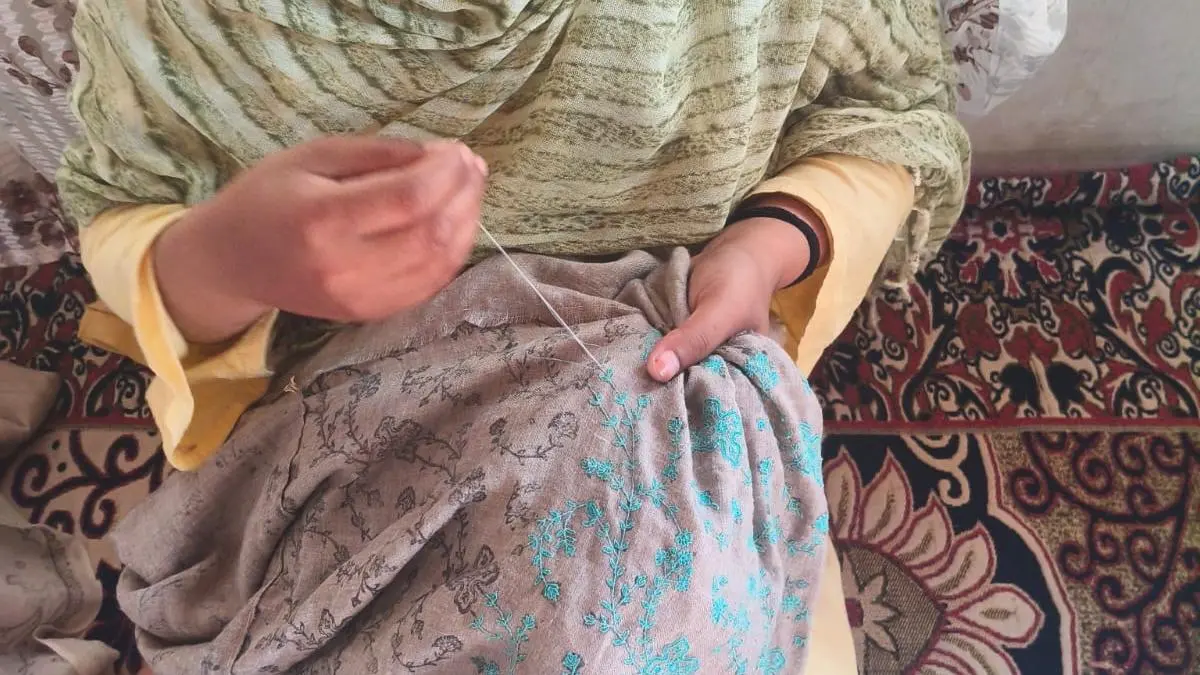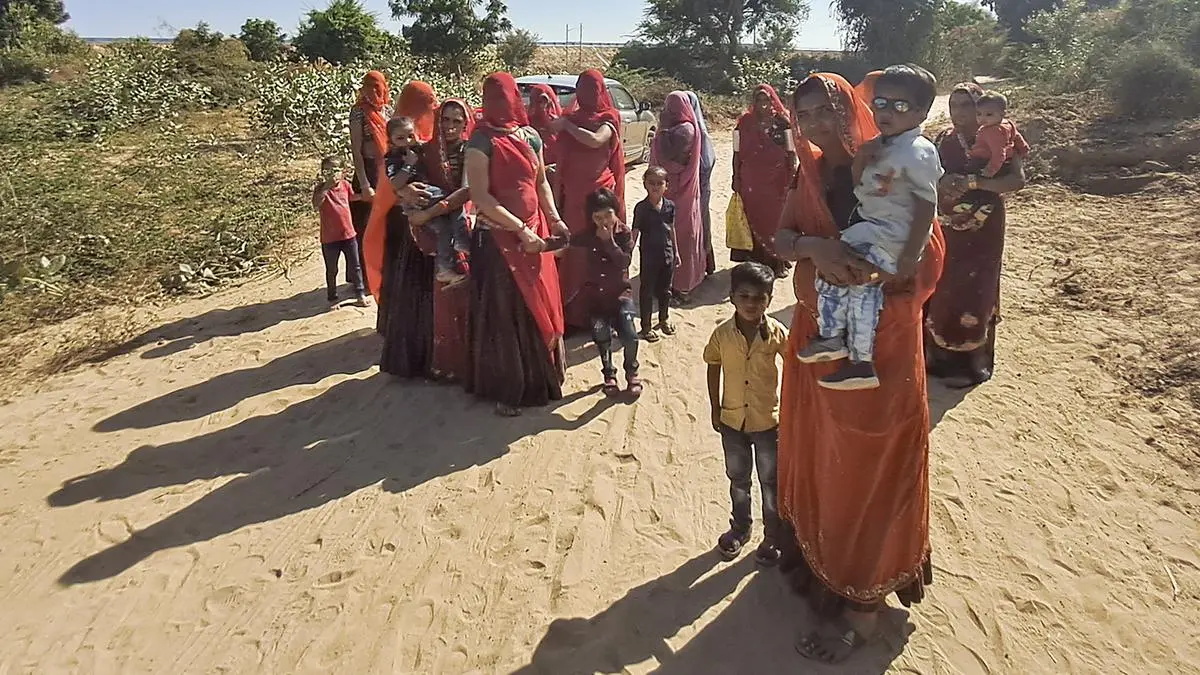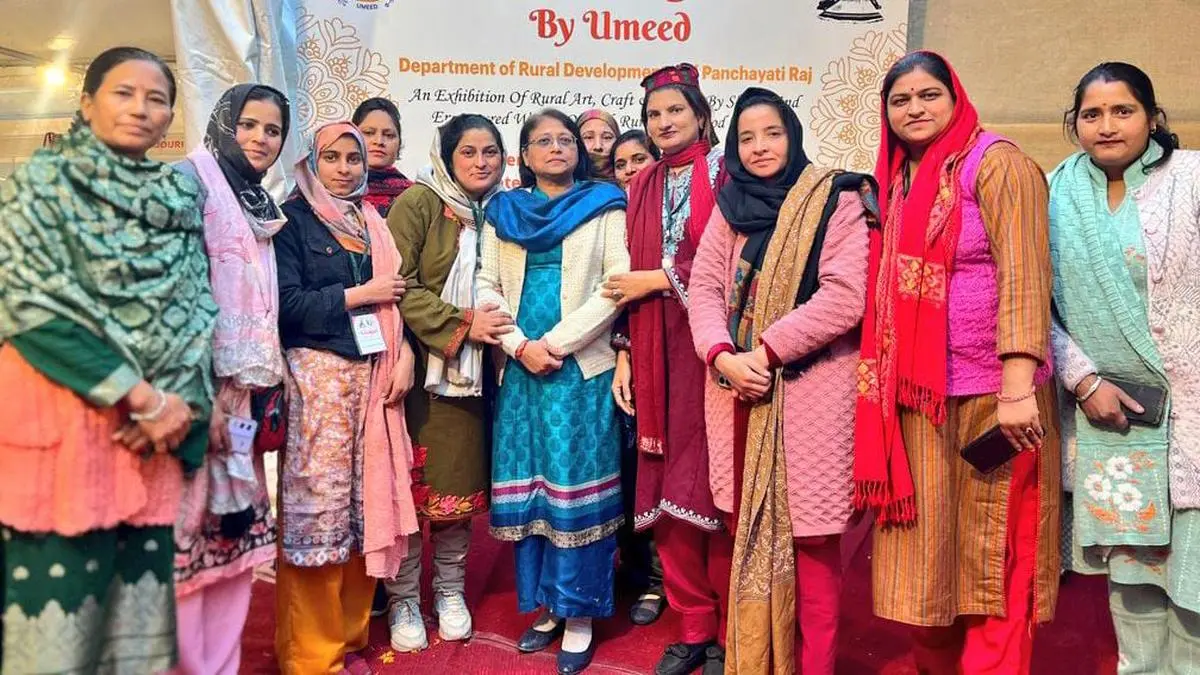
Her modest home, tucked away in a village in Budhal, a remote mountainous block of Rajouri, is surrounded by forested hills, scattered hamlets and winding roads. It is here that Parviaz Akhtar has built a livelihood through sheep rearing and animal husbandry, eventually crossing the income threshold to become a Lakhpati Didi.Around seven years ago, Akhtar formed a Self-Help Group under the Jammu and Kashmir Rural Livelihoods Mission (JKRLM) and started a small sheep-rearing and animal husbandry enterprise. With guidance, training and support from the mission, the activity gradually expanded.She now earns around ₹18,000-20,000 a month, taking her annual household income beyond ₹1 lakh.Akhtar is among around 2.40 lakh women in Jammu & Kashmir who have achieved “Lakhpati Didi” status under the Jammu and Kashmir Rural Livelihoods Mission. A Lakhpati Didi is a member of a Self-Help Group whose annual household income exceeds ₹1 lakh.The scale of the initiative is significant. According to official data, J&K has identified around 2.6 lakh potential beneficiaries, of whom about 2.40 lakh have already crossed the ₹1 lakh annual income threshold.Much of the income growth is coming from activities already embedded in the rural economy. Crop-based livelihoods and animal husbandry account for around 2.22 lakh beneficiaries, making them the largest livelihood category among Lakhpati Didis. These are followed by non-farm activities, including trading, services and manufacturing, with around 77,924 beneficiaries.Akhtar’s experience reflects that trend. Rather than moving away from traditional rural livelihoods, she has been able to make livestock rearing a more dependable source of income with institutional support.A similar transition is visible in Chenab Valley’s Kishtwar town, where Nafiya Begum turned dairy farming into a larger enterprise after forming a Self-Help Group in 2024.Begum started with 10 cows but expanded the business in less than two years to include a milk-processing unit. She now sells around 700 litres of milk a day and employs seven to nine people.“I earn between ₹9 lakh and ₹10 lakh annually,” Begum said.Today, Begum’s enterprise offers livelihood to 7 to 9 people in her area.Similarly, in north Kashmir’s Kupwara, the programme has also enabled women to build businesses around traditional crafts. Nayeema, from Darngmull, a village in the frontier district that was once frequently affected by cross-LoC firing, earns around ₹8-9 lakh annually through Kashmiri embroidery, known as tilla work.Nayeema learnt to create floral motifs on fabric and gradually turned the skill into a livelihood enterprise. She now runs a unit that provides work to more than 10 women.“The initiative has proved helpful for my family. More than 10 women are working in my unit,” she said.Her experience highlights how the programme is supporting livelihoods beyond farming and livestock, while also helping revive and commercialise traditional skills in remote areas.Her enterprise shows how SHG-linked livelihood programmes can move beyond supplementary household earnings and develop into larger rural businesses that also create employment.The district-wise numbers point to the breadth of the programme. Kupwara has the highest number of Lakhpati Didis in J&K, at around 22,000, followed by Jammu with about 20,000.The figures indicate that the initiative is reaching women across both remote mountainous areas and larger districts, with agriculture, livestock and small businesses forming the backbone of many of these livelihoods.Published on August 26, 2026
From subsistence to enterprise: J&K’s Lakhpati Didis change rural lives
Discover how J&K's Lakhpati Didis empower women, transforming rural livelihoods through self-help groups and sustainable enterprises.
536 words~2 min read