August 26th, 2026
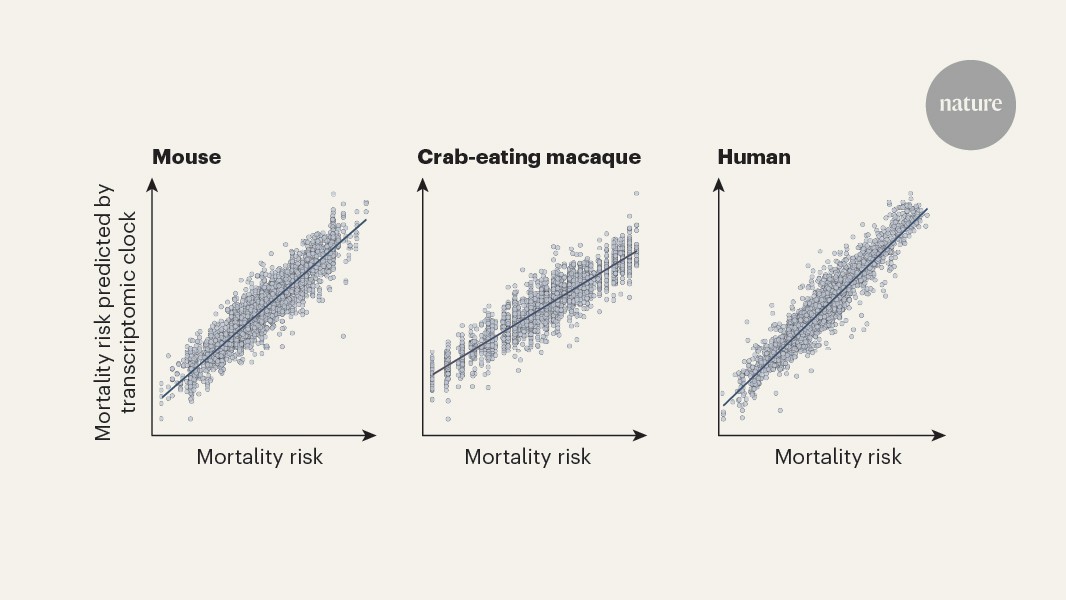
This popular science article discusses recent research that categorizes age-related changes a few thousand different cell populations in the body, distinguished by transcriptional behavior. This big picture view of aging shows a wide variety of responses to aging between cell types that occur in a staged progression throughout life, which the researchers characterize as a grand remodeling of the society of cells. The principle scientist in question favors a programmed aging viewpoint, but as is always the case, whether one thinks aging is a program like development that is under evolutionary selection or instead an accumulation of damage that occurs because health and fitness in later life is not under strong evolutionary pressure, the actual observations can be made to fit any theory of aging.
In one set of studies, we extracted more than 20 million cells from various organs from mice of different ages: 3, 6, 12, 16, and 23 months - roughly equivalent to 20, 30, 50, 60, and 75 years in humans. We analyzed the expression of 20,000 genes per cell and used this information to define the cell types. Then we tracked their population dynamics. We found that not every cell type gets changed in aging. We identified 536 main cell types and 1,828 subtypes. Only about one-quarter of these subtypes show a strong shift in aging. Others remain stable across the lifespan. It is surprising to find that changes in aging are not universal across all the cells, that there are specific cell populations that are more vulnerable.