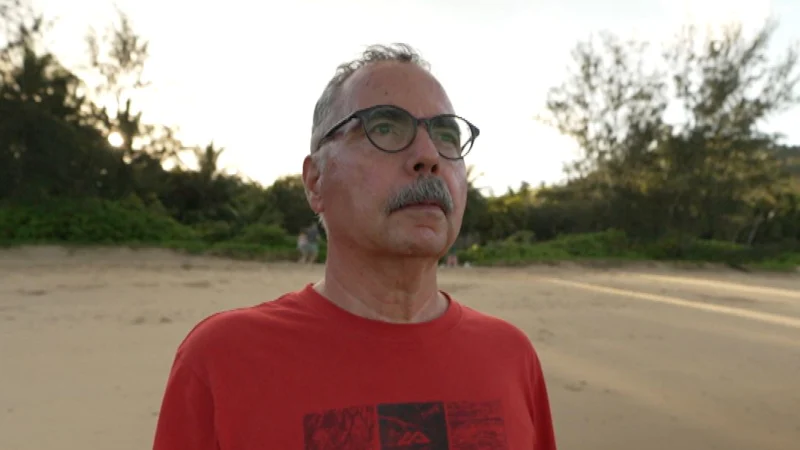
Davina SmithAugust 26, 2026 — 8:14pmWatching the video call between Michael and Melanie, it’s hard to believe one person isn’t real. The conversation flows back and forth, full of emotion and feelings.Michael, a retired psychologist in his 70s living in far north Queensland, believed he was speaking with Melanie, a softly spoken nurse in South Africa.The pair met over a dating app and courted the old-fashioned way – through words and correspondence, sharing their deepest thoughts, passions and fears.The deepfake image of a woman used to scam retired psychologist Michael out of $180,000.A Current Affair“She said she was only about 50 years of age, and getting somebody interested [in me], it was obviously flattering,” Michael told A Current Affair.“My head said, this can’t be true, but my heart said I don’t want to abandon her.”It was a whirlwind 12-month long-distance romance, until Michael exposed Melanie as a deepfake: an online persona created through identity theft and artificial intelligence.Michael suspected he was being scammed early in the relationship, but his doubts were put to rest when “Melanie” shared her identity documents.A Current AffairScammers stole images from the social media profile of an American doctor, who had no knowledge of the scheme, combining them with YouTube videos she had created.Together with voice-cloning technology and the latest face-swapping applications, the fraudsters created a digital mask that they put on every time Michael dialled in to make a video call.Dr Priyanka Singh, a specialist in digital forensics at the University of Queensland, analysed the final 10-minute break-up video call between the pair.She pointed out slight distortions in the woman’s earrings, and stray hairs as subtle clues that Melanie was not real, as the face-swapping software struggled to keep up with the actual fraudster’s movements. The scammers blamed these visual discrepancies on a poor internet connection.The gotcha moment was when Melanie brushed her face with her hand, which had an extra finger.A Current AffairSingh identified other major red flags, with Melanie’s chair changing shape and position during the call. At one point, it even disappears.For Singh, the gotcha moment was when Melanie brushed her face with her hand. For a fleeting moment, it appeared she had six fingers.Michael suspected he was being scammed early in the relationship, but his doubts were put to rest when Melanie shared her passport, South African identity card, and nurse registration certificate.He also received an influx of photos, some stolen from the American doctor’s website, and others photoshopped. And when Melanie needed financial help, Michael obliged.“I didn’t question that, and I was just really, probably, falling in love very quickly,” he said. “Being an empath, it’s very hard to look away.”Michael admitted he sent $180,000 to the scammers, despite warnings from his bank and its repeated attempts to block the transactions.“I was aware that I would take a big risk, but I thought, ‘meet the love of my life and my soulmate’,” he said while shedding tears. “It feels like I’ve been so stupid.”Singh said rather than scrutinising increasingly sophisticated technology, the best test when meeting someone online was to seek the opinion of loved ones.In Michael’s case, his family, including his daughter, voiced concerns about Melanie very early in the relationship.“He’s lost a lot of dignity, self-respect and self-confidence,” she told A Current Affair.“Even if he wants to get out there again and find a partner, he’s now wary of this online dating world.”Ultimately for Michael, revenge came when he confronted the scammers while recording a video call with Melanie. She had set up the meeting hoping to get a further $7000 out of the retiree.The 10-minute call is at times agonising to watch, as the fraudster tries to put doubt in Michael’s head, questioning his commitment to the relationship, his love for her, and even questioning if he is a fraud.Singh said it was a masterclass in how these romance scams play on emotions.When Michael accused Melanie of being a scammer and demanded she admit the fraud, the scammer hung up.Michael reported the case to New South Wales police, who conducted an investigation but concluded the scam was based overseas and it was unlikely he would recover the lost money.As for his future finding love? “I stopped all my internet accounts ... the best way is to meet somebody in person, isn’t it?” he said.Start the day with a summary of the day’s most important and interesting stories, analysis and insights. Sign up for our Morning Edition newsletter.From our partners
Retired psychologist loses $180k to deepfake romance scam
With voice-cloning technology and the latest face-swapping applications, the fraudsters created a digital mask that they put on every time their victim called.
742 words~3 min read