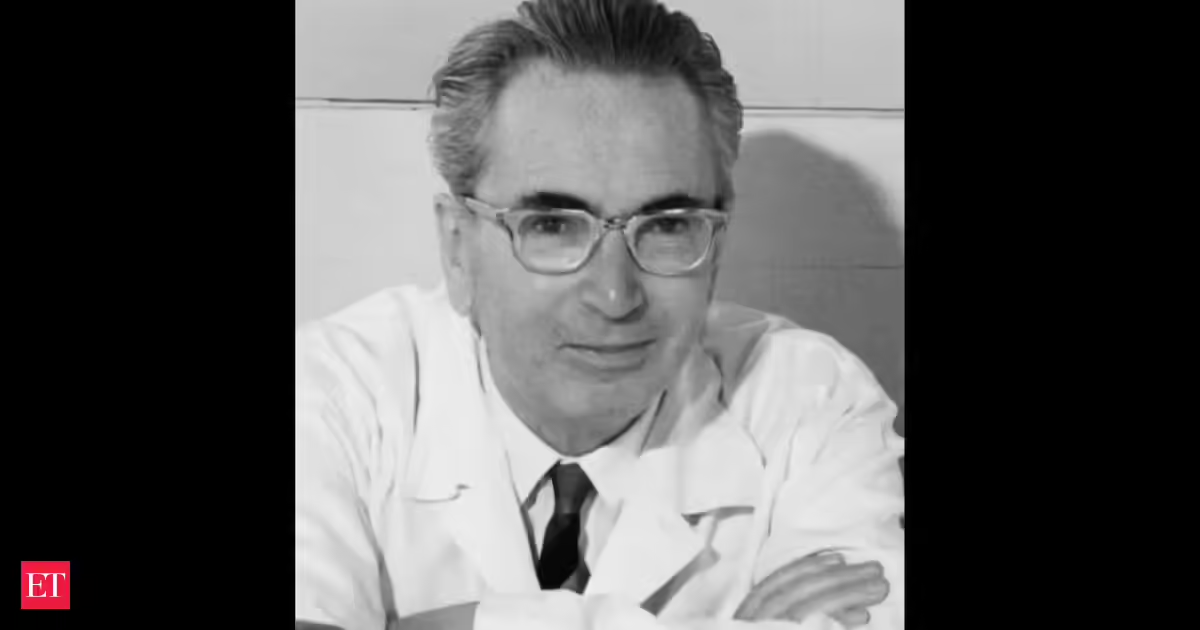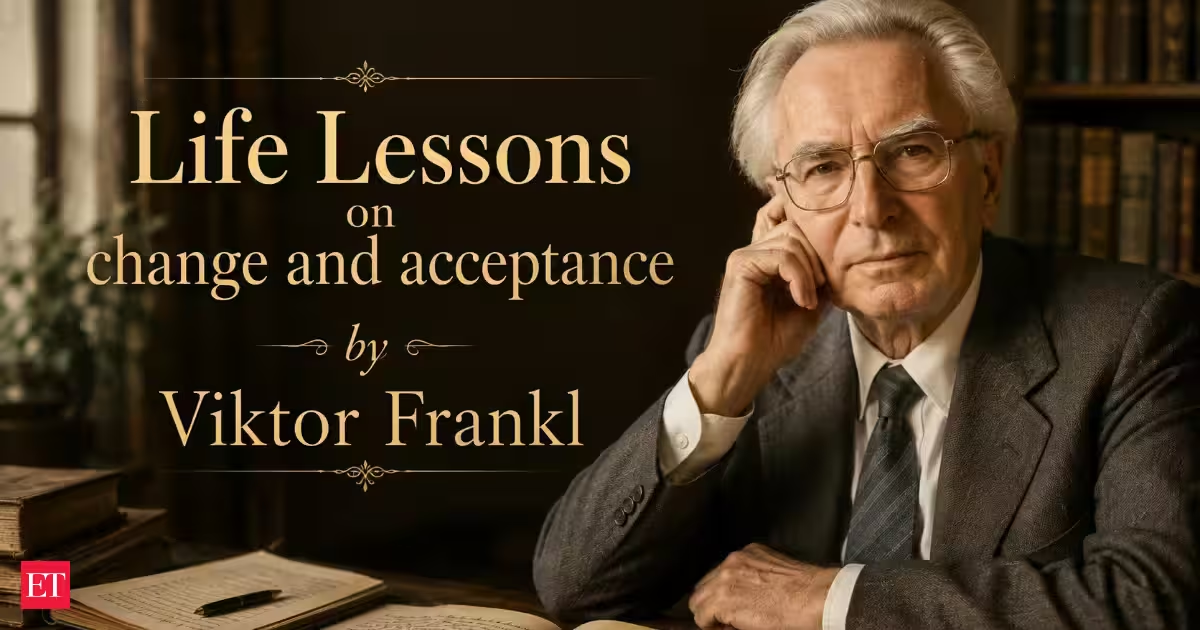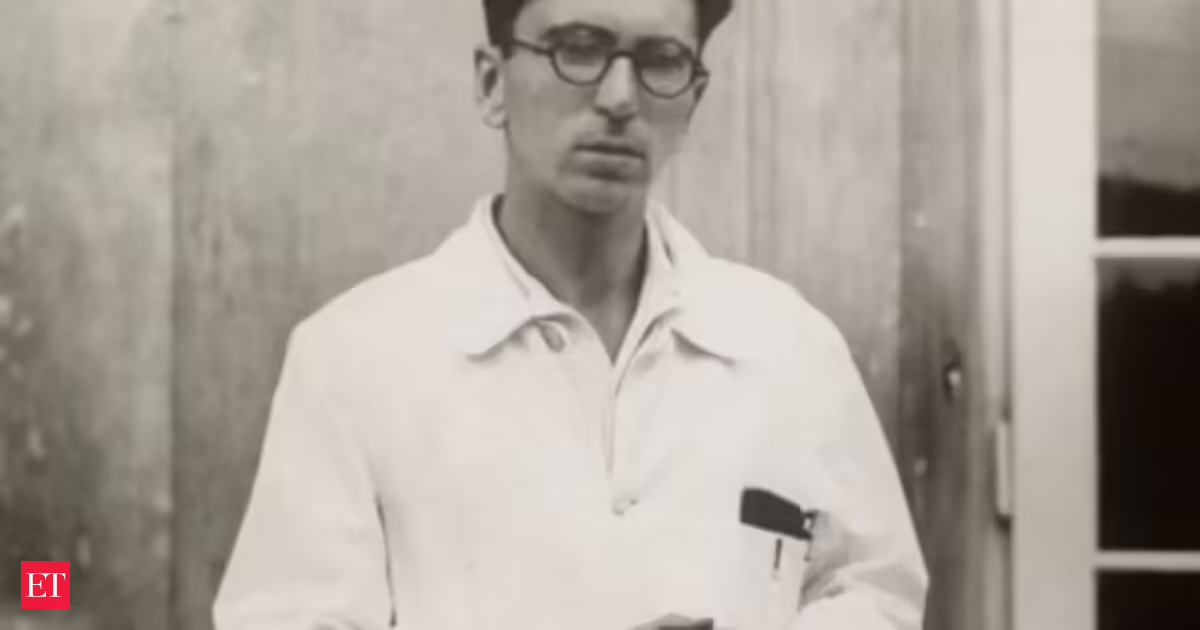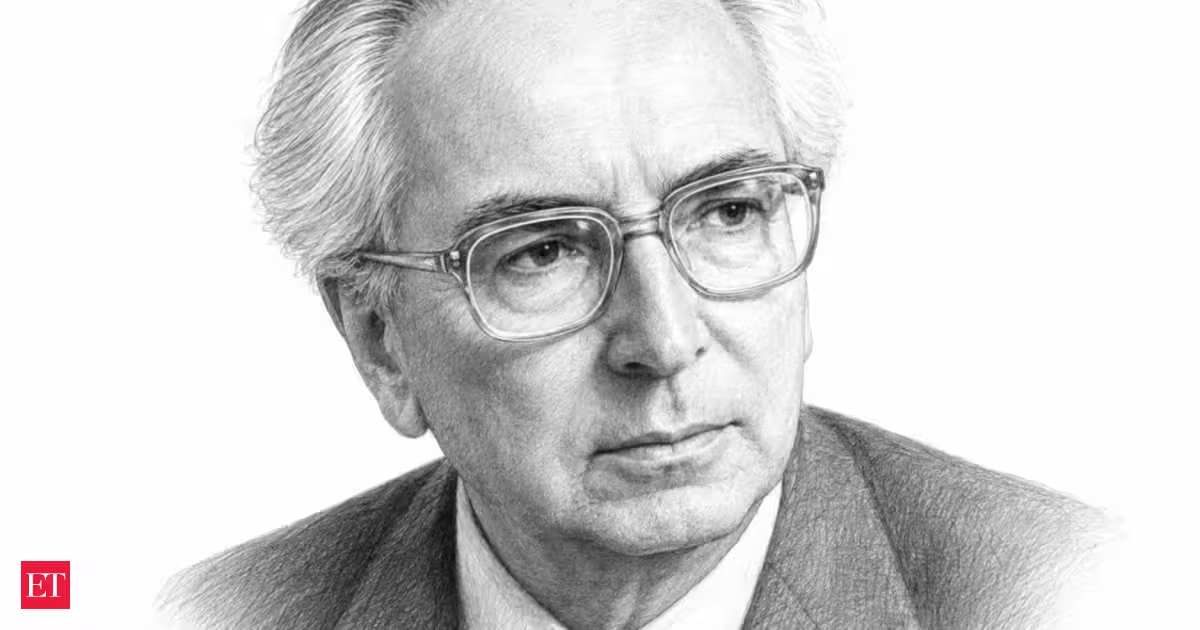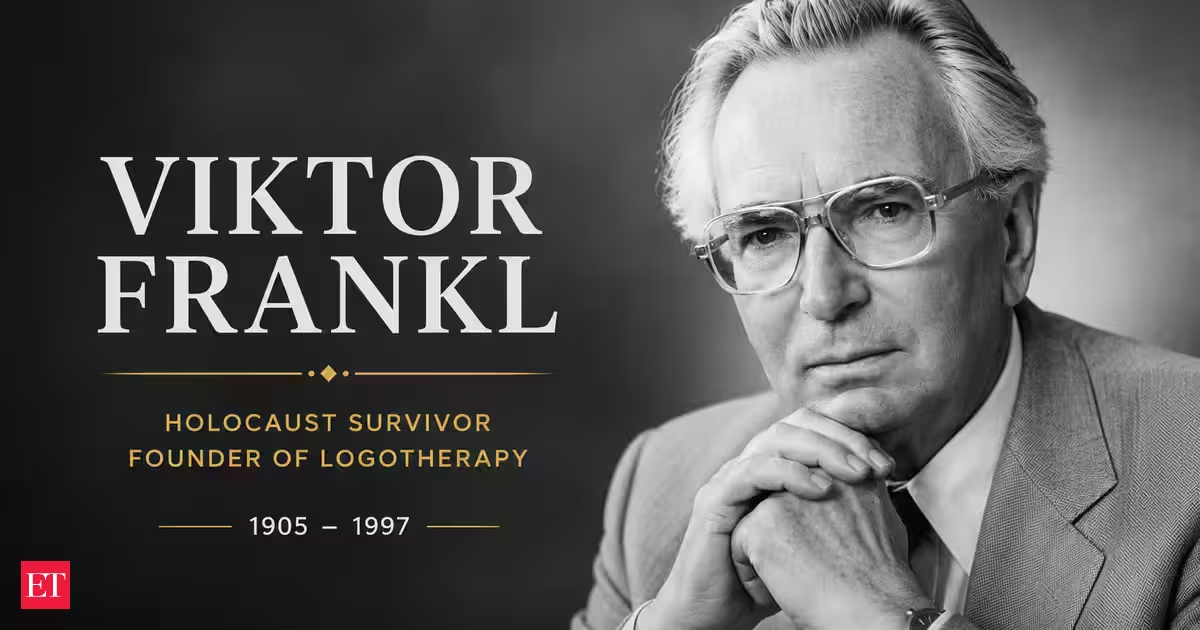
Losing people is hard; it pangs a part of yourself that may take a lifetime to recover. There are moments like these when life leaves you with no choice but to face pain and suffering like that, a tangled situation you never wanted. A relationship ends after years of love and trust, and suddenly, the person who was part of your everyday life is no longer there. You wake up with the same memories, carry the same questions and wonder how you are supposed to move forward when a part of your life has disappeared.When you are suffering after a painful loss, it is easy or probably humane to ask, “Why did this happen to me?” and somewhat see yourself as a victim in a cruel world. You may replay what went wrong, think about what you could have changed and struggle to see any meaning in what you are going through. The pain does not feel like a lesson. It simply feels like pain, more than enough to crush your existence.There is a strong ‘but’ attached to it that not everyone may see right away. What if the goal is not to find a reason for the loss, but to find a meaning for the life you still have to live? That question sits at the heart of the work of psychiatrist and Holocaust survivor Viktor Frankl, who spent much of his life examining how people can find purpose even when they cannot escape suffering.Quote of the Day by Viktor Frankl: “If there is meaning in life at all, then there must be a meaning in suffering. Suffering is an ineradicable part of life, even as fate and death. Without suffering and death human life cannot be complete.”Also Read: Quote of the Day by Dale Carnegie: ‘Do the thing you fear to do and keep on doing it... that is the quickest and surest way ever yet discovered to conquer fear’Why Viktor Frankl’s quote on suffering and meaning matters todayModern life often creates the expectation that happiness means eliminating discomfort. People try to avoid failure, grief, disappointment and uncertainty whenever possible. But suffering is not always something we can control. Some losses cannot be reversed, and some difficult chapters cannot be skipped.Frankl's idea offers a different way of looking at such experiences. It does not suggest that suffering is good or that people should seek it. Instead, it asks whether even unavoidable pain can become part of a person's search for meaning.That distinction matters. A difficult experience may take something from us, but it does not necessarily have to define everything that comes afterward.What Viktor Frankl’s quote means in real lifeFrankl's words are ultimately about the relationship between suffering and meaning. Life inevitably contains experiences that are painful, unfair or beyond our control. We cannot always decide what happens to us, but we can sometimes decide how we respond to it and what we choose to do afterward.That could mean finding a reason to keep going after a loss, caring for someone despite personal hardship, rebuilding after failure or using a painful experience to develop greater compassion for others. Meaning does not erase suffering. It can give someone a reason to endure it.Life lesson on relationships and heartbreak from Viktor Frankl’s quoteA heartbreak can make suffering feel completely meaningless, especially when you gave someone your love, trusted them and still ended up losing the relationship. Frankl’s words offer a difficult but powerful lesson: you may not be able to change the loss, but you can choose what you do with the pain it leaves behind. The relationship may have ended, but your life has not. The suffering can become a period of better understanding yourself, recognizing what you truly need, setting stronger boundaries or learning what kind of love you want in the future. Finding meaning does not mean pretending the heartbreak was good or that you should be grateful for it. It means refusing to let the loss become the end of your story. Who was Viktor Frankl?Viktor Frankl was born in Vienna, Austria, on March 26, 1905. He became a psychiatrist and psychotherapist and developed logotherapy, a psychological approach based on the idea that the search for meaning is a central human motivation. His work became known as the “third school” of Viennese psychotherapy, following the approaches associated with Sigmund Freud and Alfred Adler.Frankl developed an early interest in psychology and philosophy. As a young man, he corresponded with Freud and later studied Adler's theories at the University of Vienna Medical School. He became particularly interested in depression and suicide and established youth counseling centers in Vienna that worked to reduce teenage suicide. After earning his medical degree in 1930, he worked in psychiatric hospitals and later headed a female suicide prevention program.His life changed dramatically under Nazi persecution. Because he was Jewish, his medical practice was eventually closed after Nazi Germany annexed Austria in 1938. In 1942, Frankl and his family were deported to the Theresienstadt concentration camp. His father died there. Frankl was later transported to Auschwitz, where his mother was murdered. His wife also died in the Bergen-Belsen concentration camp.During his imprisonment, Frankl observed how people responded differently to extreme suffering. He believed that those who retained a sense of purpose could find an important psychological resource for survival. He also tried to reconstruct the manuscript of a book he had been writing before his imprisonment.Viktor Frankl's legacyAfter liberation, Frankl returned to Vienna and continued his medical and academic career. In 1946, he published the book that would become his best-known work, Man's Search for Meaning. Based partly on his experiences in the concentration camps, the book explored suffering, survival and the human search for purpose. It went on to sell millions of copies and was translated into numerous languages.Frankl continued teaching at the University of Vienna and at universities in the United States. He wrote extensively about meaning, responsibility and human resilience and remained active in his field for decades. The Viktor Frankl Institute in Vienna was established in 1992 to continue his work.Frankl died in Vienna on September 2, 1997, but his observation and its explanation remain relevant: When we cannot change what has happened to us, can we still choose what that experience means for the life we build afterward?
A Holocaust survivor’s rebellion against suffering: Viktor Frankl’s quote for carrying grief without being carried by it
Quote of the Day: The life of Viktor Frankl exemplifies how one can uncover meaning amid profound suffering. His teachings postulate that, despite unavoidable pain, we can discover a sense of purpose. This approach illuminates pathways through life's devastating losses. Although heartbreak can feel void of significance, Frankls message empowers individuals to define their relationship with suffering, illustrating that meaning enriches rather than diminishes our experiences.
1,049 words~5 min read