Satya Krishnaswamy, Chief Customer Officer at Typeface, a marketing orchestration engine for the world's leading brands.gettyWhen I talk to CMOs about what they want to achieve with AI, saving money inevitably comes up. They want to save time by automating tasks, and they want to save marketing dollars by optimizing spend. But I've found that when teams focus too much on cutting costs, they only see marginal cost savings. Those who think bigger, who ask, "What can we do with AI that we could never do before?" are the ones seeing major growth.The difference is a possibility mindset. These CMOs see AI as something that can unlock creative and operational ambition, not just help them do more with less.The Workforce Reduction MythCMOs often consider AI pilots successful if they produce faster outputs with fewer people. But efficiency metrics can discourage healthy transformation by pushing teams toward incremental improvements instead of true transformation.Many companies spending significantly on AI are actually increasing headcount, per a Ramp study. Research findings coauthored by MIT Sloan associate professor Lawrence Schmidt also found that AI use can contribute to growth in certain roles because workers focus on higher-value tasks.In my experience, losses in roles that are easily automated are replaced by additions in higher-value positions as companies rely on AI to become more productive. Schmidt’s research found that increased AI use was linked to both employment and sales growth.Why CMOs Should Consider The PossibleThese realities illustrate why marketing leaders should think about the art of the possible instead of about how to do the same work for less. What becomes possible when humans are freed from the time-consuming tasks that AI can perform? In practice, that means systematically asking what new customer experiences, campaigns, personalization, formats and collaborations become possible with AI, rather than just how you can perform the existing work more efficiently.My company’s research found that 93% of marketing leaders report pressure to move faster due to AI, yet only 16% report they're ready to move at AI speed. Investing in better AI orchestration can help close this gap by minimizing the manual tasks of routing and approvals and transitioning to automated workflows, surfacing where human judgment adds true value.If deployed properly, AI shrinks the time frame between a marketer’s initial idea and its execution, quickly enabling creative and marketing teams to become shapers and editors of campaigns rather than simply requestors of information and managers of content. Marketing teams now have more time for judgment, taste and ideas that only humans can bring.Rewriting The AI Scorecard: From Efficiency To AmbitionAI enables CMOs to focus on a new set of questions to determine whether they're succeeding. They can ask:• What work are we doing now that was impossible 12 months ago?• Where have we increased the quality bar for strategy, content and relevance, without increasing burnout?• How are we changing experimentation into a continuous feedback loop instead of running fixed experiments?• What complex problems are we solving that we couldn't before?Possibility thinking means efficiency metrics aren’t the end game. CMOs should develop outcome-oriented metrics aligned with thinking about the possible, such as depth of personalization across segments and channels, number of new campaign types or channels, improved campaign performance and brand equity improvement.This unlocks bolder bets while avoiding the limited thinking of simply attempting “to do more with less.”Three Possibility Thinking Moves For CMOsThere are three things CMOs can do to help their teams unlock and embrace possibility thinking.1. Rewrite the AI brief around ambition, not savings.In addition to goals that only look at efficiency or volume output metrics, think about the big problems facing your marketing teams and what your ideal scenario would look like. Then, you can focus on using AI to build new capabilities while including guardrails to protect the brand and corporate governance.AI only works at scale if brand standards, rules and privacy requirements are built into the workflows. For example, one CPG company I work with was able to create 10 times more on-brand content by integrating brand guidelines into AI training. But don’t forget to consider measuring whether AI is improving the performance of your marketing, not just allowing you to do more of it.2. Protect a “possibility budget” of time and experiments.Ask teams to devote a defined portion of their capacity to AI-powered experiments that wouldn’t have previously been attempted. It’s clear that AI has already sped up content creation. But can it accelerate approvals, handoffs against systems or performance optimization? AI can break down silos created by the channel-specific nature of legacy martech, so encourage cross-functional collaboration to keep experiments grounded in business outcomes.3. Champion a new narrative to the C-suite.Present the C-suite with a strategy that focuses on AI as a catalyst for category-defining work, faster learning cycles and additional brand equity. Conversations should transition from what tools are used to how organization-wide transformation is moving campaigns forward faster, with better insights and control. Emphasize the need to focus on people before technology—what new roles are created, how teams are collaborating and how workflows are being redesigned.Explicitly push back on strategies that focus solely on “adoption” or efficiency-based ROI. Adoption is table stakes. Building AI into your team’s operating model and infrastructure is where true transformation happens.As an example, one firm I work with started deploying AI software but realized they had the chance to completely rethink their marketing organization in terms of processes and roles. They paused the project and took their revised proposal back to the C-suite. After getting an enthusiastic approval, they spent time on the people and process part and then restarted the deployment. The results they achieved far exceeded what they originally expected.ConclusionAI isn't here to replace marketers; it’s here to remove the production friction between their best ideas and the market. True ROI comes from humans liberated from repetitive execution, with more time for imaginative leaps that unlock long-term growth.Forbes Communications Council is an invitation-only community for executives in successful public relations, media strategy, creative and advertising agencies. Do I qualify?
Why CMOs Should Embrace Possibility Thinking
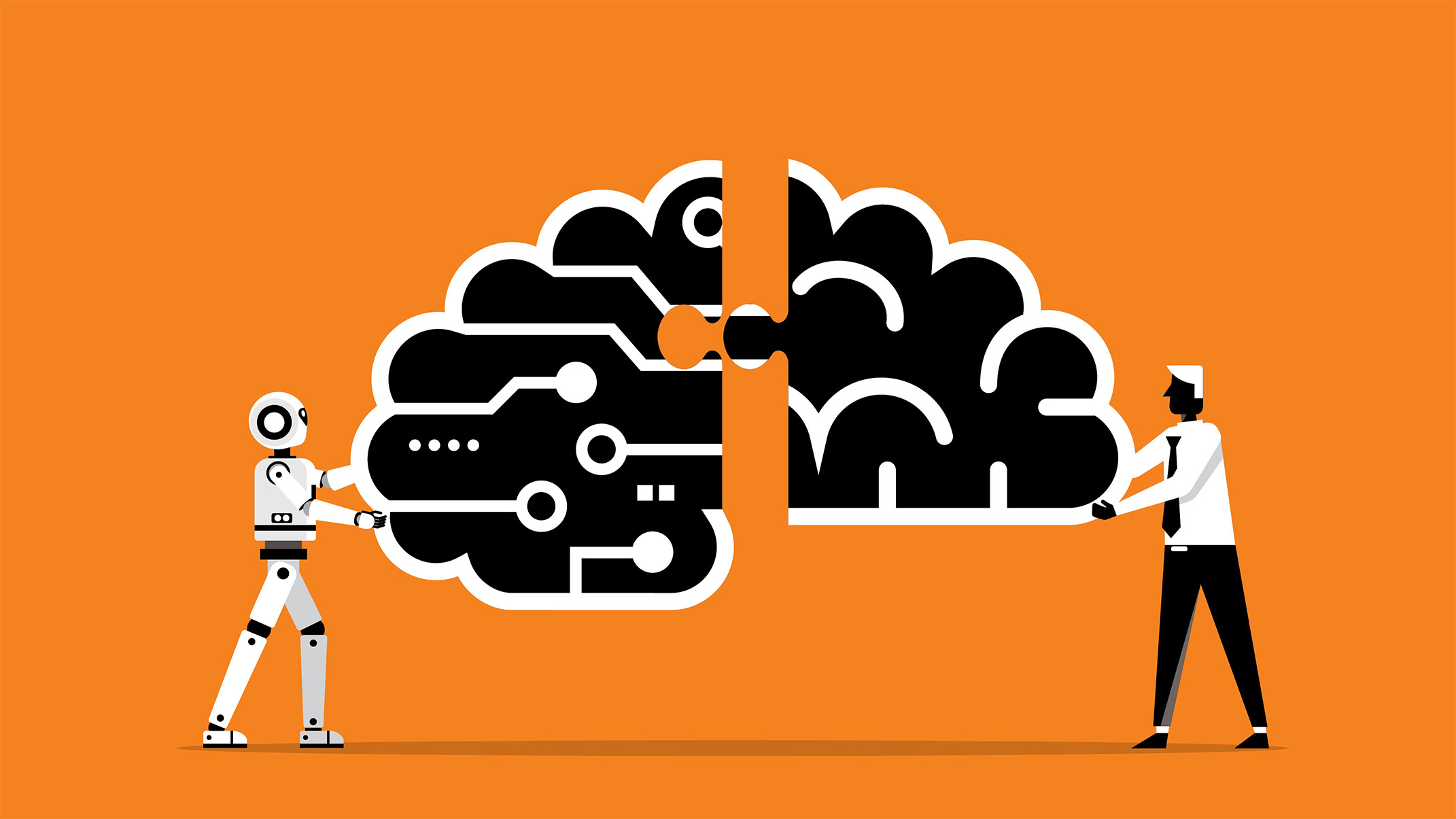
What becomes possible when humans are freed from the time-consuming tasks that AI can perform?
1,002 words~5 min read