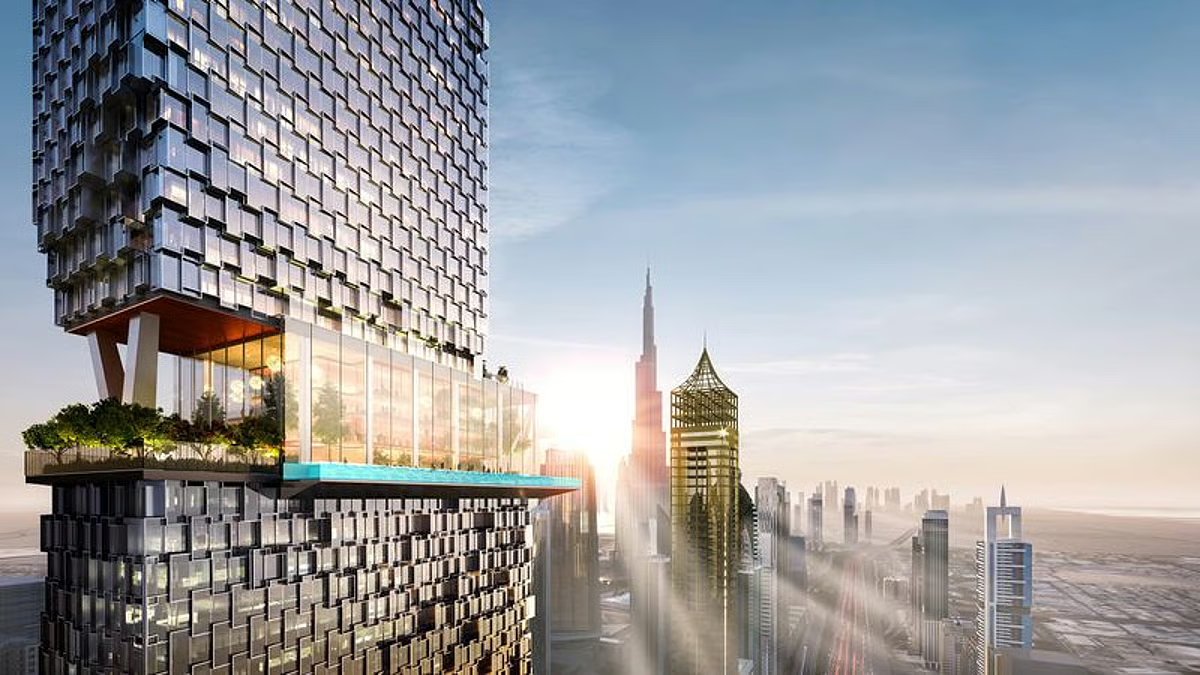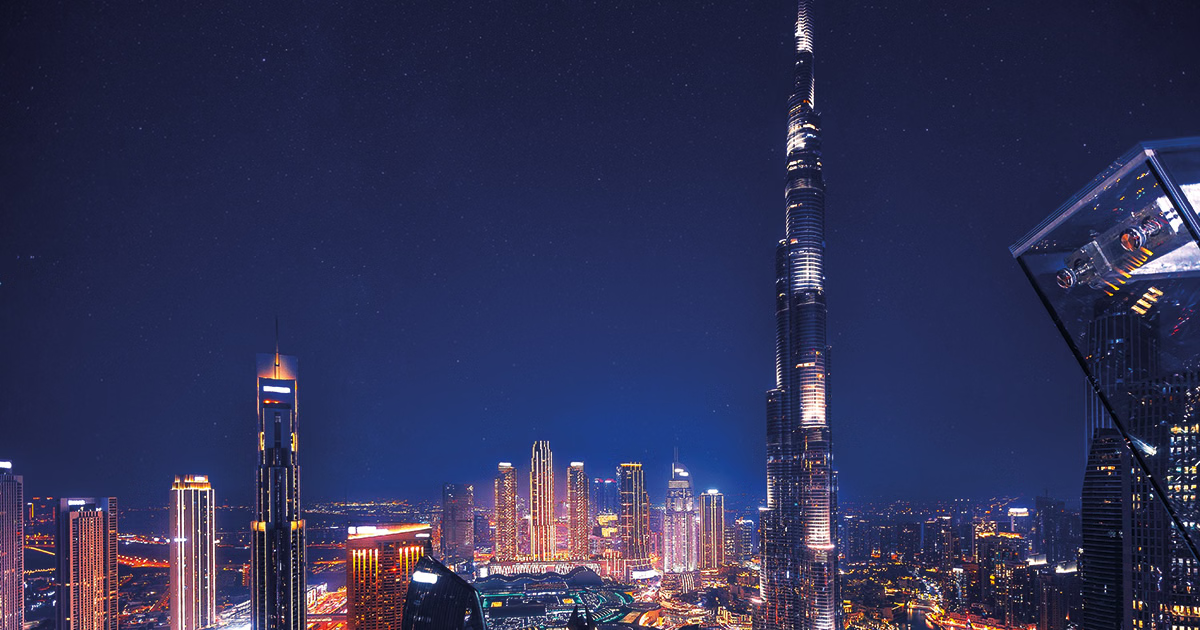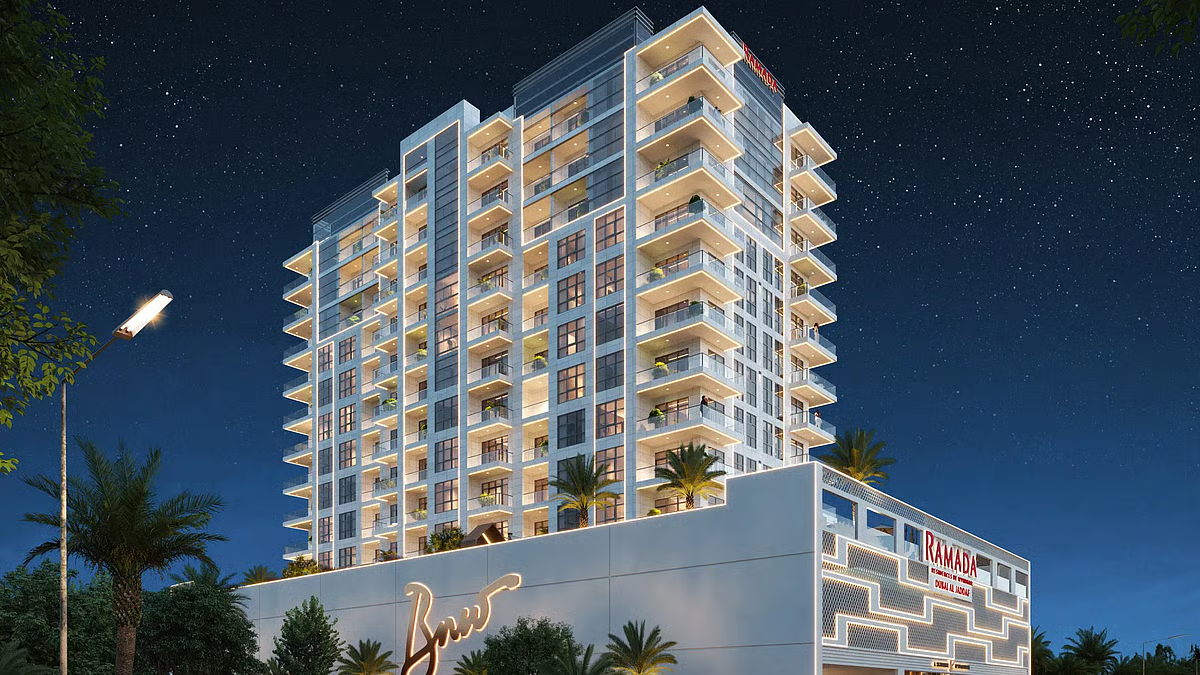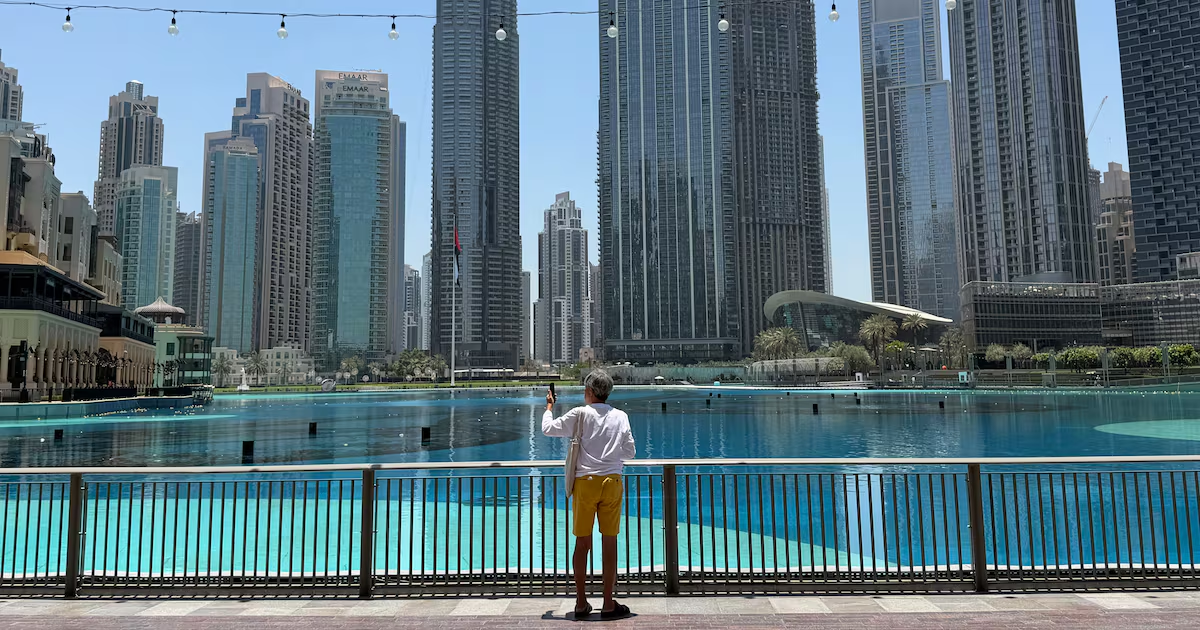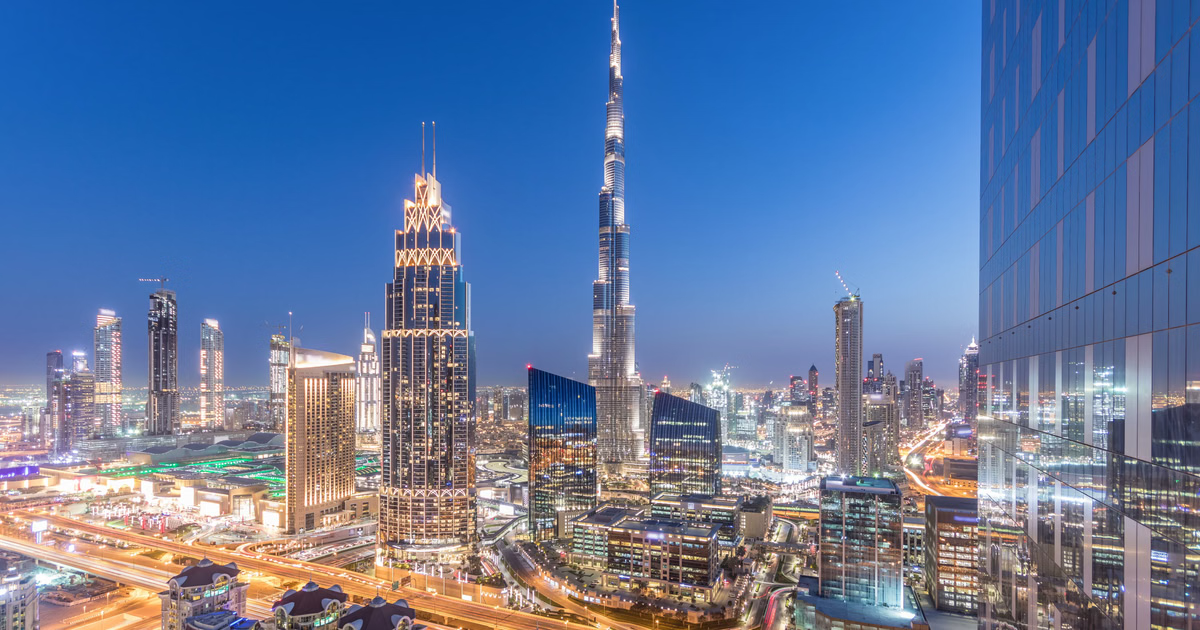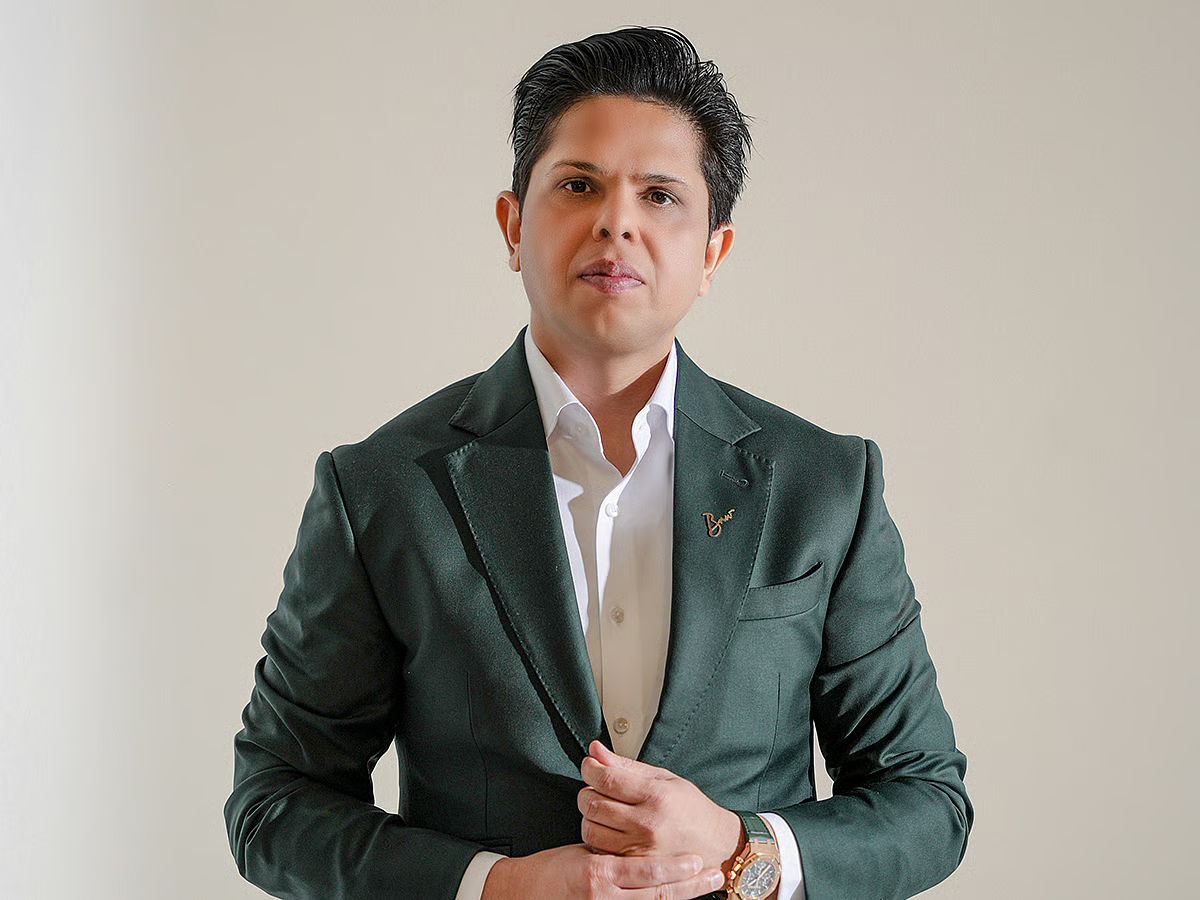
There is a question reshaping how serious investors evaluate property: not what this apartment looks like today, but who will want to own it a decade from now and why? For much of the past two decades, luxury real estate in the UAE was evaluated through a cliched framework of the view, the address, the finishes, and the price per square foot. That framework still has a place, but it no longer tells the full story. A new logic is asserting itself, one where the brand attached to a development carries as much weight as the bricks that hold it up. Branded residences, properties developed in partnership with globally recognised hospitality, fashion, or lifestyle names, have existed for decades. What is different now is scale, velocity, and geography. As per the Savills report, the UAE ranks second globally by total number of branded residence projects, after the United States. Dubai leads all cities worldwide, with 64 completed branded residence developments and a further 87 in the pipeline. Building on years of strategic development and investment, Ras Al Khaimah has emerged as a global success story, now ranking ninth worldwide among the most sought-after real estate markets. Two emirates from a single country occupying the global top ten are a result of deliberate policy, ecosystem investment, and an unusually clear-eyed understanding of what mobile, globally minded wealth seeks in a home. A globally recognised name on a building instantly communicates to a buyer in Seoul, São Paulo, or Stockholm what a local developer's reputation might take years to establish: a credible promise of quality, service standards, and long-term desirability. That premium is essentially the price of verified trust in a market where the buyer may never have set foot before. The financial case is compelling. According to the CBRE report, buyers are, on average, paying a 64 per cent premium over comparable non-branded properties, a figure that reflects something far deeper than brand vanity. Ras Al Khaimah tells an equally compelling story: once regarded as a value-oriented market, it has repositioned itself as a luxury destination, with the announcement of the Wynn Al Marjan Island resort serving as a powerful demand catalyst that has set off a construction boom and international investor attention. Notably, non-hospitality branded residences are claiming a growing share of that pipeline, a sign that the emirate's appeal has matured well beyond a single project or sector. What strikes me most about the current moment is the broadening of the brand canvas itself. Globally, the sector is growing at nearly 20% annually, with the Middle East and Africa forecasted to expand by more than 270% by 2031, as cited in the Savills report. Crucially, non-hospitality brands such as fashion houses, automotive marques, and design studios are claiming an increasingly meaningful share of that growth. This tells us that buyers are not simply purchasing access to hotel-grade amenities. They are purchasing alignment with an identity, a set of values, and a community of like-minded owners. The residence has become as much a statement of self as a financial asset. This evolution is visible at the developer level too. The presence of Wyndham on the hotel brand leaderboard and Tonino Lamborghini on the non-hotel brand leaderboard (Savills), both part of BNW Developments’ broader portfolio, highlights how developers are increasingly adopting a nuanced approach to branding. Rather than relying on a single model, they are leveraging both hospitality-led and lifestyle-driven partnerships to appeal to distinct buyer motivations, from operational trust and investment security to design pedigree, exclusivity, and aspirational living. Very few developers globally can claim that kind of positioning across both verticals simultaneously. The UAE is no longer simply attracting capital seeking short-term appreciation. It is drawing in a different kind of wealth migration: entrepreneurs, family offices, and globally mobile professionals who are not visiting but relocating, not speculating but settling. For this cohort, the brand on the building is not a luxury add-on. It is a form of due diligence: a globally legible signal that the asset will hold its meaning, value, and appeal regardless of which city the owner happens to be calling home at any given moment. In uncertain times, assets tied to trusted names become genuinely safer. The next chapter of luxury real estate across the UAE will not belong to the projects with the most extravagant lobbies. It will belong to the ones that buyers in a dozen countries already know, respect, and want to own a piece of, before the building is even complete. By Dr. (CA) Ankur Aggarwal, Chairman and Founder, BNW Developments
How the branded residence boom is reshaping the UAE's skyline
Dubai and Ras Al Khaimah lead surge in high-premium branded residences
760 words~3 min read