At moments of geopolitical uncertainty, the clearest test of a property market is not whether activity slows, but how it returns.Recent data from Bayut, the UAE’s leading proptech platform, suggests that demand is not disappearing so much as reordering itself. More importantly, the pattern is visible not just in traffic or browsing behaviour, but in verified market interactions from the platform that point to genuine buyer and renter intent.Resilient segmentsIn Dubai, that resilience is becoming most visible across three parts of the market: premium sales corridors, established mid-market ownership communities and family-oriented villa rentals. In each case, the rebound is appearing in places that tend to be linked less to speculative browsing and more to practical housing needs, longer-term planning and higher-value decision-making.One of the clearest signals is coming from the ownership market, particularly at the top end. In villa sales, stronger recovery is visible not only in the Dh2 million to Dh5 million band, which reflects mainstream end user demand, but also in the Dh20 million to Dh50 million and Dh50 million to Dh100 million brackets. That range spans both practical family ownership markets and Dubai’s upper-tier residential stock, with momentum concentrated in communities such as Dubai Hills Estate, Palm Jumeirah and Emirates Hills.The significance of that pattern should not be understated. In less mature markets, external shocks often trigger a broad-based withdrawal from discretionary property decisions, particularly at the luxury end. In Dubai, the data suggests something more nuanced: activity is returning where buyers have either strong use case clarity or deep asset conviction.The apartment segment reinforces that reading. Demand recovery is visible in higher-value bands, particularly between Dh10 million to Dh20 million. Established, lifestyle-focused areas like Jumeirah Beach Residence, Dubai Marina and Downtown Dubai stood out in particular with buyers keen on this price bracket. Another segment which also showed remarkable growth was for apartments priced between Dh20 million to Dh50 million, with specific traction across Jumeirah and Palm Jumeirah. These are some of the city’s best-known apartment-led markets and among the most internationally recognisable parts of Dubai’s residential landscape.“What this data shows is that market sentiment in Dubai is not simply being measured by passive interest,” says Haider Ali Khan, CEO of Bayut and dubizzle and CEO of Dubizzle Group MENA. “Through our internal systems, we are looking at verified, trackable interactions between property seekers and agents, which gives us a much clearer view of where genuine intent is holding up. What stands out is that demand is returning first in the segments where decision-making is typically more deliberate, whether that is family housing, established ownership communities or ultra-prime property. That points to a market that is becoming more resilient, more selective and ultimately more mature.”That is often what market health looks like after a disruption. Not exuberance, but discipline.Villa rental market is strongThe rental market, meanwhile, offers a complementary signal. Bayut reports that performance has also been particularly strong in villa leasing bands between Dh100,000 and Dh200,000, with additional momentum in the Dh200,000 to Dh500,000 range. These are not fringe segments. They broadly map to family housing demand and to communities that have become central to Dubai’s suburban expansion story, including Arabian Ranches 3, DAMAC Lagoons, Tilal Al Ghaf, The Springs and The Meadows.This matters because family rentals tend to be among the more dependable indicators of underlying housing confidence. They are tied to school cycles, household formation, relocation decisions and budget discipline. When activity reappears there, it often points to a market that is adjusting rather than capitulating.For Dubai, that may be the more meaningful takeaway. The emirate’s residential market has spent the past several years evolving from a momentum-led cycle into something more layered: deeper domestic participation, broader family demand, a stronger premium end and a buyer base that is more informed.In that context, the current recovery pattern looks less like a bounce and more like evidence of structural maturity. A market does not prove its strength when everything is calm. It proves it in the way demand behaves when confidence is tested.On that measure, Dubai appears increasingly like a market that bends, but does not break.– In association with Bayut
Demand holding strong for ultra-luxury properties, Bayut data suggests
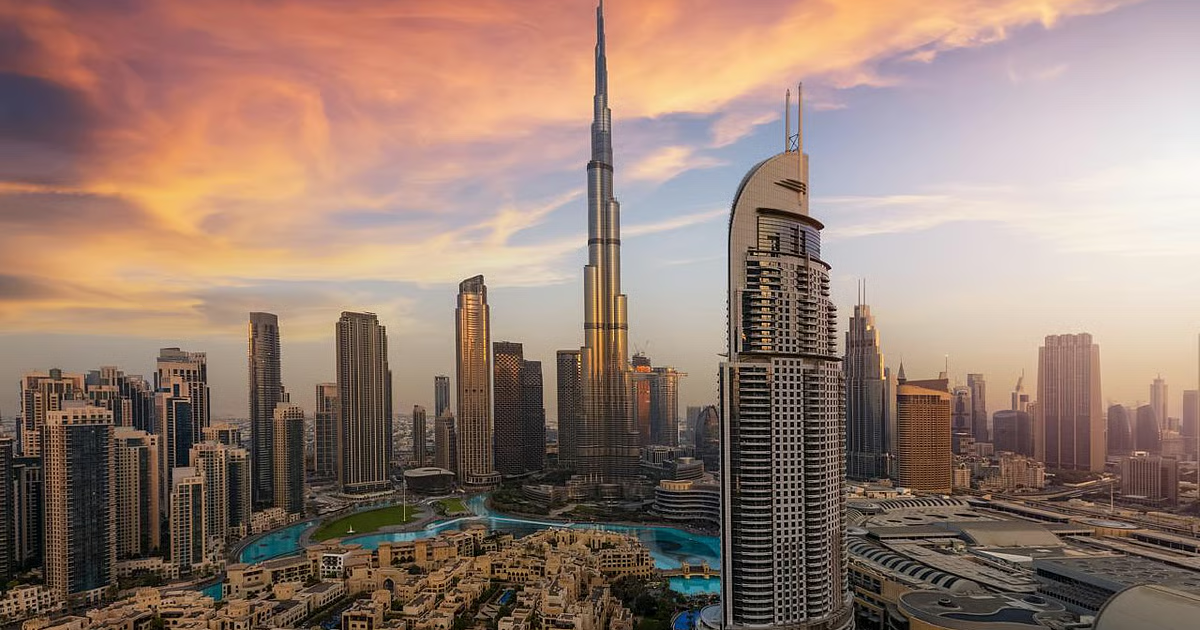
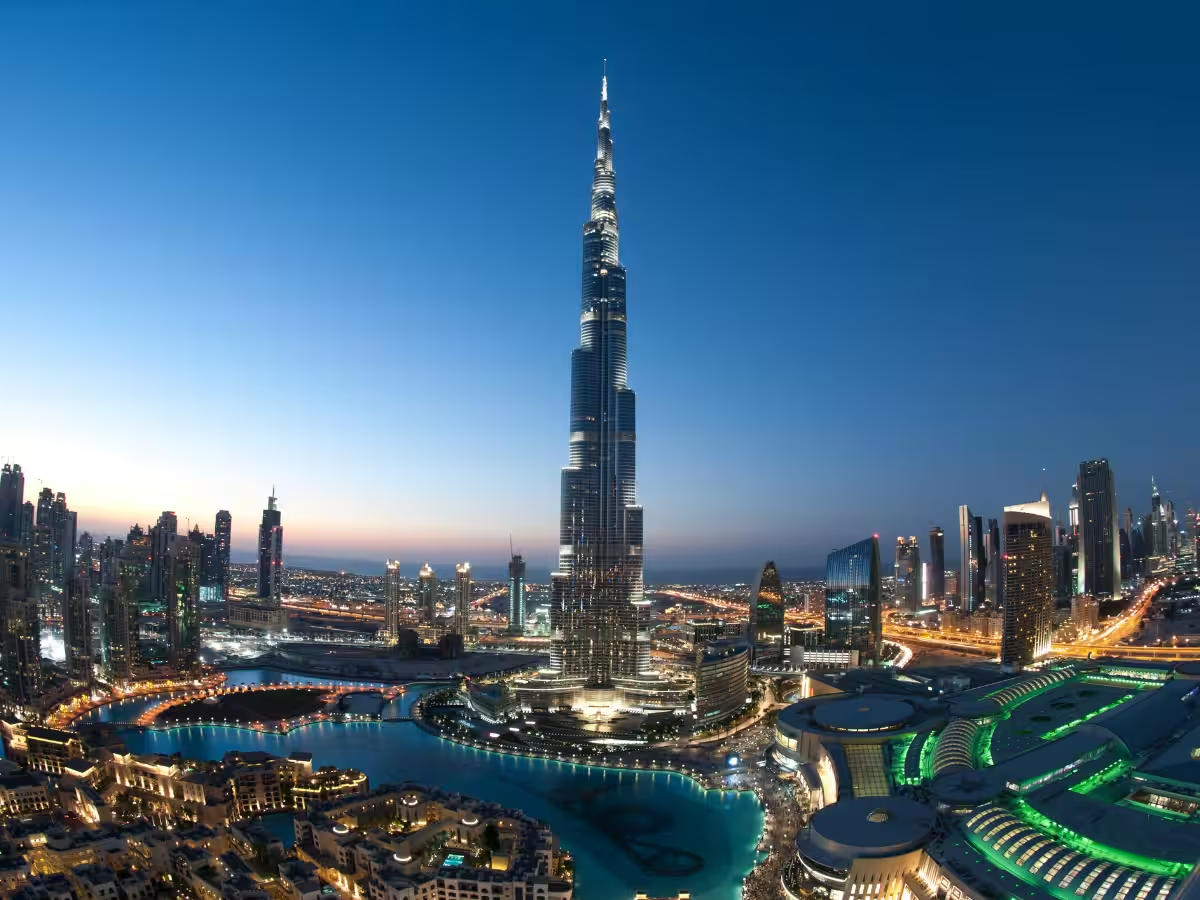
In Dubai, that resilience is becoming visible across three parts: premium sales corridors, established mid-market ownership communities and family-oriented villa rentals.
688 words~3 min read