A paid-off old pickup can be rational to keep today. Affordable electric trucks and targeted scrappage can make its eventual replacement rational too.
Support CleanTechnica's work through a Substack subscription, on Patreon, or on Stripe. Help us produce all of the high-quality, original content we publish week after week despite the challenges of content-scraping AI, antisocial media, inflation, and other hurdles.
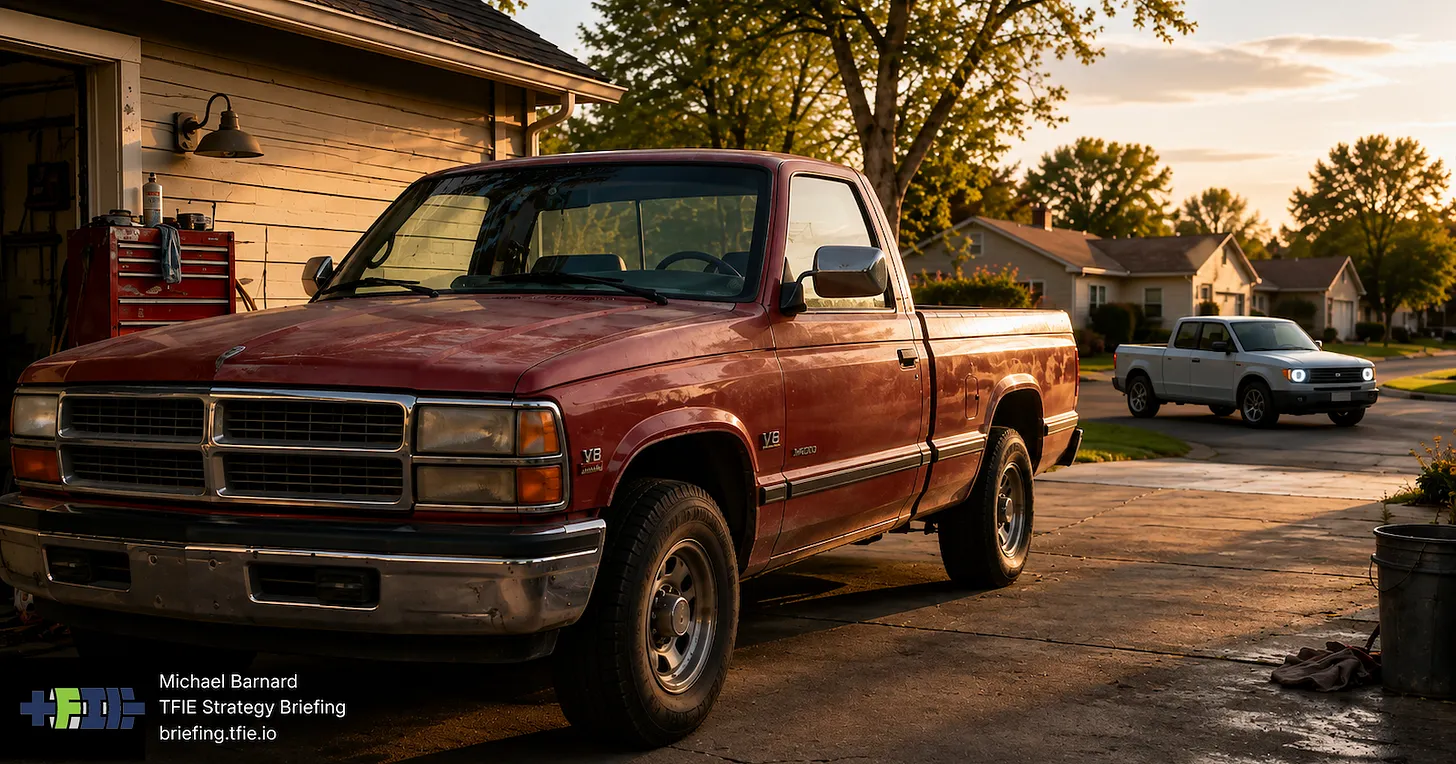
A reader who owns a hand-me-down 1995 Dodge Ram plans to keep repairing it until rust, gasoline prices or regulation finally stop him. I think he is making a rational household decision. The truck is paid for, he knows how to maintain it, and a repair bill of hundreds or even a few thousand dollars is easier to justify than spending $50,000 on a new electric pickup. Yet the climate arithmetic says this is exactly the kind of vehicle the United States should want off the road. The policy problem is making those two conclusions stop contradicting each other.
The full TFIE Strategy Briefing analysis works through the emissions, household economics and policy design that could make an old gas guzzler’s next replacement an electric one.
A 1995 Ram 1500 gets roughly 12 to 16 miles per gallon depending on engine and drivetrain. Driven something like the American norm, gasoline combustion alone can produce around 7 to 9 tonnes of carbon dioxide each year. An efficient electric pickup on the average US grid would be closer to 2 tonnes. The emissions difference is large enough that retiring a heavily used old pickup can make lifecycle sense even after accounting for the manufacturing emissions of its replacement.