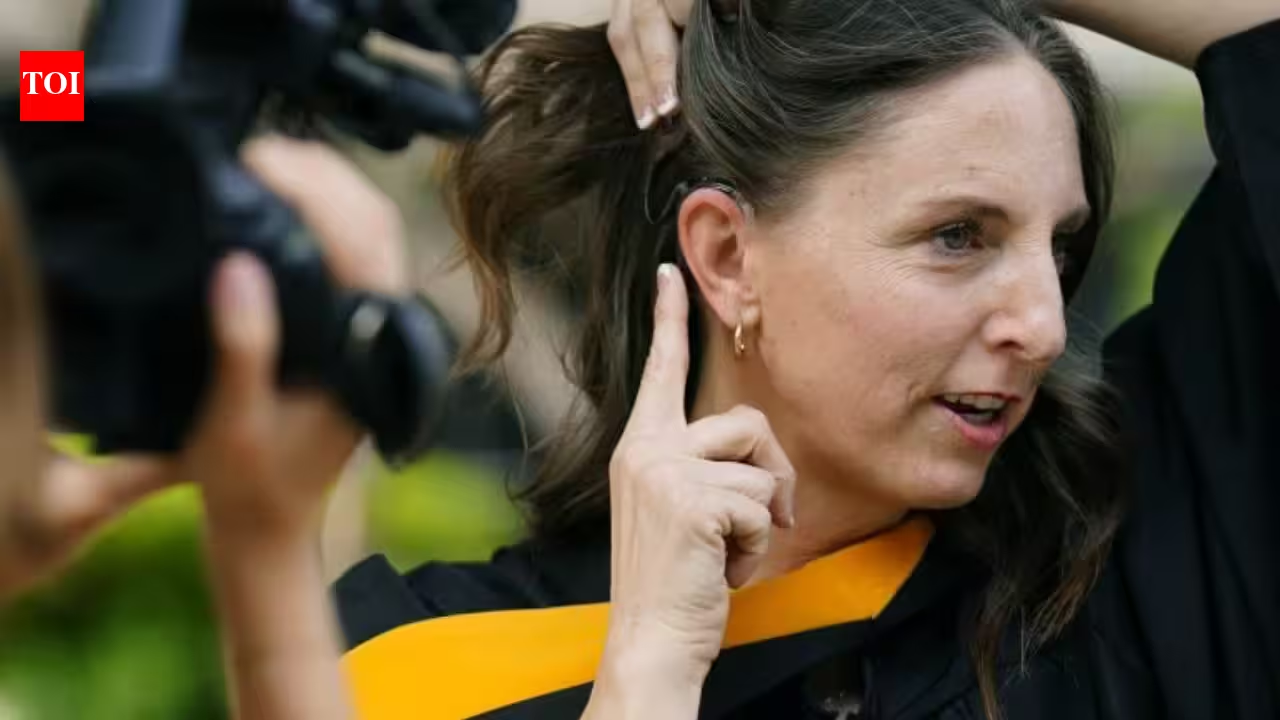
PC: GCUFor Heather Porter, graduation day in Phoenix was not simply the end of a university course. It marked the close of several demanding years in which studying had to fit around a large family, foster care and a sudden change in the way she experienced the world.As reported by People, Porter received her master’s degree from Grand Canyon University on April 29, 2026, walking across the commencement stage in a purple gown. Among those watching was her seven-year-old daughter, Rebekah, who reached across the aisle to hold her mother’s hand during the ceremony.By then, Porter had already spent years adjusting to significant hearing loss and the complications that followed. She had also continued raising her children while completing her graduate studies online.When hearing loss began to change Porter’s everyday lifePorter first noticed that something was wrong with her hearing while she was still an undergraduate. Conversations became harder to follow, and information that seemed straightforward to others could leave her struggling to keep up.As reported, the problem was eventually traced to an autoimmune condition affecting her inner ear. Her diagnosis came during the COVID-19 pandemic, a period when Porter was already dealing with the uncertainty of her changing hearing.The effect was not limited to classrooms or conversations. Porter described feeling increasingly cut off from people around her, including members of her own family. There was a period of grief as she adjusted to the possibility that her hearing would not return to what it had been.“I was struggling to understand things that other people understood easily,” she said of watching other people’s lips, as reported by Grand Canyon University News.Her cochlear implant opened a new door to sound, but complications followedPorter eventually received financial assistance that allowed her to have a cochlear implant. The device gave her another way to access sound, but her experience with it was far from straightforward.About a year and a half after the implant was fitted, it began malfunctioning. Porter experienced pain and other problems, and medical examinations showed that the device was failing. She was eventually told that electricity was leaking from the implant into her head. Surgery was required to replace it.The second implant became part of the routine she gradually built around her hearing. Porter also uses sign language, something that became particularly meaningful as she became more connected with the deaf and hard-of-hearing community.She has described learning sign language as an unexpected gift during a period when much of her life had been changing.PC: ABC100Graduate school happened alongside raising 11 childrenPorter's university work was only one part of her life. She was raising a family of 11 children while completing her degree, including children who had joined the family through foster care and adoption.Her experience with foster care began when she and her then-husband took in a child and later decided to foster that child's three older siblings as well. Porter was 25 at the time.She later recalled that she did not want the siblings to be separated from one another, so the family took all four children in. Porter ultimately gave birth to six of her children. Her youngest, the 11th, was adopted while she was already in graduate school.That meant coursework and family responsibilities were running side by side. There were days when the demands of the degree felt difficult to manage, Porter acknowledged, and she has spoken about the tears that came during the programme. Still, she kept going.PC: ABC100Her graduation marked more than a degree after years of challengesThe commencement ceremony gave Porter a chance to mark the achievement with some of the people who had been part of the years it took to reach it.Images from the ceremony show her daughter Rebekah reaching towards her across the aisle, while another photograph captures Porter receiving her degree. Her sister, Annie Pearce, was also there and later embraced her after the ceremony. Pearce said Porter's familiarity with sign language and her existing connection with the deaf community had become an important part of how she handled the loss of her hearing.For Porter, the significance of the degree extends beyond having another qualification. She now hopes to use what she has learned in work with people who are hard of hearing.Turning her own struggle into hope for othersPorter plans to pursue work as a psychotherapist, with a particular interest in serving the hard-of-hearing community. Her own experience with hearing loss has given her a perspective that she hopes will be useful when working with people facing similar difficulties.She is also considering what could come after the master’s degree. A Ph.D. remains a possibility, as does teaching internationally. She summed up what she had taken from those years in a message about facing difficult circumstances without allowing them to define the rest of a person's life.“There is hope, no matter how low life feels,” Porter said.
She raised 11 children and was losing her hearing; despite a failed cochlear implant, this single mother earned her master's degree
For Heather Porter, graduation day in Phoenix was not simply the end of a university course. It marked the close of several demanding years in which studying had to fit around a large family, foster care and a sudden change in the way she experienced the world.
807 words~4 min read