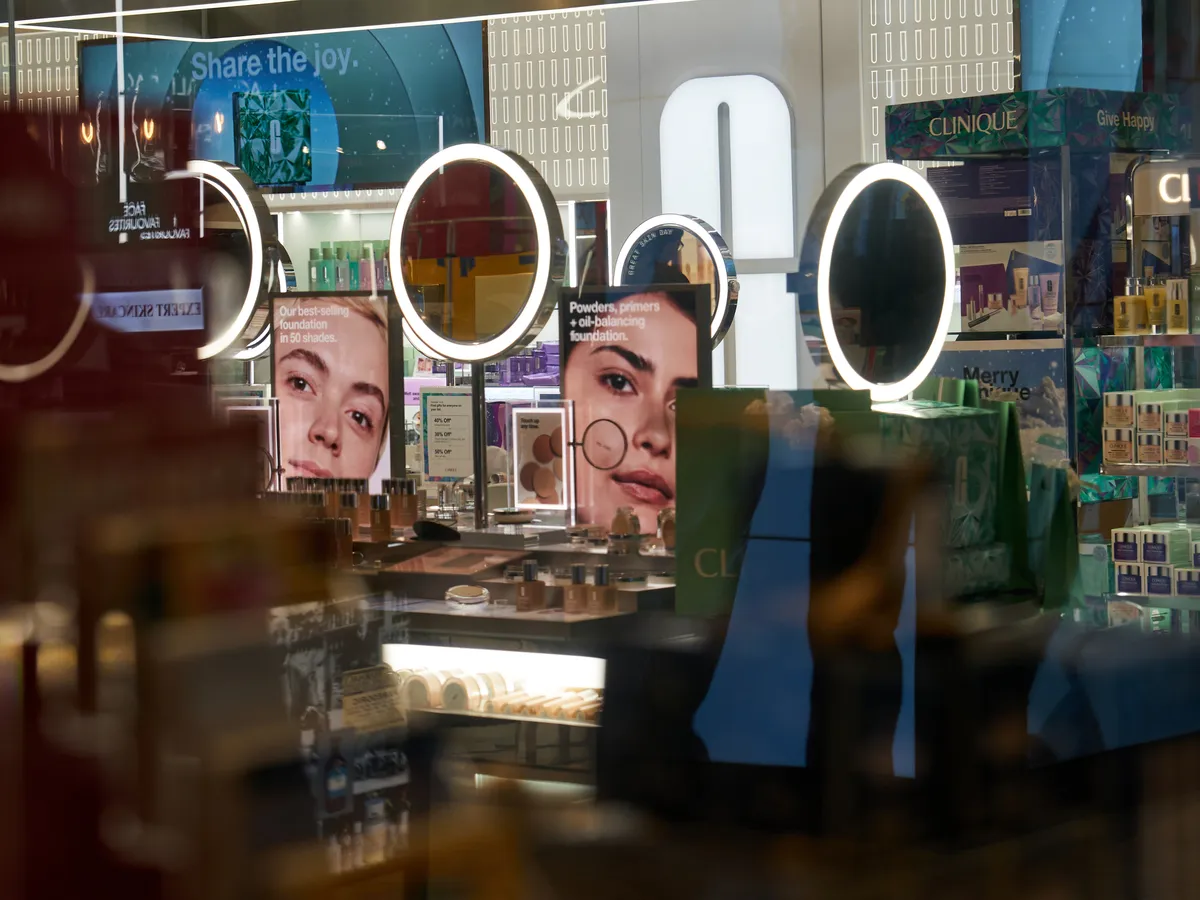
Skip to Content News Archives Economy Energy Oil & Gas Renewables Electric Vehicles Mining Commodities Agriculture Real Estate Mortgages Mortgage Rates Finance Banking Insurance Fintech Cryptocurrency Work Wealth Smart Money Wealth Management Investor Personal Finance Family Finance Retirement Taxes High Net Worth FP Comment Executive Women Puzzmo Newsletters Financial Times Business Essentials More Innovation Information Technology FP500 Podcasts Small Business Lives Told Tails Told Shopping Financial Post Store Obituaries Place a Notice Advertising Advertising With Us Advertising Solutions Postmedia Ad Manager Sponsorship Requests Classifieds Place a Classifieds ad Working Profile Settings My Subscriptions My Offers Newsletters Customer Service FAQ News Economy Energy Mining Real Estate Finance Work Wealth Investor FP Comment Executive Women Puzzmo Newsletters Financial Times Business Essentials HomeNewsRetail & MarketingU.S.-Canada cosmetic tariffs threaten the $10 beauty impulse buyTariffs don’t automatically translate to price hikes, but 50 per cent duties become difficult for companies to absorbAuthor of the article:The concern for the industry is less about one eyeshadow or lipstick becoming more expensive than the effect that tariffs have on an integrated North American supply chain. Photo by Bing Guan/BloombergIn between offering advice on how to find the best towels and where to buy affordable versions of high-end garments, Bryce Gruber recently waded into the United States-Canada trade war, warning her social-media followers that some of their favourite makeup is about to get more expensive.Subscribe now to read the latest news in your city and across Canada.Exclusive articles from Barbara Shecter, Joe O'Connor, Gabriel Friedman, and others.Daily content from Financial Times, the world's leading global business publication.Unlimited online access to read articles from Financial Post, National Post and 15 news sites across Canada with one account.National Post ePaper, an electronic replica of the print edition to view on any device, share and comment on.Daily puzzles, including the New York Times Crossword.Subscribe now to read the latest news in your city and across Canada.Exclusive articles from Barbara Shecter, Joe O'Connor, Gabriel Friedman and others.Daily content from Financial Times, the world's leading global business publication.Unlimited online access to read articles from Financial Post, National Post and 15 news sites across Canada with one account.National Post ePaper, an electronic replica of the print edition to view on any device, share and comment on.Daily puzzles, including the New York Times Crossword.Create an account or sign in to continue with your reading experience.Access articles from across Canada with one account.Share your thoughts and join the conversation in the comments.Enjoy additional articles per month.Get email updates from your favourite authors.Create an account or sign in to continue with your reading experience.Access articles from across Canada with one accountShare your thoughts and join the conversation in the commentsEnjoy additional articles per monthGet email updates from your favourite authorsSign In or Create an AccountorCosmetics — along with tulip bulbs, winter jackets and wooden frames — are among the hundreds of Canadian products hit with a new 50 per cent tariff by the U.S. after trade talks between the two countries broke down. Canada in turn hit certain U.S. makeup imports with 50 per cent retaliatory tariffs on Tuesday, with those set to take effect Sept. 8.On both sides of the border, shoppers may get squeezed.Breaking business news, incisive views, must-reads and market signals. Weekdays by 9 a.m.By signing up you consent to receive the above newsletter from Postmedia Network Inc.A welcome email is on its way. If you don't see it, please check your junk folder.The next issue of Posthaste will soon be in your inbox.We encountered an issue signing you up. Please try againLast week, ahead of a deadline in the trade talks, Gruber, a women’s lifestyle influencer and shopping editor, pointed out that many popular makeup products are made in Canada and shipped to the U.S.“A good chunk of L’Oreal products are coming out of Canada,” Gruber said in a video posted to Instagram and TikTok. “Remember L’Oreal owns a ton of different brands, not just the affordable drugstore stuff.”L’Oreal SA and The Estee Lauder Cos. are among the major beauty companies exposed to the latest tariffs through their Canadian manufacturing operations, according to people with knowledge of the matter who asked not to be named discussing private information.Estee Lauder owns M.A.C. Cosmetics Inc. and Deciem Inc., the company behind affordable skincare brand The Ordinary. And the Canadian subsidiary of L’Oreal has 39 brands in its portfolio, more than 1,700 employees and several locations, including a factory and distribution centre in Quebec, according to its website.“People are very interested in products that work very well, but are not expensive. And who is dominating that right now? L’Oreal,” Gruber said in an interview. She also pointed out that The Ordinary has become a beauty “hero” owing to its simple skincare formulations at a low price.Tariffs don’t automatically translate to price hikes, but 50 per cent duties become difficult for companies to absorb. “If there’s a 50 per cent tariff, you’re no longer looking at a $10 impulse purchase,” Gruber said. “For the average American woman that becomes a, ‘I don’t know if I need it.’”Even when companies absorb some or all of the tariffs rather than raising prices, the levies alter the economics of selling cosmetics across the border and may force changes to pricing, manufacturing and distribution.A representative for Estee Lauder declined to comment, while L’Oreal did not respond to requests for comment.The broader concern for the industry is less about one eyeshadow or lipstick becoming more expensive than the effect that tariffs have on an integrated North American supply chain.After South Korea, Canada was the second-largest source of beauty and skincare imports to the U.S. last year, according to data from the U.S. International Trade Commission. The Canadian sector includes major U.S. brands as well as domestic manufacturers.Like a smaller-scale version of the North American auto sector, big players in the cosmetics business are highly integrated, producing products in Canada, the U.S., Mexico and around the world, according to Darren Praznik, who leads industry lobby group Cosmetics Alliance Canada.“The sector exports anywhere from 70 per cent to 98 per cent of the production of individual facilities” in Canada, he said, with the U.S. as the largest destination. “What is produced in Canada is very efficient, very competitive.”Tariffs will be “exceptionally disruptive to their distribution networks,” Praznik said. “And if they have to eat those tariffs because their competitors are not subject to them, it will be very difficult on their bottom line.”Companies, particularly large multinationals, can adapt, but doing so can be costly and time-consuming, he said.Canadian makeup company Groupe Marcelle Inc. has already absorbed higher costs after the US closed a loophole that allowed cheap goods to clear customs tariff-free.As for the newest tariff developments, “we will assess the situation and make the best decisions for our business, understanding that we are trying to build long-term relationships with our consumers,” Marcelle President David Cape said by email Tuesday.Estee Lauder executives have said at industry conferences and on earnings calls that the company is taking a range of actions to mitigate the potential impacts of tariffs, including shifting manufacturing closer to consumers. It has so far not increased prices, according to one of the people familiar with the situation.“Given enough time, anything is possible,” Praznik said. “It isn’t the end of an industry. It’s a major readjustment.”—With assistance from Melissa Shin and Marc Davies. Join the Conversation This website uses cookies to personalize your content (including ads), and allows us to analyze our traffic. Read more about cookies here. By continuing to use our site, you agree to our Terms of Use and Privacy Policy.
U.S.-Canada cosmetic tariffs threaten the $10 beauty impulse buy
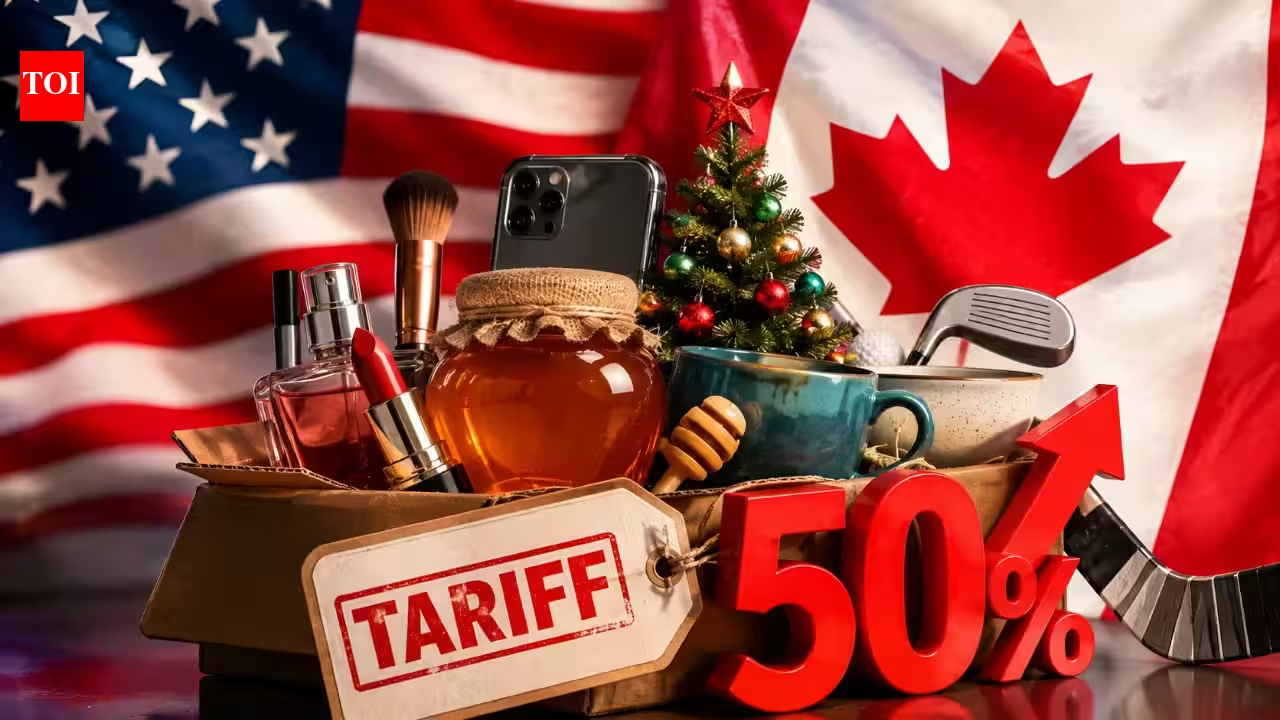
Cosmetics are among the hundreds of Canadian products hit with a new 50% tariff by the U.S. after trade talks broke down. Read here now
1,261 words~6 min read