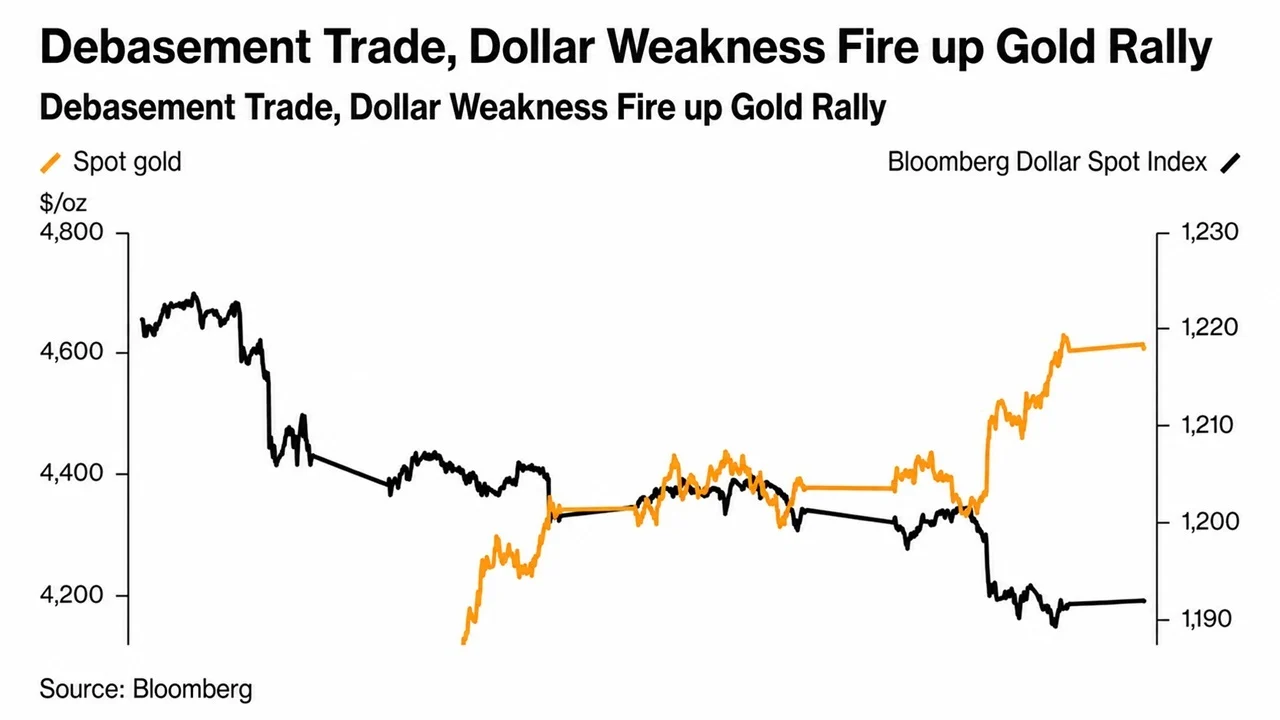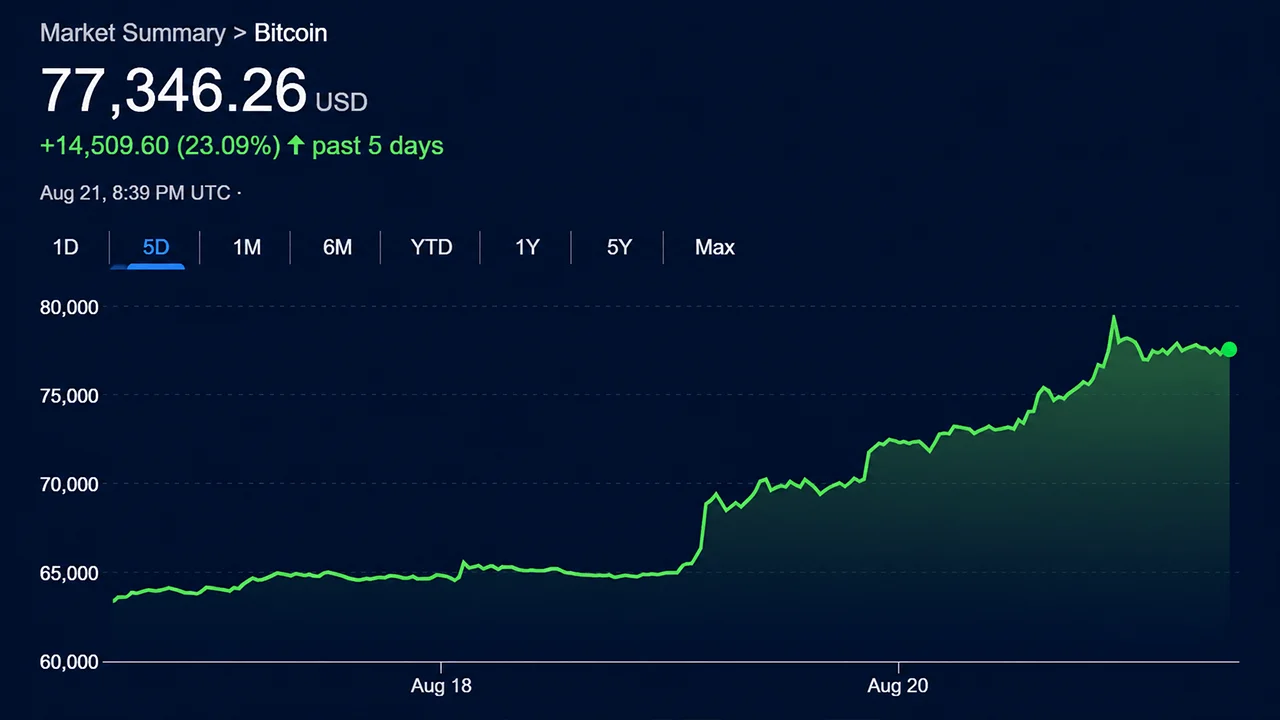
Gold and bitcoin have both seen recent price surges as the national debt crossed the $40 trillion mark.Gold prices have risen to their highest levels in some three months or so, rising as high as $4,740 per ounce this week. Meanwhile, bitcoin saw its strongest weekly increase since March 2023, growing over 20% and crossing $80,000, before paring back those gains a bit on Tuesday.
“Last week, the U.S. federal debt surpassed $40 trillion — people are looking for diversifiers other than government bonds,” Campbell Harvey, a professor at Duke University’s Fuqua School of Business, told the Washington Examiner. “Gold is at the top of the list.”He added that “20% of Federal tax revenue is directed to pay the interest on the U.S. massive debt. No wonder investors are looking to gold and bitcoin as potential diversifiers.”In the past month, gold prices have risen by over 14%. Compare that to the benchmark S&P 500, which has risen just over 3.5% in that same period.Joseph Cavatoni, a senior market strategist for the Americas for the World Gold Council, told the Washington Examiner that over the past several months, there has been a higher level of “up-and-down” volatility in the gold market as investors try to anticipate geopolitical events, understand the implications of tariffs, gauge the fallout from the war with Iran, and more.“But we’ve always been talking about this undercurrent of the fundamentals of what continues to drive gold higher on the long-term trajectory,” Cavatoni said, “and that is the debt levels, the role that fiat currencies will play in reserve assets, and overall, the need for people to preserve wealth over time, and that wealth preservation is at the heart of I think what we’re talking to here.“We’re now at this famous $40 trillion number that everyone’s throwing around, a trillion dollars of annual service — so it’s getting that attention again,” he said.Last week, yields on 30-year Treasury securities pushed to levels not seen in some two decades, a sign that investors might be growing increasingly concerned about the government’s fiscal health. In response, the Treasury announced it would “at least double” the size of its debt buybacks from $2 billion to $4 billion.That move, designed to lower longer-term yields, caused those rates to temporarily fall in response, but yields then climbed back, erasing much of the decline following the Treasury announcement.“The rate market’s basically saying we’re fearing continuing to lend the U.S. government money at these levels because we don’t see a way out, and I think that that’s giving people that big economic concern,” Cavatoni said.The buybacks, notably, engendered criticism from Stanley Druckenmiller, the head of Duquesne Family Office, who has been characterized as a mentor of Treasury Secretary Scott Bessent in the past.In an op-ed, written using artificial intelligence and published in the Wall Street Journal, Druckenmiller pushed back on the interventions.“Every basis point of artificial yield suppression is a subsidy to procrastination,” the op-ed reads. “Suppressed long rates sugarcoat the interest-cost projections, shrink the apparent urgency, and let incumbents assure voters the debt is someone else’s problem.”Cavatoni also pointed out that investors are waiting to see what happens with Federal Reserve Chairman Kevin Warsh’s annual speech at the Jackson Hole Economic Policy Symposium on Friday. Every Fed chair addresses the symposium, giving them a chance to spell out their priorities for the year ahead and better articulate their views on the current state of the economy and monetary policy.Cavatoni said investors have questions about the U.S. maintaining its credit ratings and its ability to service the debt, as well as how Bessent interacts with the Fed and the independence of the central bank.As gold has gone up, so too have bitcoin and other cryptocurrencies.Ten days ago, bitcoin was trading at under $63,000. As of Tuesday afternoon, it was trading at nearly $79,000.John Berlau, a senior fellow and director of finance policy at the Competitive Enterprise Institute and an expert on the crypto space, cited some of the same concerns regarding bitcoin and other cryptocurrencies rising.PAUL RYAN AIMS TO UPDATE WELFARE REFORM PLAYBOOK WITH STATE PILOT PROGRAM“It’s inflation concerns, concerns about the debt — when people are worried about how much value, or whether a fiat currency is losing value, they’ll gravitate both to things where there is a fixed supply and you can’t inflate like gold and like cryptocurrencies,” he told the Washington Examiner.Berlau also cited increased institutional acceptance of cryptocurrencies and the blockchain technology underpinning them.