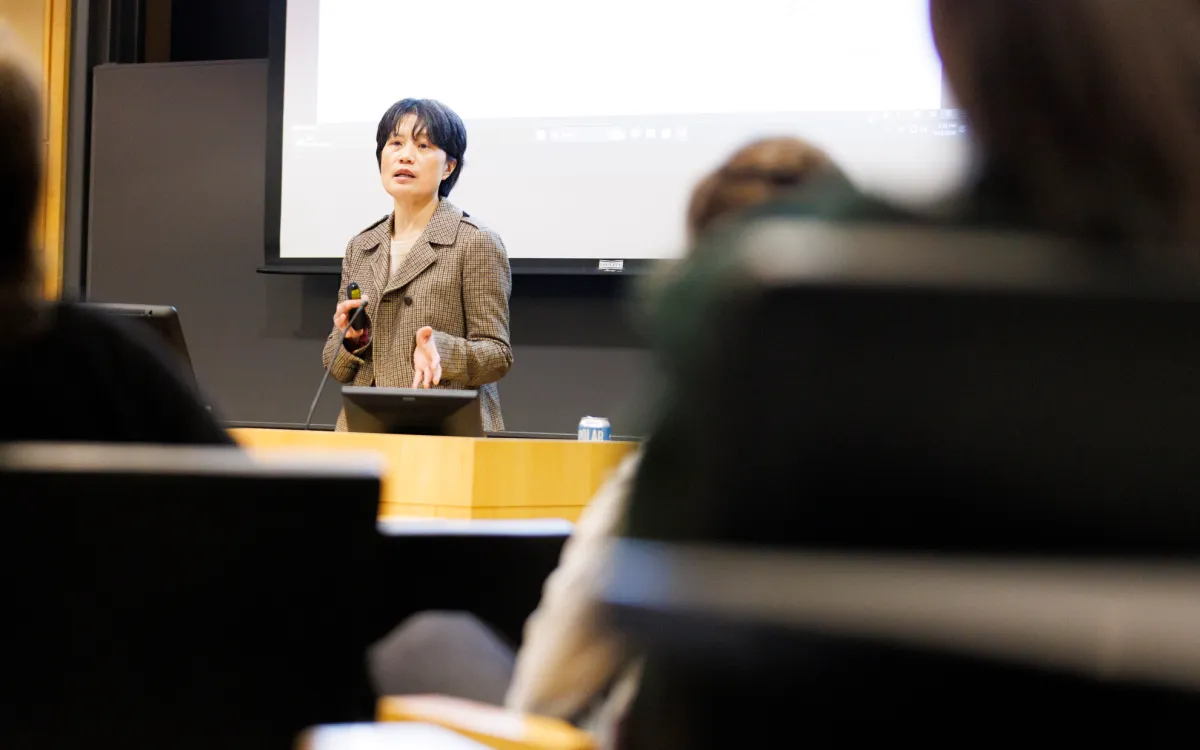
When Deblina Sarkar checked her email one afternoon this past February, she saw a heart-wrenching email from a father. He had found his way to the website of her Nano-Cybernetic Biotrek research group at the MIT Media Lab and written to tell her about his 10-year-old daughter. The girl had diffuse intrinsic pontine glioma (DIPG), an aggressive form of brain cancer resistant to standard treatments. He had come across Sarkar’s research on nanoscale electronic devices designed to move through the bloodstream, reach diseased regions of the brain, and deliver precisely targeted electrical stimulation, and he wanted to know if there was any hope. Messages like this one land in her inbox every other week or so. It’s “the main motivation behind our work,” says Sarkar, the AT&T Career Development Associate Professor of Media Arts and Sciences and a member of the MIT Center for Neurobiological Engineering. Sarkar started her career thinking about nanoelectronics. A physicist and electrical engineer by training, she spent years making ever-smaller transistors, chasing increasingly low power consumption, until she recognized that the most energy-efficient computer on Earth was actually in the human skull. The brain runs on roughly as much power as a dim lightbulb, and Sarkar says modern computing systems consume about a million times that amount to do comparable work. But the lack of treatments for brain diseases got her interested in building tools to understand—and heal—the brain. She began to think about how nanoscale electronics, fused into biological structures, might do things medicine had never managed. The result, developed over more than seven years, is a platform she calls circulatronics: nanoscale electronic devices capable of navigating the body’s fluid systems, identifying diseased tissue, and providing wireless therapeutic stimulation—no surgery, holes in the skull, or $100,000 procedure required. In collaboration with the Mayo Clinic, she’s shown in mice that precise electrical stimulation can halt tumor growth in cases where standard treatments have failed. The technology may not arrive in time for the girl whose father wrote to her. But Sarkar believes clinical trials to test the platform could begin within three years.
A home for responsible optimists
As the MIT Media Lab marks its first four decades, new leadership, adventurous research, and the most consequential technology in a generation are converging.
3,527 words~16 min read