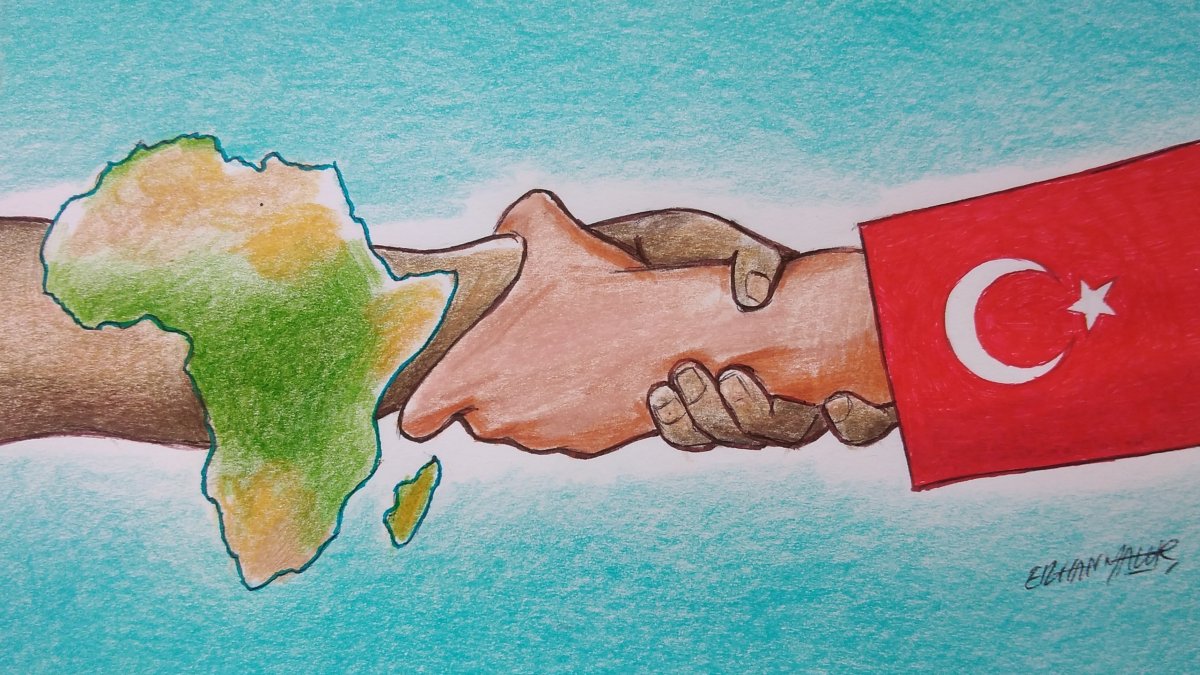
For much of the past two decades, Türkiye’s presence on the African continent was narrated and framed through the lens of humanitarianism: hospitals built by the Turkish Cooperation and Coordination Agency (TIKA), the Presidency for Turks Abroad and Related Communities (YTB) scholarships extended to students from Mogadishu to Ouagadougou, and Yunus Emre Institute (YEE) cultural centers that carried Ankara’s new vision and humanitarian diplomacy into capital cities where Western embassies had long since retreated. This perception of Türkiye as a primarily humanitarian actor has not disappeared, but it no longer sits at the center of the relationship between the African continent and Türkiye.
What has displaced this perception of Türkiye is a harder currency altogether, one measured in drone airframes rather than aid packages. The Bayraktar TB2 unmanned combat aerial vehicle (UCAV) and its heavier sibling, the Bayraktar Akıncı UCAV, have become the most visible symbols of a Turkish foreign policy that increasingly treats military defense exports as a vehicle for alliance-building. The African continent, more than any other region outside Türkiye’s immediate neighborhood, has become the proving ground for this new military and security approach to diplomatic engagements.