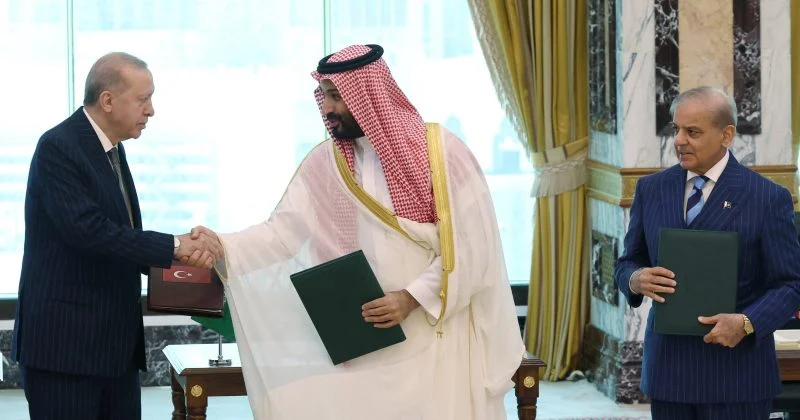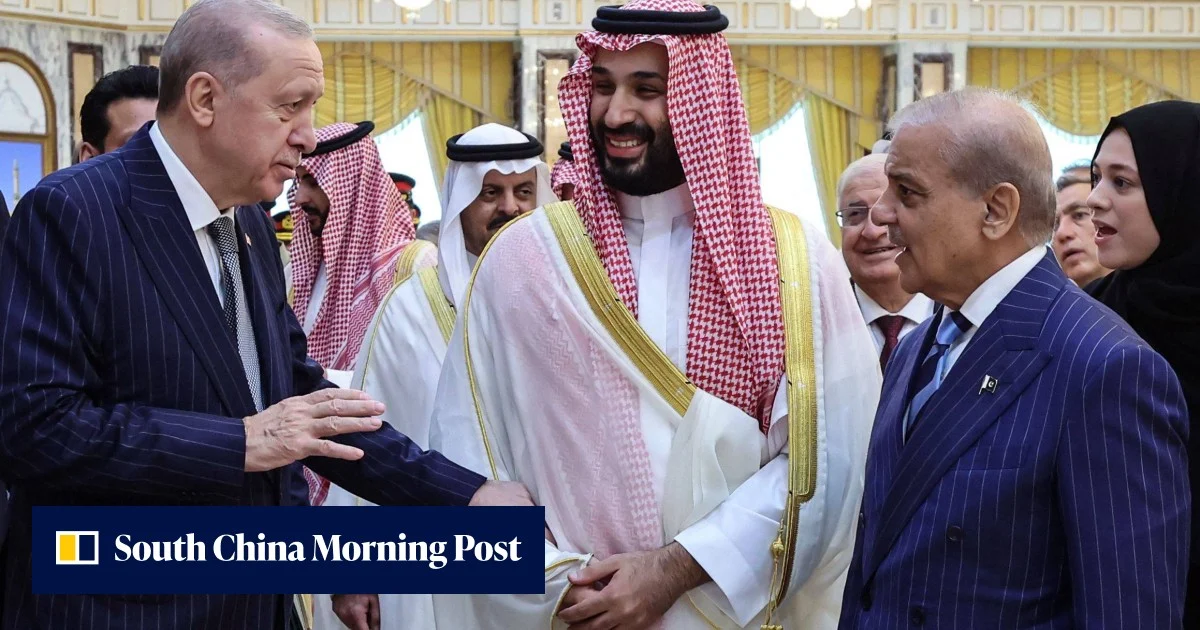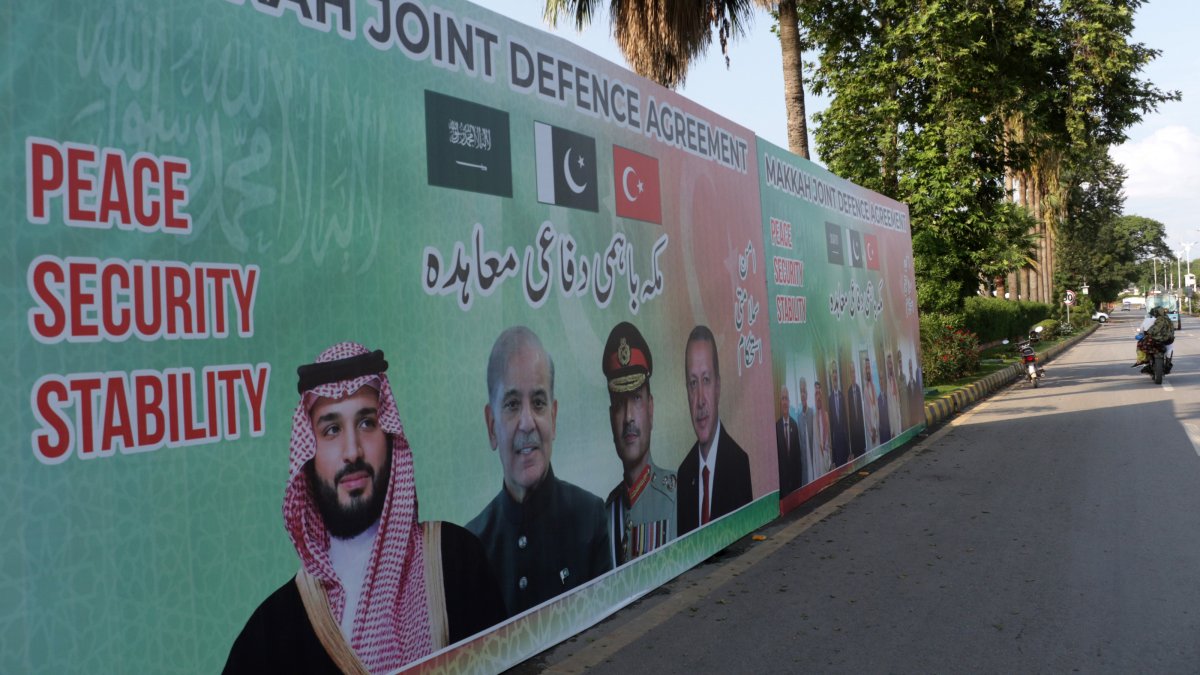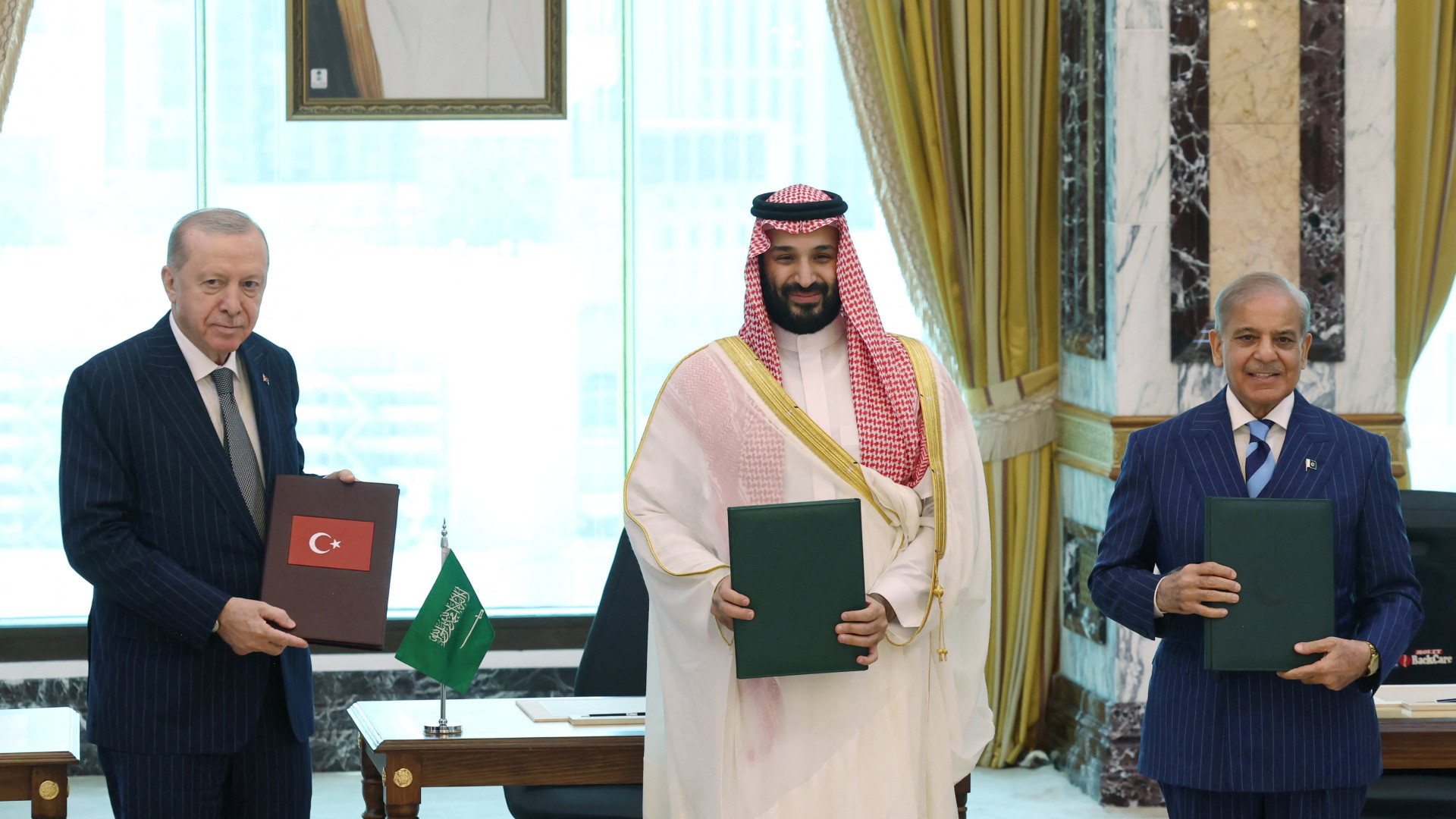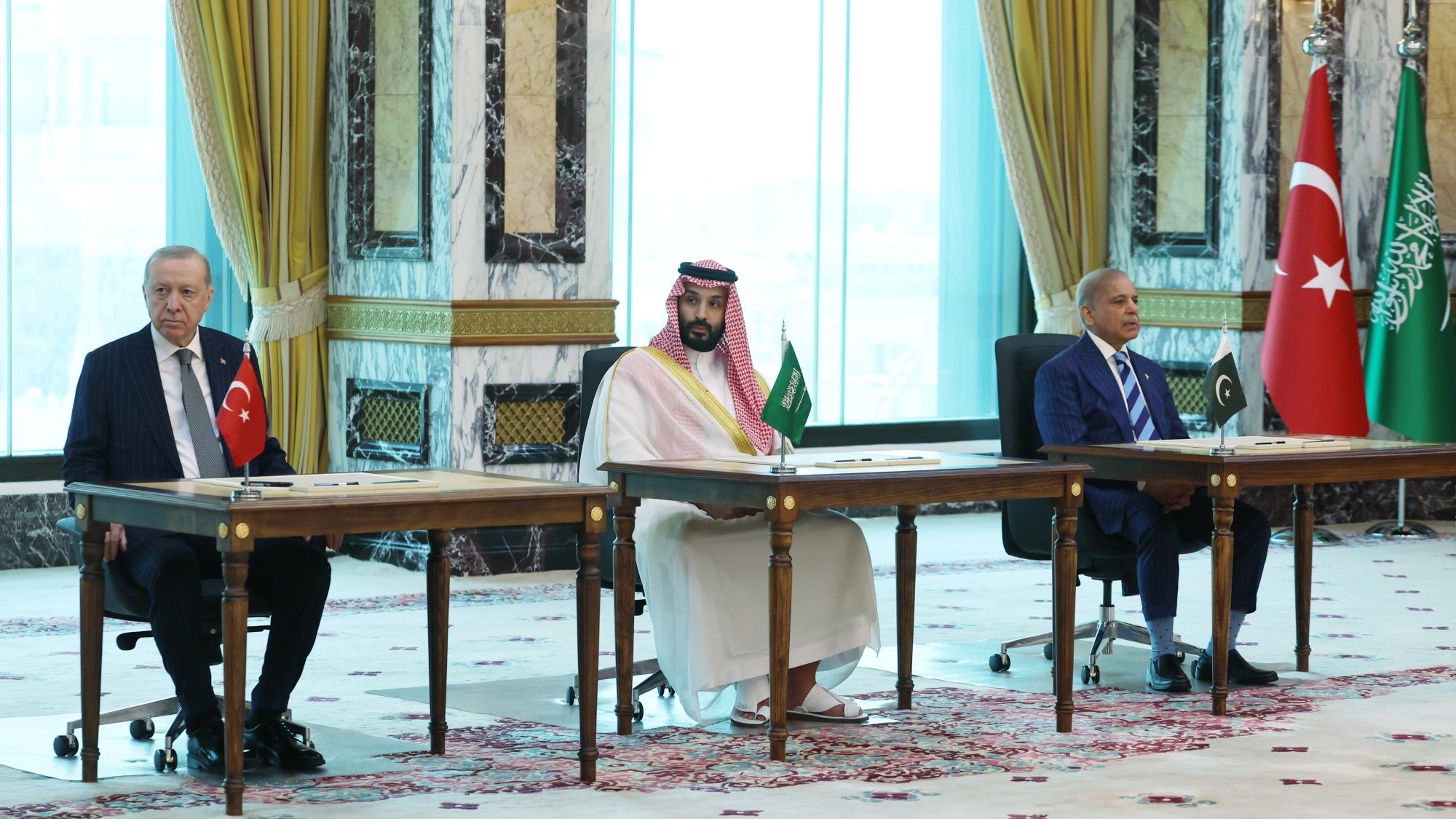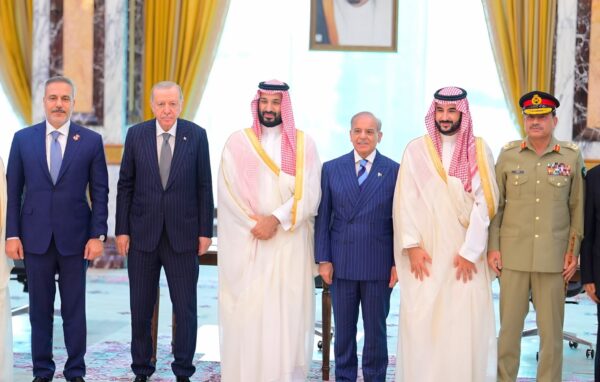
The Mecca pact signed on Aug. 7 between Pakistan, Saudi Arabia, and Turkey has variously been described as a “Muslim,” “Islamic,” “Sunni,” or “Middle Eastern” NATO. Some of these epithets might simply reflect commentators’ limited repertoire of alliance metaphors. But Turkish Foreign Minister Hakan Fidan explicitly referenced NATO in describing the new pact’s defense provisions.
Indeed, the pact declares mutual defense as a duty of its three members—an attack on one will be considered an attack on all. But it does not establish a central command system, any paths to achieve greater interoperability, or clear obligations in terms of defense spending and procurement. It also does not mention the use of nuclear weapons.
The Mecca pact signed on Aug. 7 between Pakistan, Saudi Arabia, and Turkey has variously been described as a “Muslim,” “Islamic,” “Sunni,” or “Middle Eastern” NATO. Some of these epithets might simply reflect commentators’ limited repertoire of alliance metaphors. But Turkish Foreign Minister Hakan Fidan explicitly referenced NATO in describing the new pact’s defense provisions.
Indeed, the pact declares mutual defense as a duty of its three members—an attack on one will be considered an attack on all. But it does not establish a central command system, any paths to achieve greater interoperability, or clear obligations in terms of defense spending and procurement. It also does not mention the use of nuclear weapons.