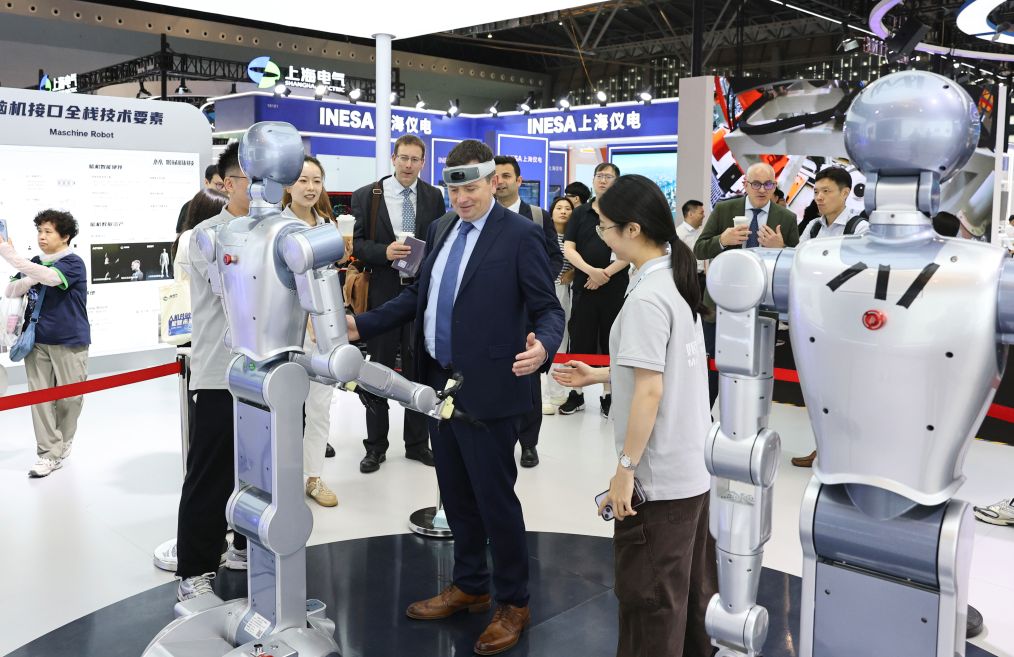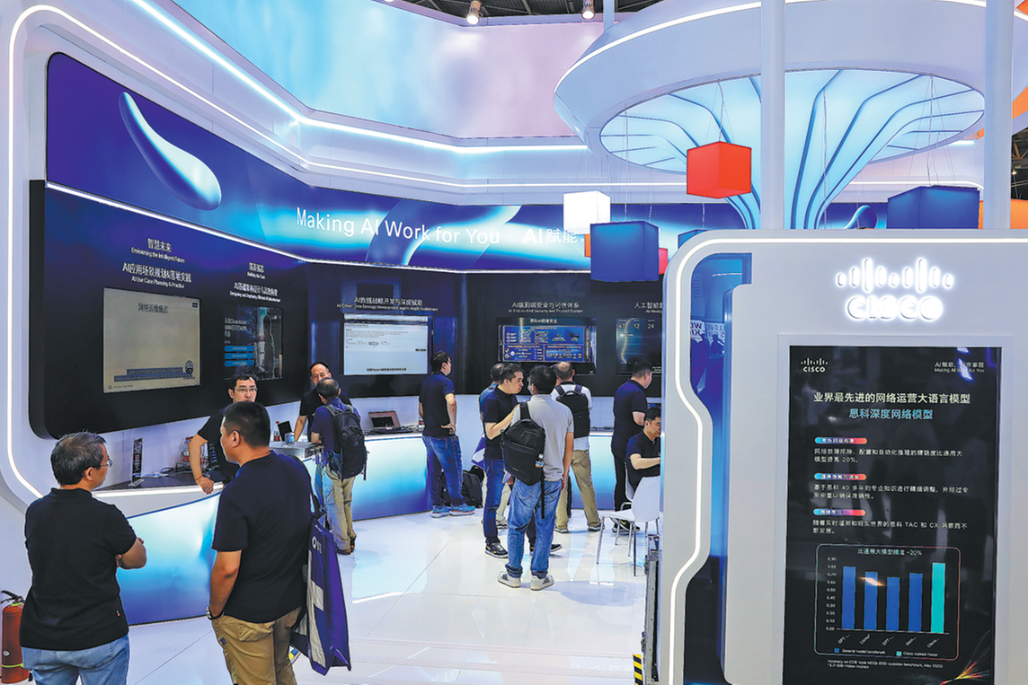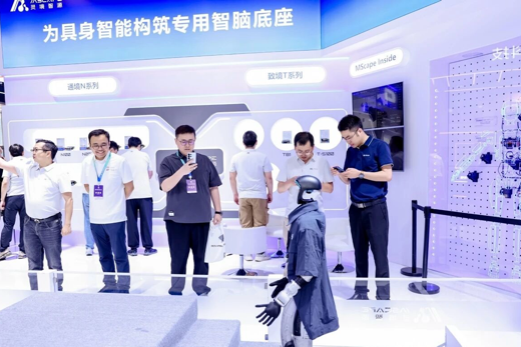
Visitors gather at Mscape's booth during the just-concluded 2026 World Robot Conference in Beijing. [Photo provided to chinadaily.com.cn]
China's push for greater self-reliance in embodied intelligence is extending to the underlying computing stack, as domestic developers work to close gaps in the chips, operating systems and control architectures that translate artificial intelligence into smooth physical action.
At the just-concluded 2026 World Robot Conference in Beijing, Shanghai-based MScape Technology presented two product routes built on its self-developed Dvorak ultra-heterogeneous computing architecture. The N series uses Nvidia computing chips and is designed for broad compatibility with mainstream hardware and software, while its T series uses domestic chips as a more self-reliant option.
"The essential difference is the source of computing power," said Sun Bo, founder and CEO of MScape Technology, adding that the two routes are intended to be complementary rather than simple substitutes.
"The N series gives robot makers a path to faster deployment using familiar tools, while the T series seeks to bring more of the underlying stack, from chips to the operating system, under domestic control," Sun said.