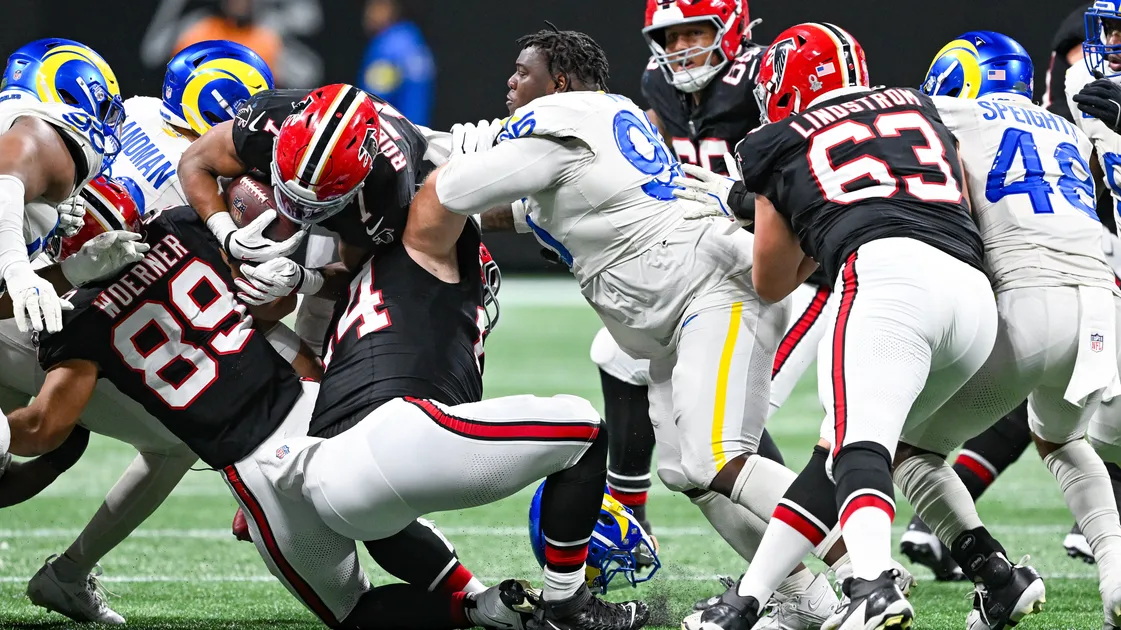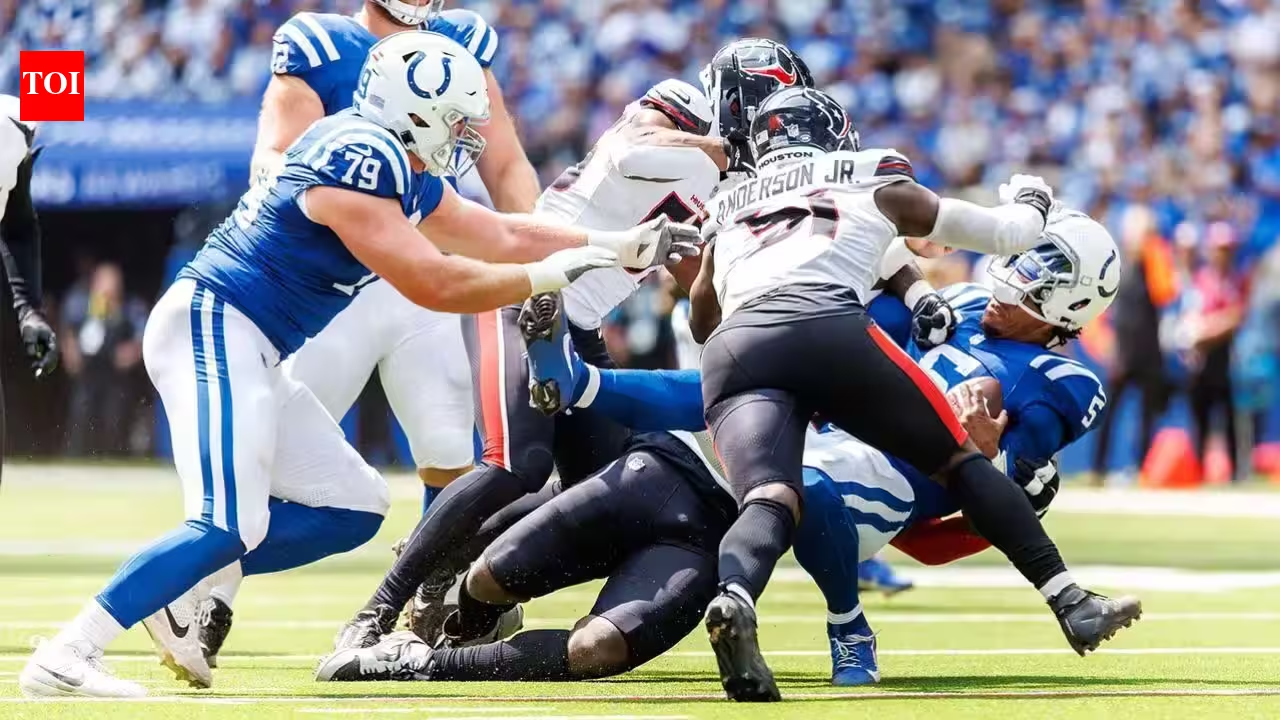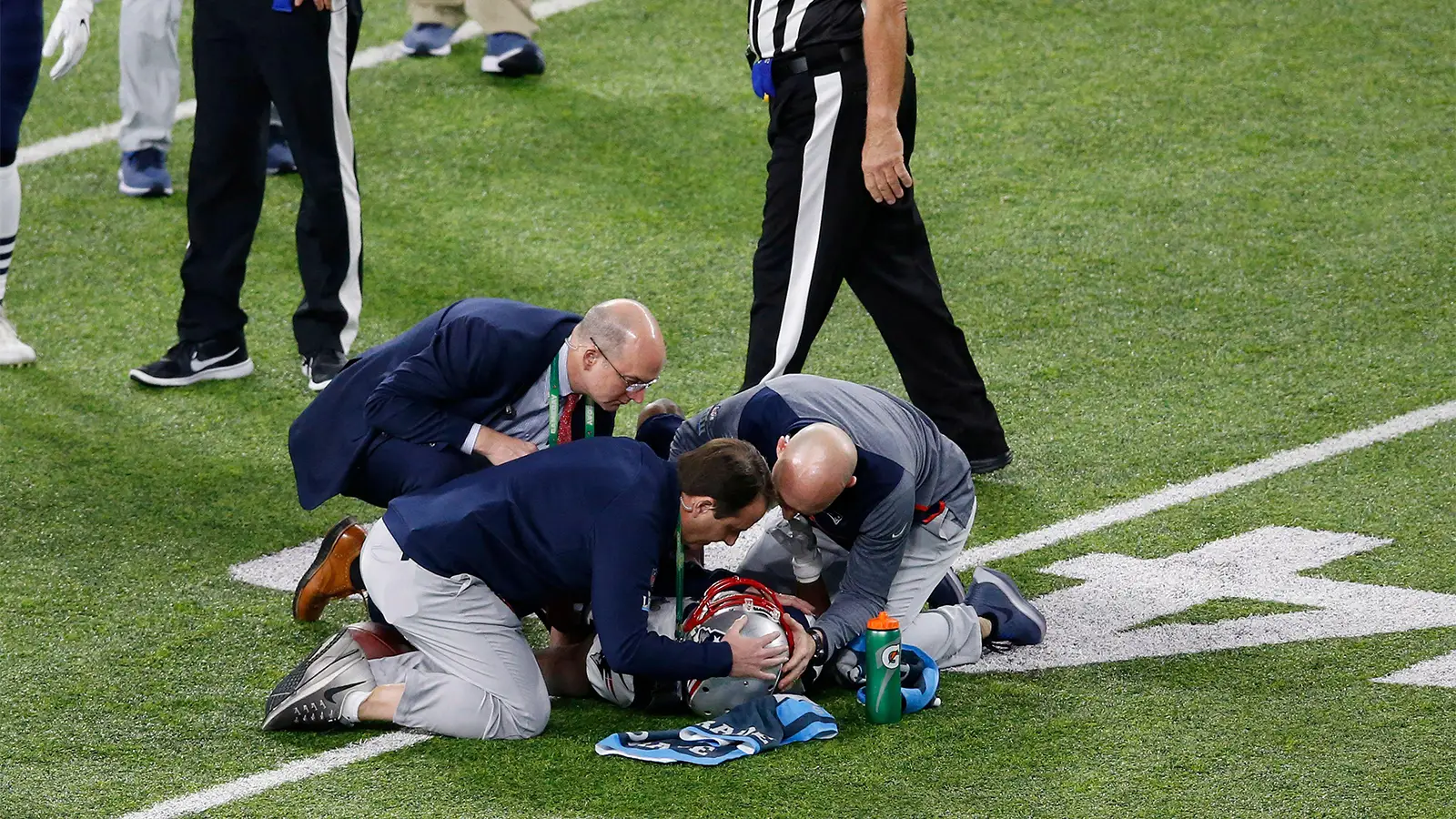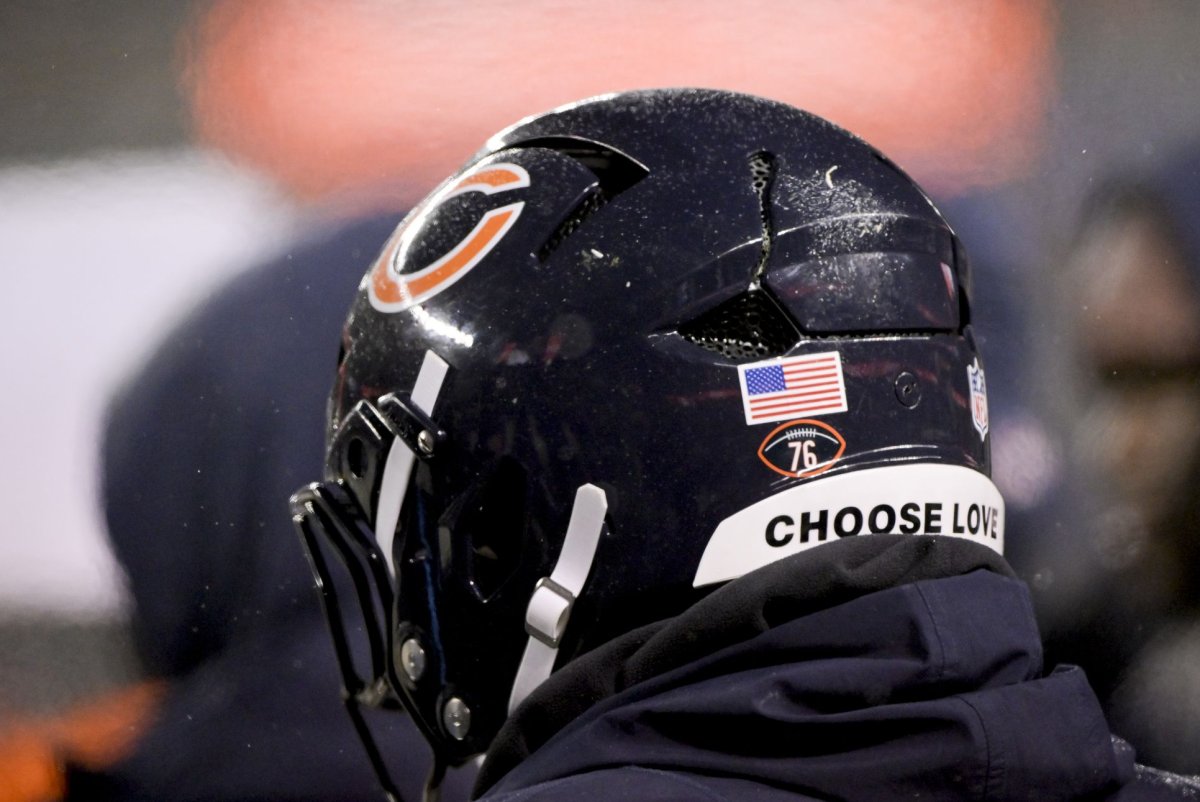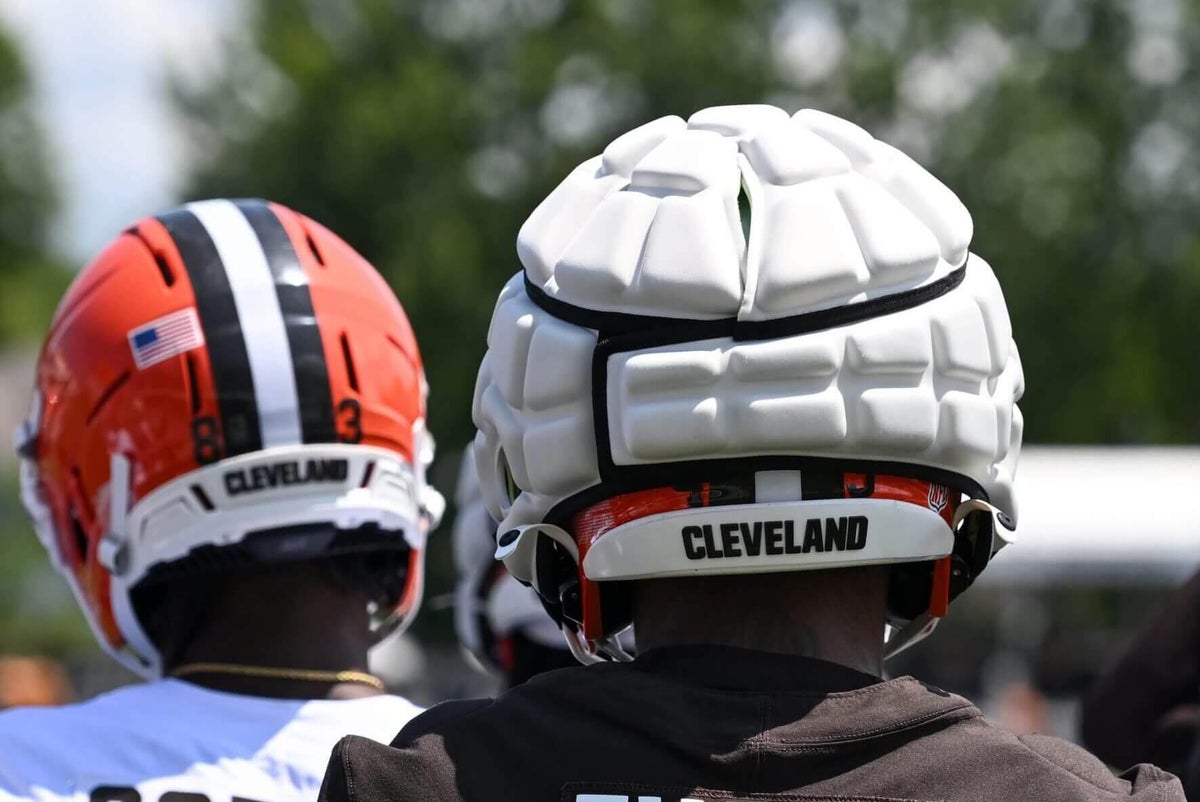
A new medical journal study published Tuesday concluded that at least a quarter of NFL players who died between 2016 and 2021 had chronic traumatic encephalopathy, or CTE, a neurodegenerative disease that has been diagnosed in individuals with high exposure to repetitive head trauma.The study from The BMJ, detailed in The New York Times, evaluated the 1,712 NFL players it said died between 2008 and 2021. Of the total, 338 donated their brains for neuropathological evaluation and 315 of them, or 93.2 percent, were diagnosed with CTE.The study further narrowed its sample to the last six years when brain donations were more frequent. In that period between 2016 and 2021, 878 players died, of whom 235 brains were donated for examination. Of those, 215 players were diagnosed with CTE, which is 91.4 percent. The final diagnosis percentage does not account for the 643 brains that were not examined.Based on the confirmed cases of CTE, the study concludes that a minimum of 24.5 percent of those who died between 2016 and 2021 had CTE. That’s if none of the brains that were not examined showed signs of the disease. Over the course of the full study dating back to 2008, the minimum rate is 18.5 percent.CTE can only be diagnosed by examining the brain after death.After the NFL spent years downplaying the concussion problem and its links to CTE, the league has been more proactive in recent years on the issue. In 2022, the league introduced the Guardian Cap, which is a soft, padded cover that fits over a player’s traditional helmet. In some of the earliest findings, the league said that the initiative was “an unqualified success” because “they’ve driven a significant reduction in concussions in practices.”The NFL approved use of Guardian Caps during regular-season and postseason games in 2024. During that preseason, there were 44 concussions, which was the fewest since the NFL began tracking data in 2015, according to NFL executive vice president overseeing player health and safety Jeff Miller and NFL chief medical officer Dr. Allen Sills.In the 2024 player poll conducted by The Athletic, almost 60 percent of players gave the Guardian Caps a thumbs down for in-game usage, while almost 30 percent gave it a thumbs up. Players in the poll were granted anonymity to speak candidly about sensitive topics.“You’re ignorant if you say thumbs down,” one player said. “It’s at each player’s discretion, and CTE is terrifying.”“Thumbs down,” another player responded. “That’s just a little too much. We have helmets to protect us. At the end of the day, if you’re gonna get a concussion, that’s not gonna protect you. If you get hit hard enough or your head hits the ground, you’ll still get a concussion. It’s not 100 percent foolproof.”One player acknowledged the benefits of the Guardian Cap for the purpose it was introduced, but still maintained that he wouldn’t wear it.“Thumbs down for me personally,” the player said. “I’m never gonna wear that, and it’s literally just because of the fashion part. It does a good job of protecting your head, but I’m not wearing it.”Guardian Caps are optional and many active players are still figuring out how they would like to proceed on game days. During training camp, Dallas Cowboys wide receiver CeeDee Lamb practiced with a Guardian Cap but told reporters he would not wear it in regular-season games because “it’s not comfortable.” Meanwhile, Pittsburgh Steelers rookie wide receiver Germie Bernard said this week on the “Not Just Football” podcast with teammate Cam Heyward that he will wear the Guardian Cap as he begins his NFL career.“Me and my lady were talking about it and everything, and she was just like, ‘I don’t want you to end up like some of these guys out here that don’t play football no more,” Bernard said. “And I’m like, ‘It wouldn’t actually be a bad idea.’ For me to play, like longevity, it’s not normal for our brains to be rattled for 10-plus years. So that is something that can help me in the long run. That’s how I look at it.”The topic of head injuries and their long-lasting impact on players is a constant conversation that hovers over the NFL. Certain times bring that discussion more to the forefront, especially when tragic realities are brought to light. Earlier this month, former San Francisco 49ers running back Roger Craig was inducted into the Pro Football Hall of Fame. During his enshrinement speech, Craig revealed that he had been diagnosed with vascular dementia.“Two things can be true,” Craig said. “Football gave me opportunities beyond anything I could imagine. It helped shape the man I became. At the same time, we know more today about brain health than when I played, and I hope sharing my story encourages people to pay attention to their health and seek help when something doesn’t feel right.”Another objective of The BMJ study was to examine the association between CTE severity and risk of dementia. The study found that among NFL players who donated their brains, dementia diagnosed based on records before death was common and associated with Stage IV CTE. In the 338 brains that were donated, dementia was diagnosed in 202 of 338 (59.8 percent). That included nine of 23 of those without CTE, seven of 24 with Stage I CTE, nine of 40 with Stage II CTE, 83 of 147 with Stage III CTE and 94 of 104 with Stage IV CTE.The study found that among NFL brain donors, 69.3 percent of dementia cases were not reported on death certificates, “suggesting that previous reports relying on death certificates underestimated dementia.”“These data indicate that CTE severity at death is significantly associated with dementia in NFL player brain donors, and that dementia is common in these donors,” the study concluded.The BMJ, previously known as the British Medical Journal, is a peer-reviewed medical journal owned by the British Medical Association.
New study shows at least a quarter of NFL players who died from 2016-2021 had CTE
A new medical journal study showed 91.4 percent of all donated brains studied between 2016 and 2021 were diagnosed with CTE.
981 words~4 min read