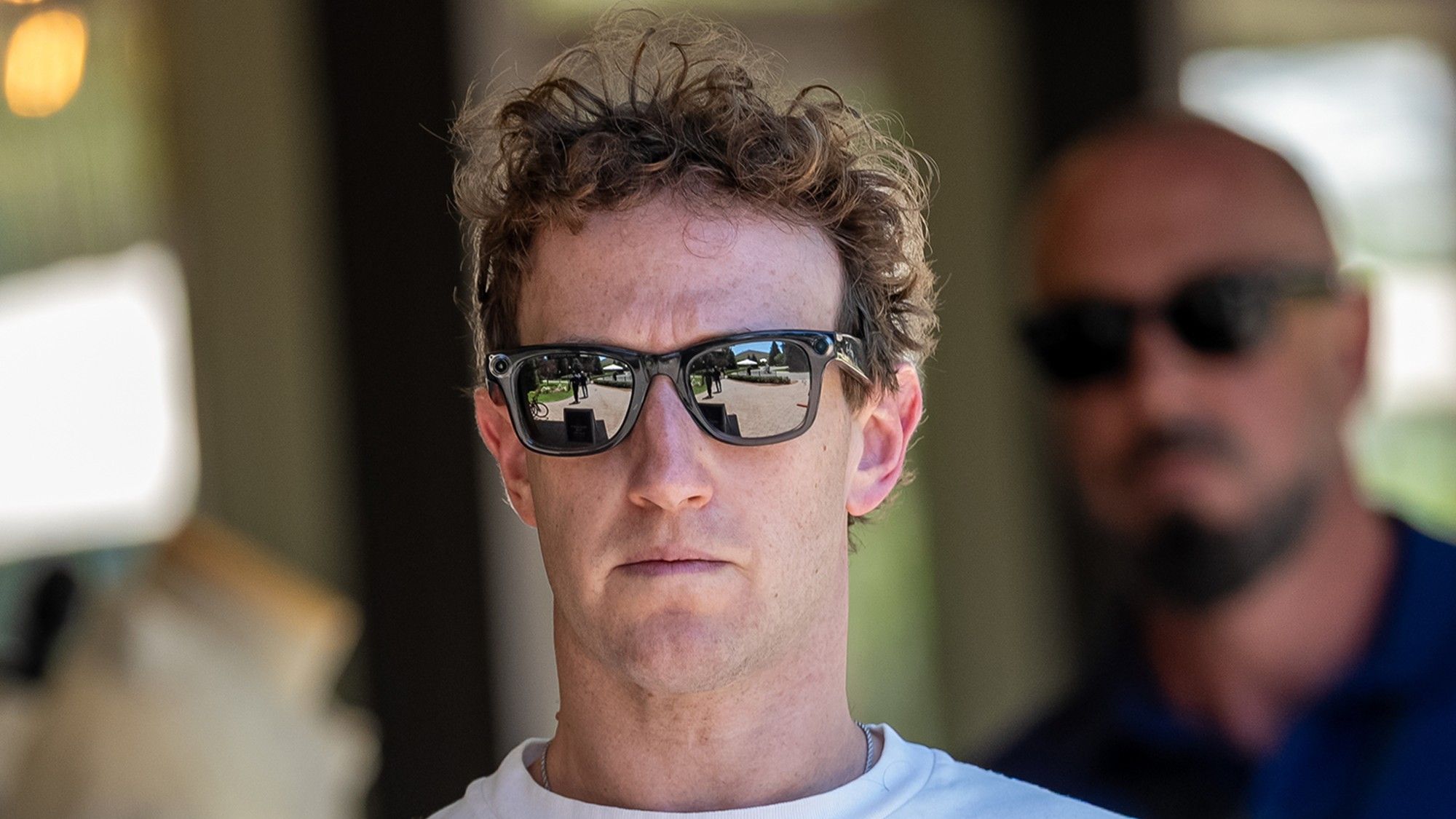
Mark Zuckerberg believes that “the biggest risk of AI” is not rogue agents or mass unemployment, but corporate control, said Nilesh Christopher in the Los Angeles Times. In a sweeping 6,500-word manifesto earlier this month, Meta’s chief executive outlined his vision “to build ‘personal superintelligence’” for the masses. Average people could soon have “a personal AI agent” to “work on their behalf.” Meta, he argues, will lead the way as “an American open-source alternative to rapidly advancing, inexpensive Chinese AI models” and tech rivals like Anthropic and OpenAI that have kept their code private. Zuckerberg suggested ways the government can “collaborate with AI companies for safety-testing” of their models, though he “cautioned that government intervention” in AI development risks handing “the advantage to China.” But it is imperative, he said, that neither the government nor “a few companies amass too much control over the technology.”Zuckerberg’s “LinkedIn-evangelist-grade techno-optimist pablum” tries to position Meta as the “little guy,” said Will Oremus in The Atlantic. The man who “single-handedly commands a $1.5 trillion tech giant” has emerged as a “critic of corporate power,” urging the “industry’s high priests to throw open the gates to the masses.” It’s a conveniently timed message. As Americans sour on massive data center buildouts and see headlines of rogue AI breaking constraints, Zuckerberg is suddenly “a man of the people.” He wants to be the “good AI guy,” said Dave Lee in Bloomberg. “Don’t buy it.” We’ve seen Zuckerberg flip-flop on issues too many times—most notably when he banned President Trump from Facebook and then later attended his inauguration. The only reason Meta lacks an “all-powerful closed AI model” is that it has “failed to build a competitive one.”
Meta: Zuckerberg’s plea to liberate AI
The Facebook founder wants superintelligence for all
343 words~2 min read