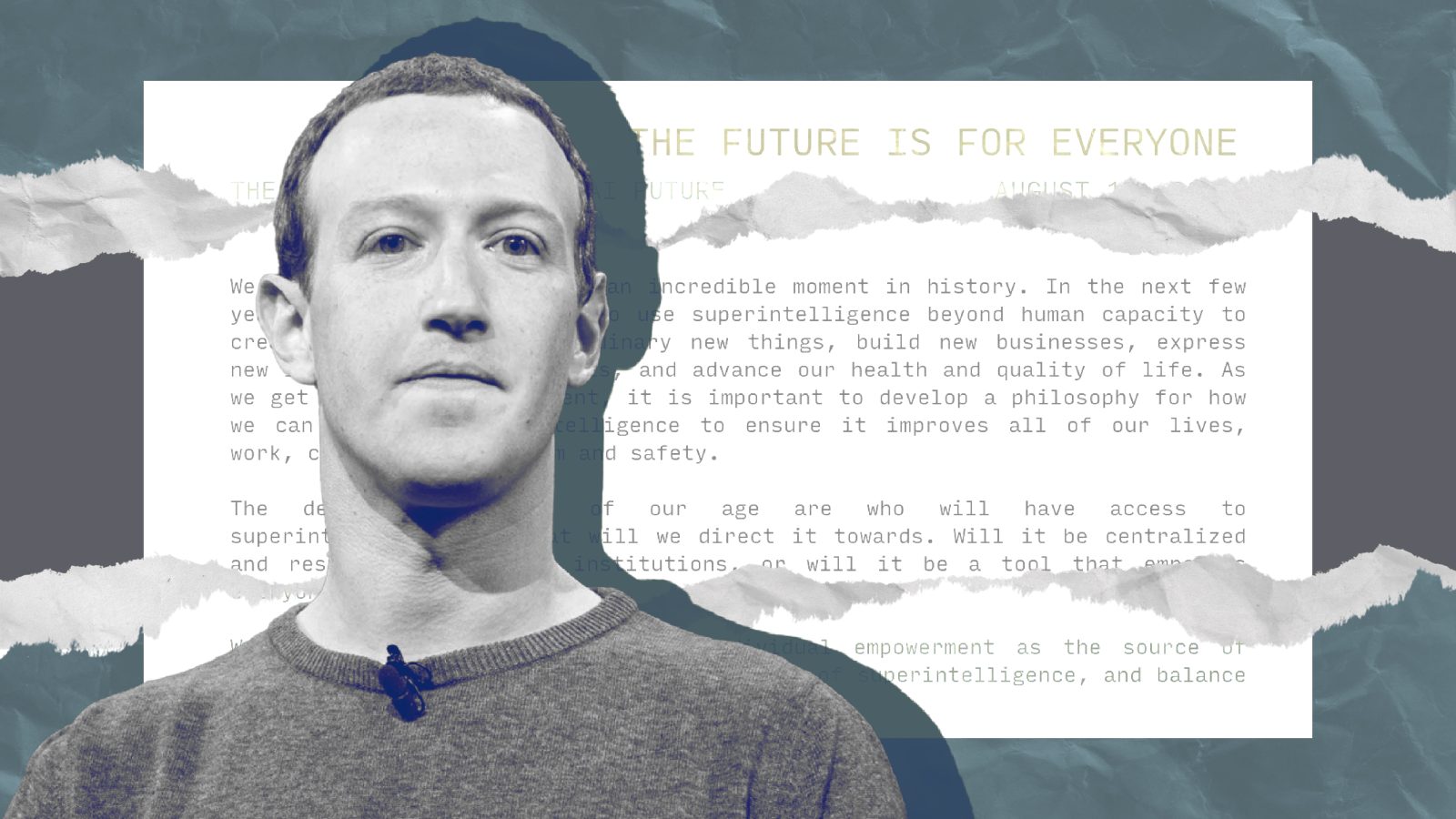
Mark Zuckerberg’s "The Future is for Everyone," published last week, lays out an expansive vision for personal superintelligence built around individual empowerment, invention, and the broad distribution of AI capabilities. Rather than concentrating advanced AI in the hands of governments, corporations, or a handful of technology providers, Zuckerberg argues that individuals should have access to powerful AI agents aligned with their own goals and values.
It is an ambitious vision, but it also asks readers to place considerable faith in Meta as one of the companies capable of delivering it. That creates an obvious tension. Meta is one of the world’s most powerful technology platforms, built largely on advertising, massive-scale data collection, and proprietary consumer services. The company advocating against excessive concentration of AI power is itself among the companies most capable of accumulating that power.
Let’s examine whether Zuckerberg’s vision can truly put more AI power in individuals’ hands without giving Meta even more control. Then we’ll close with my Product of the Week: a business laptop designed to support more AI processing locally.
Meta’s History Complicates Zuckerberg’s Vision