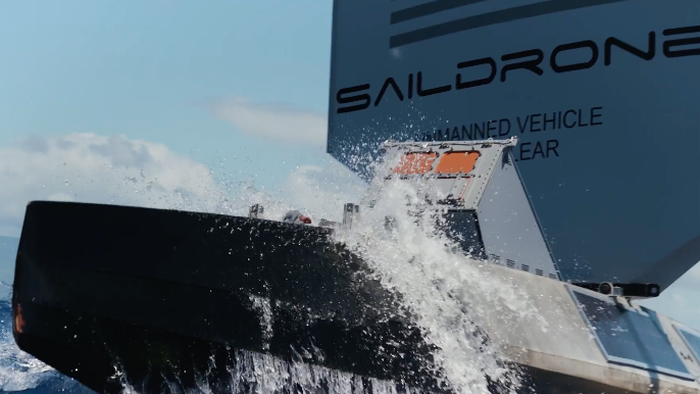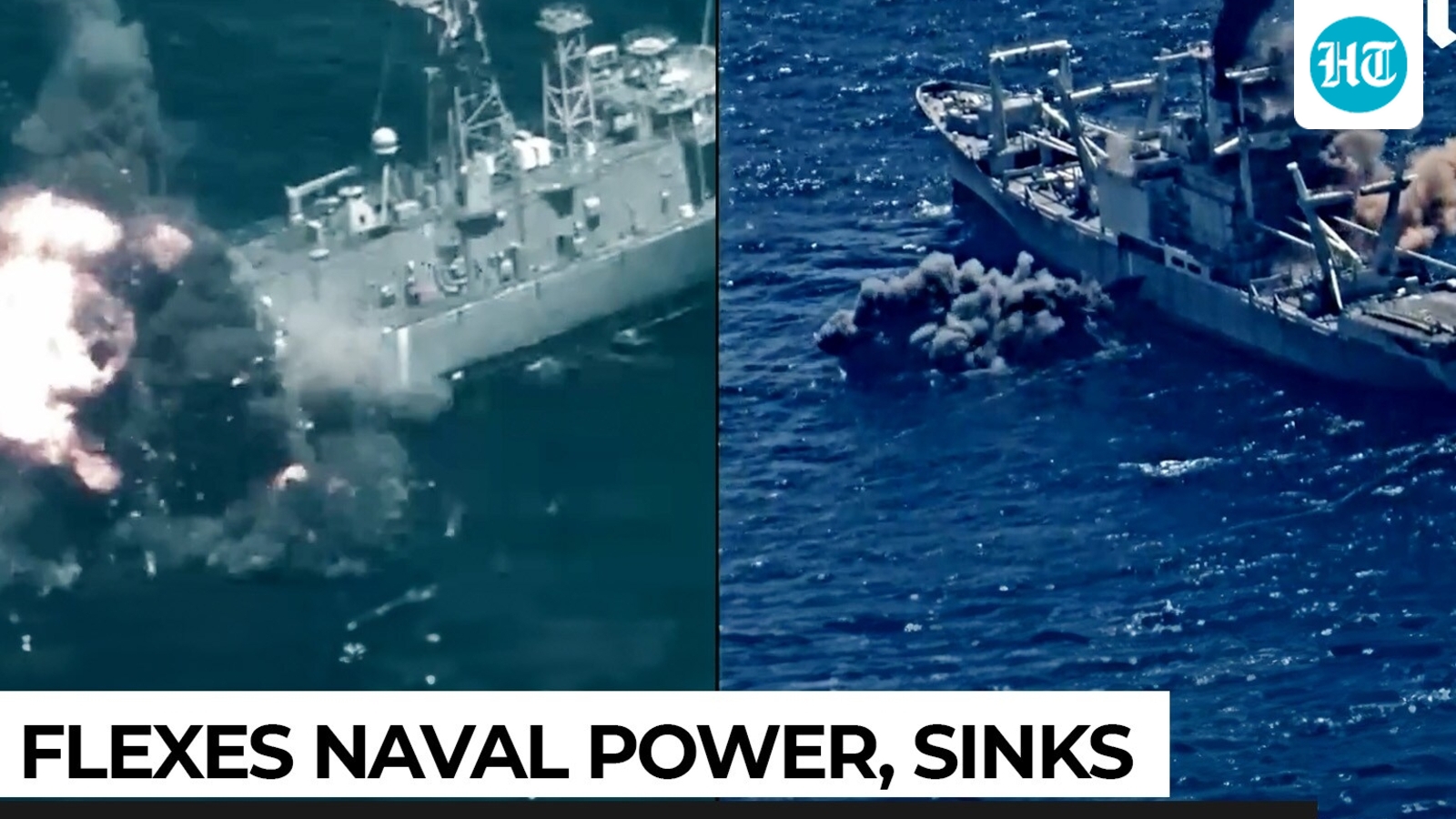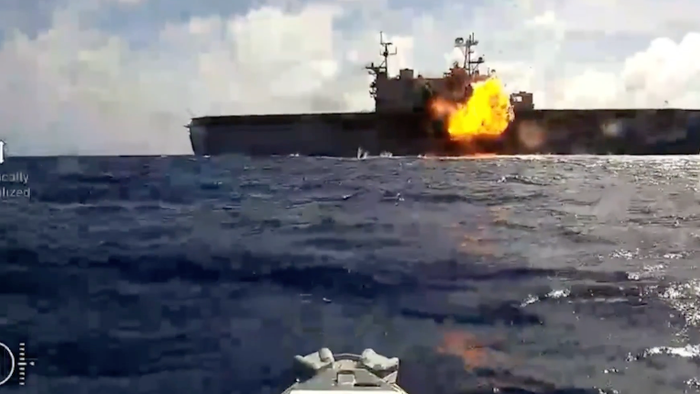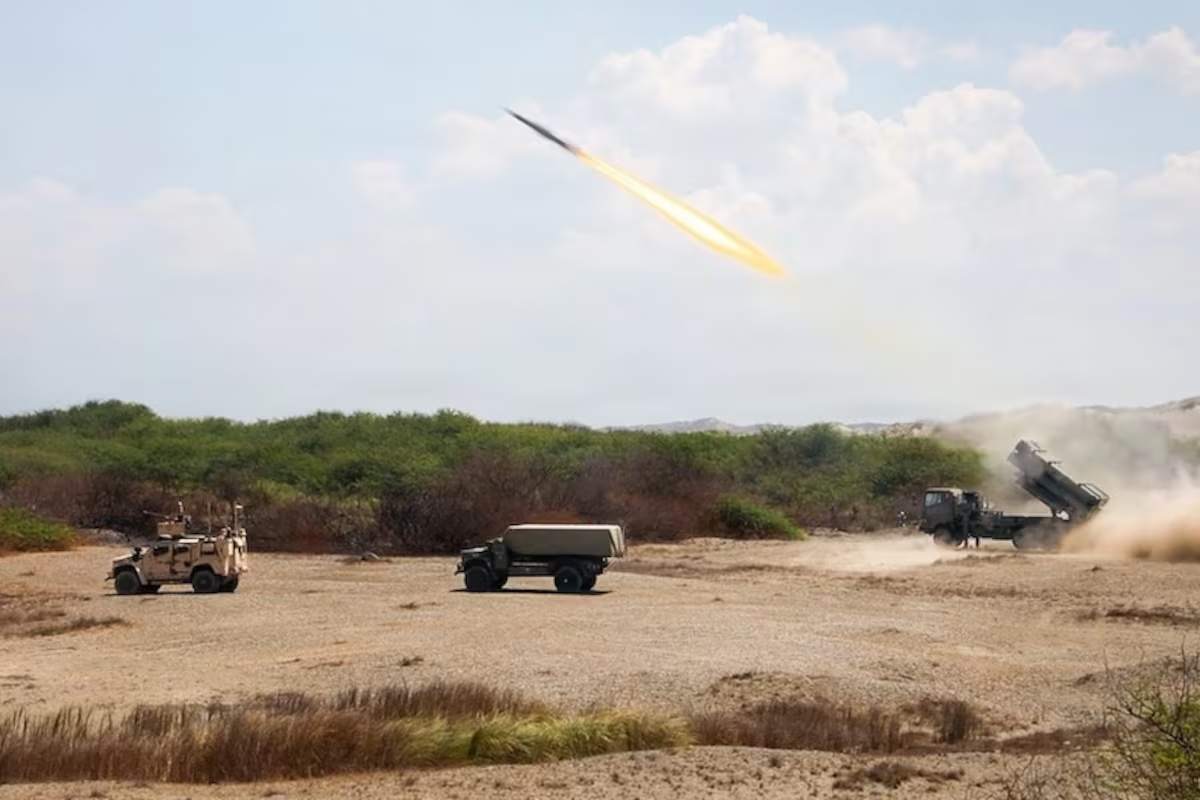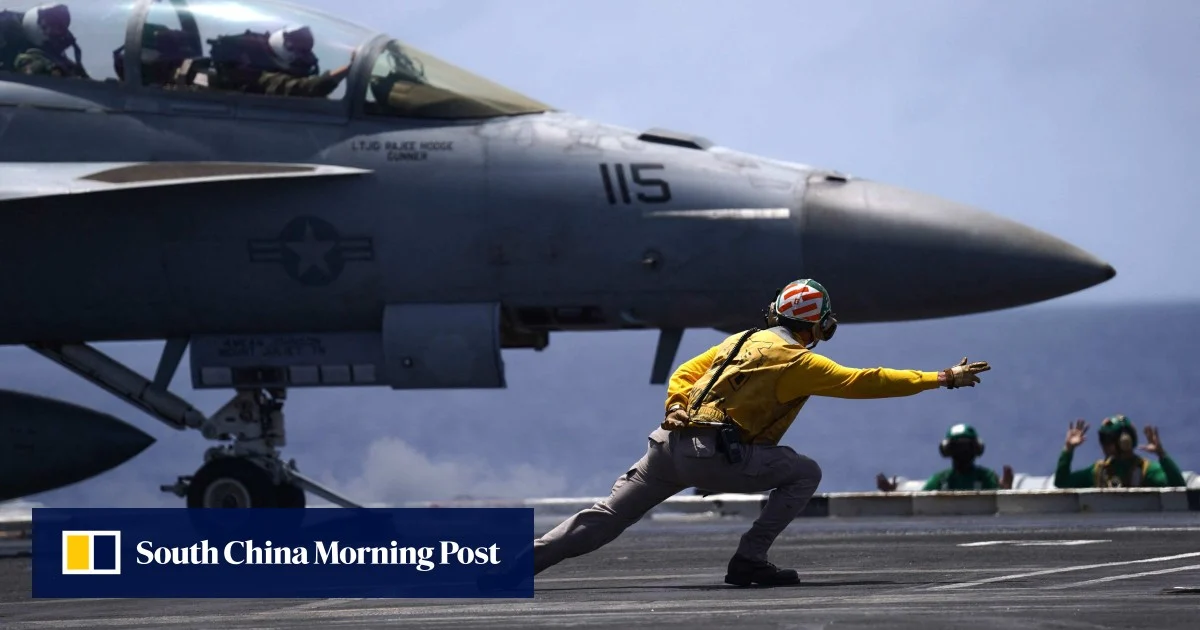
SINGAPORE — A pair of multinational exercises in the Pacific this summer offered a chance for the US military to flex its growing ship-sinking capabilities, including the ability to conduct long-range attacks from stealth bombers and drive unmanned boats into target vessels.
The capabilities were on display during the sinking exercise (SINKEX) phases at both Exercise Valiant Shield and Rim of the Pacific (RIMPAC).
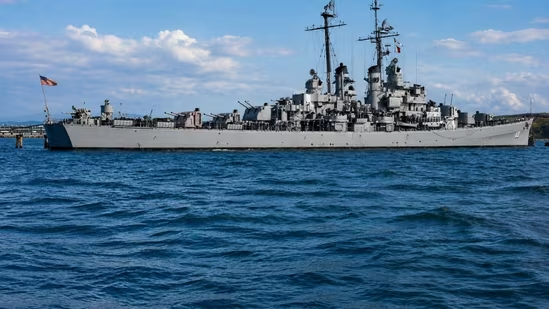
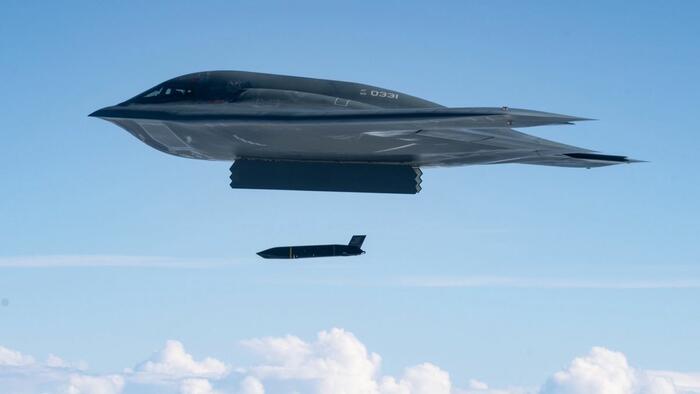
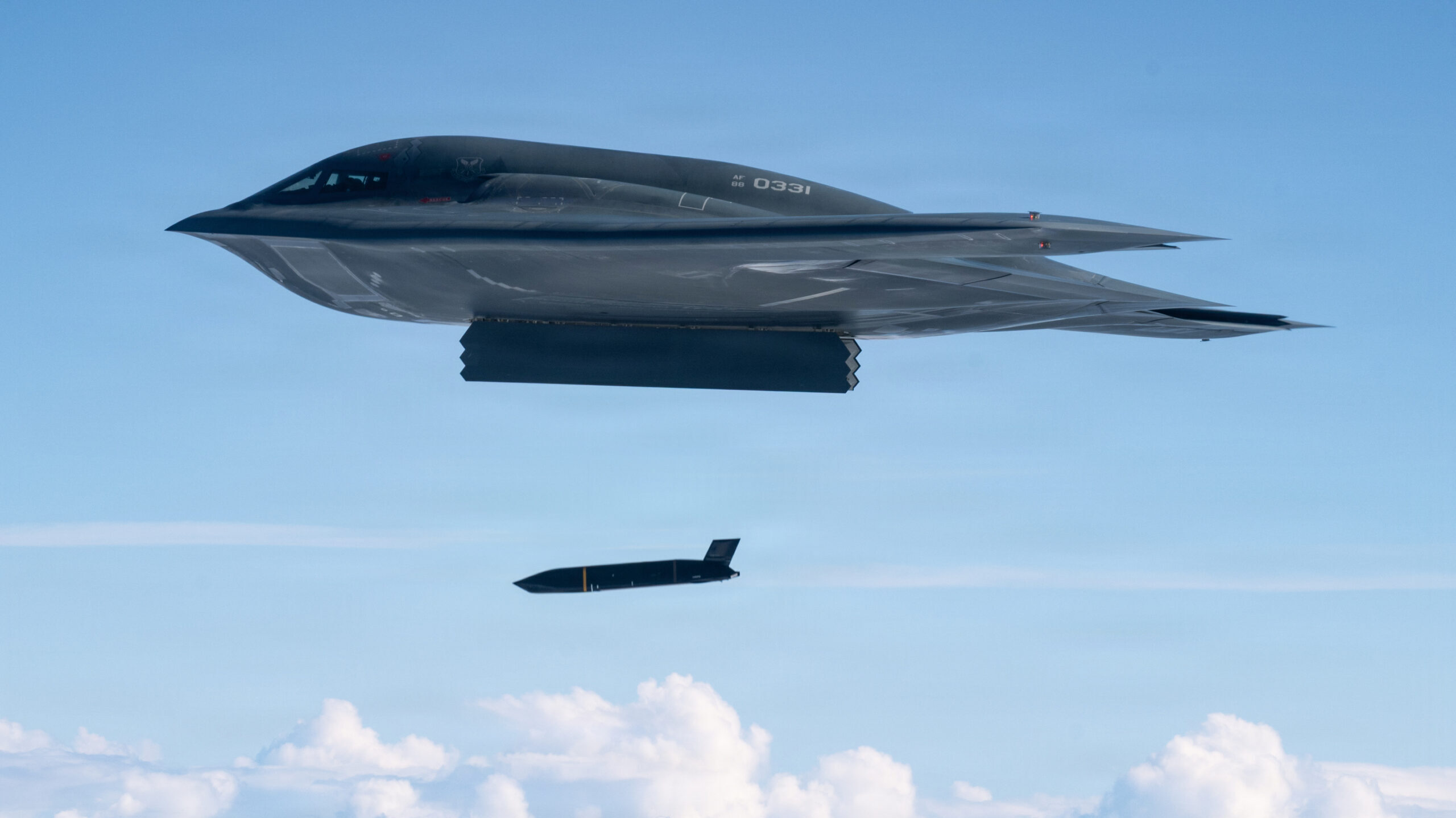
The first SINKEX took place June 27 during Valiant Shield, north of the Mariana Islands, when a US Air Force B-2 bomber launched a stealthy AGM-158C Long Range Anti-Ship Missile (LRASM) at the decommissioned amphibious transport dock Juneau, according to a news release.
The strike appeared to be the first public launch of an LRASM from a B-2, a significant development given it’s the only in-service stealth aircraft that can carry the LRASM internally. Internal bomb bays maintain the stealth aircraft’s low-radar cross-section and enable the US military to conduct stealthy, long-range anti-ship attacks, which could prove crucial in contested airspace across the vast distances of the Pacific Ocean.
“The B-2’s impressive performance underscores the U.S. military’s commitment to adaptability and flexibility in the face of emerging security challenges,” US Pacific Air Forces commander Gen. Kevin Schneider said in the news release then.