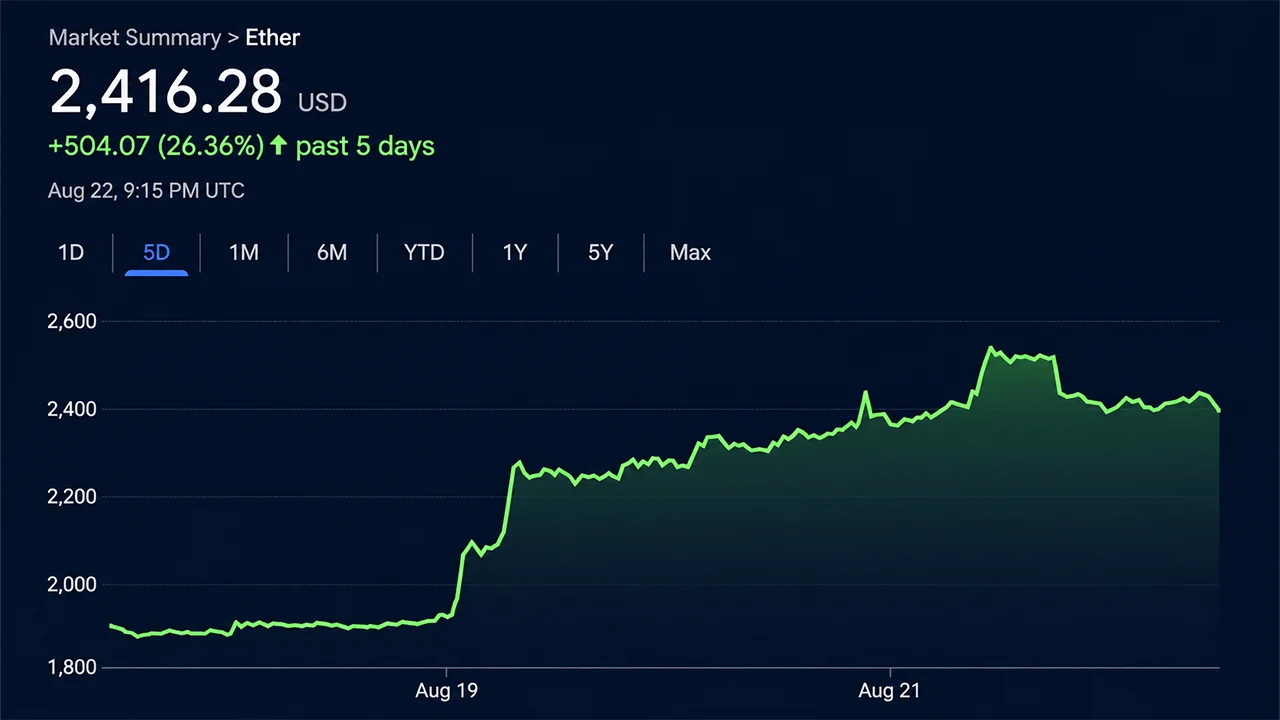
Ethereum’s 1-week implied volatility just pulled off a magic trick, going from 33% to 67% in the span of seven days. And traders on Paradex are already positioning to ride the current.
The sharp IV spike, reported by the digital asset derivatives platform on August 25, has created a notable gap between short-term and longer-dated options pricing. The result: a flurry of calendar spread activity targeting ETH’s gradual move toward the $2,700 strike.
The trade: selling expensive vol, buying cheap vol
A calendar spread is one of those strategies that sounds complicated but boils down to a simple bet. You sell a near-term option that’s priced richly and buy a longer-dated option at the same strike that’s comparatively cheap. If the short-term volatility normalizes while the longer-dated contract holds its value, you pocket the difference.
In this case, traders on Paradex sold September 4 calls at the $2,700 strike with an implied volatility of roughly 65%. Simultaneously, they bought October 30 calls at the same $2,700 strike, where IV sat at approximately 56%. The net cost for five contracts came to about $624.60.