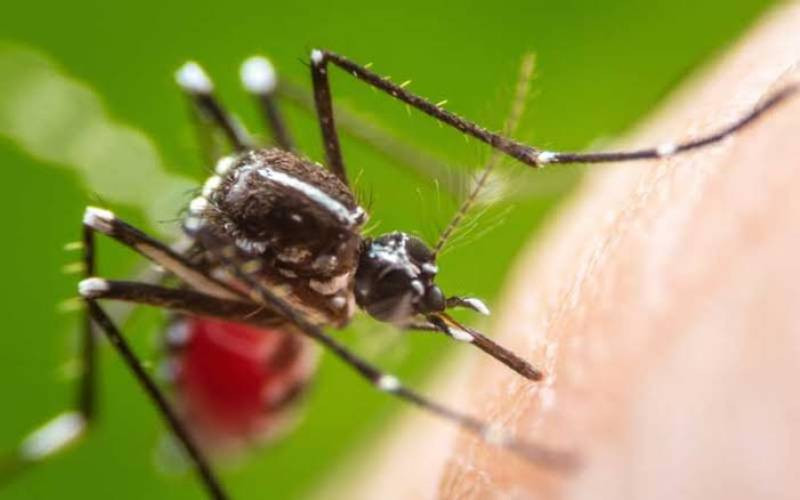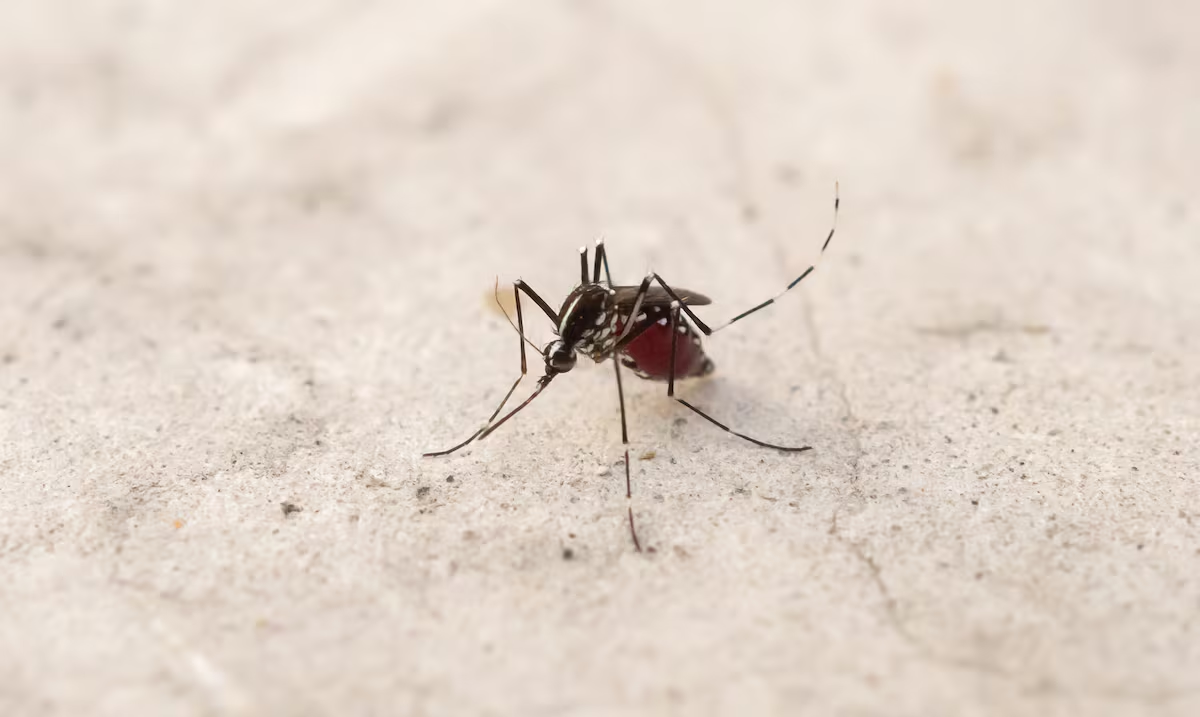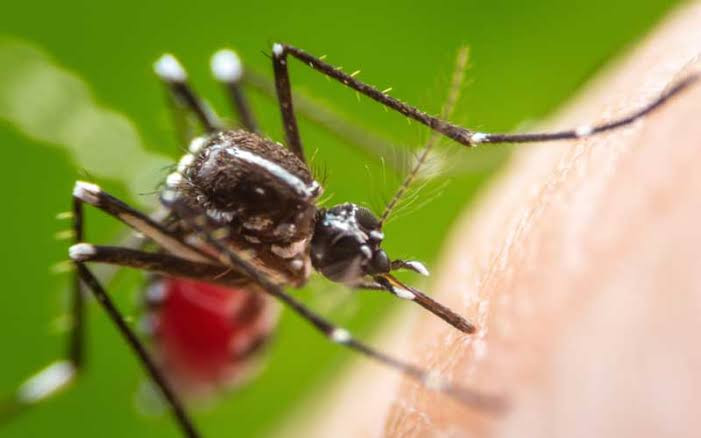
According to Duale, the mosquitoes predominantly bite during the day and breed in stagnant water.
Kenya records an average of 16,675 dengue cases annually, with the Coastal region remaining a major hotspot for transmission, Health Cabinet Secretary Aden Duale says.
According to Duale, the mosquitoes predominantly bite during the day and breed in stagnant water found around homes and other residential areas.
"Common breeding sites include water storage containers, tanks, drums, flower pots, discarded plastics, old tyres, clogged gutters, puddles and other water-holding receptacles," Duale said in a statement on Tuesday.
The CS said poor environmental sanitation, inadequate solid-waste management, irregular garbage collection and unsafe water storage practices were contributing to the spread of the mosquitoes and increasing the risk of dengue transmission.