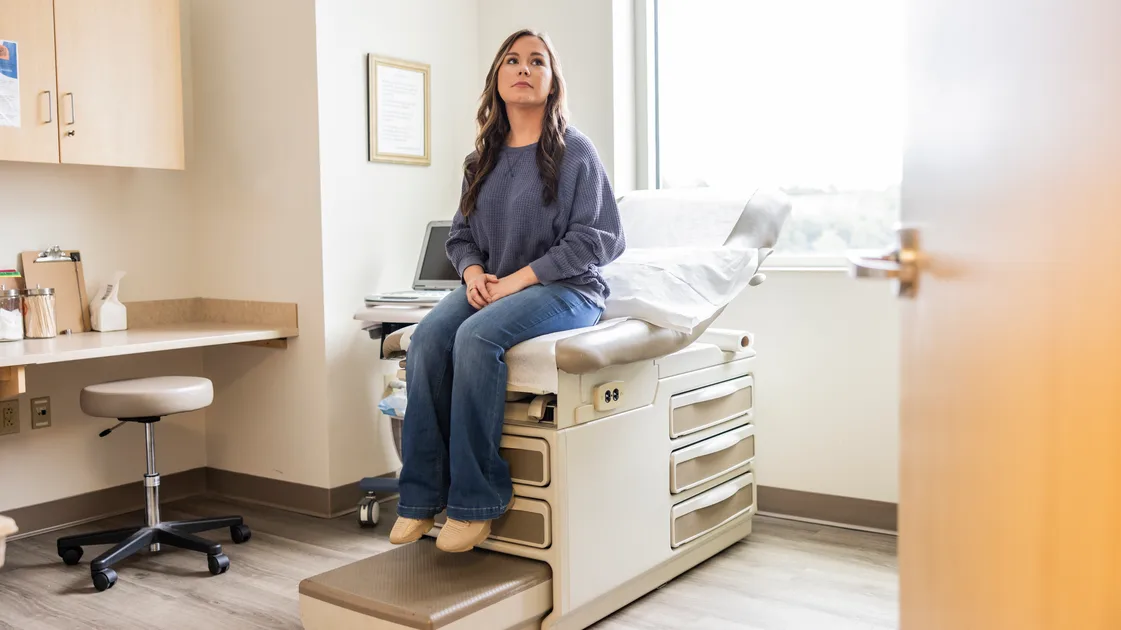
A week before her dental surgery, one of my patients came to me with a question.She had been in recovery from opioid addiction for more than a year and a half. When she first entered my treatment program, we saw each other weekly. Over time, through remarkable discipline, those visits became monthly. She had rebuilt her life on buprenorphine treatment. She had gone back to work, reconnected with her church, fought for her children in family court, and regained stability.She had worked for every bit of it.Now she was doing something else important: fixing her teeth, which had suffered through years of addiction and neglect. She was scheduled for multiple extractions, and because she was in a medication-assisted treatment program, her dentist wanted to know who would manage her pain afterward.We talked carefully. We planned ahead. We agreed we would temporarily adjust her medication and manage her pain safely.We had a plan.The surgery itself went fine. Then Friday afternoon came. A few hours later, her pain was far worse than expected. We moved quickly, prescribing additional medication exactly as we had discussed. But what happened next had very little to do with medicine.The pharmacy flagged the prescription because she was already taking buprenorphine. Insurance triggered a prior authorization that could not be completed late on a Friday. The state prescription monitoring system raised another flag.A carefully constructed plan — one made by a patient, her physician, and her dentist — suddenly hit layer after layer of suspicion, delay and bureaucracy.She could not get the medication.By that evening, she was sitting in an emergency room lobby with her husband, in agonizing pain. He called me from the waiting room. I can still hear him asking, “Why is this happening? What could we have done differently?” I did not have a good answer.For 12 hours, a woman who had spent a year and a half rebuilding her life sat in unnecessary pain, not because no one had prepared, and not because no one cared, but because once the plan left the room where it was made, it began to come apart.Before the procedure, she had told me something I still think about.“I’ve worked too hard for this.”And when everything started unraveling: “I thought we had a plan.”We did. That is what still hurts. I had been so certain that planning ahead would protect her.I was wrong.For a long time, I told myself moments like this were isolated breakdowns. A delayed refill. A missed discharge instruction. A specialist handoff that did not go smoothly. But the longer I practice, the more I realize this is not rare.I have since recognized versions of this pattern after hospital discharges, delayed refills, specialist transitions and countless other moments when a sound medical decision simply does not hold the way patients assume it will.It is one of the quietest, most exhausting realities in American health care.Every day, doctors and patients make careful, appropriate decisions. Then somewhere between the office, the pharmacy, the hospital, the insurer, or the next handoff, those decisions can lose enough force that patients find themselves starting over.It’s not always because anyone is reckless or indifferent. Often, it’s because each part of the system is doing exactly what it was designed to do: verify, reassess, regulate and protect. But from the patient’s point of view, the experience can feel maddeningly similar.“I already told them that.”“Didn’t we already do this?”“Why am I starting over?”We have quietly normalized a kind of medical repetition that would feel absurd almost anywhere else.“Health care is not only about making good decisions. It is also about helping those decisions survive the real world.”In most parts of life, once an important decision is made, we expect it to carry forward. In health care, patients often learn something stranger: Even the right plan may need to be repeatedly defended.Sometimes, that repetition is frustrating.Sometimes, it is painful.And sometimes, especially when addiction recovery, mental health, chronic illness or serious pain are involved, it costs people something far more important: trust, momentum, dignity or suffering that never should have happened.What stayed with me most was what happened next.When she came back for a follow-up, I was nervous. I was afraid she would blame me. I felt like I had let her down. I had not anticipated enough. I had not protected her plan from all the downstream obstacles waiting for it.Instead, she thanked me.She thanked me for listening. She thanked me for calling. She thanked me for helping her through it.And strangely, that was harder.Because I could not comfortably say “you’re welcome” to gratitude for suffering I still believed should have gone differently.She was thanking me for helping her navigate a failure I felt we should have better prevented.That moment changed me.I still think deeply about diagnosis, treatment and doing right by patients. But now I also think more carefully about what happens after they leave my office.Where could this stall?What paperwork could delay it?What assumption could reopen a decision we already made thoughtfully?Because making the right decision is only part of the job.More and more, I believe continuity is part of the treatment itself.For clinicians, that means anticipating handoff failures better, especially during predictable high-friction moments like surgery, hospital discharge or medication changes. For patients, it means asking one more question before leaving: “What could interrupt this plan, and who do I call if it does?”That question alone can sometimes prevent a crisis.And for the system itself, we need to measure not just whether decisions are made, but whether they actually hold. Because health care is not only about making good decisions. It is also about helping those decisions survive the real world.One of the hardest lessons of my career is that some of the most painful failures in health care are not bad decisions. They are the right decisions that patients are forced to keep proving, over and over again.Holland Haynie, M.D., is a family physician and Chief Medical Officer at a federally qualified health center in rural Missouri. He writes about the space between medical decisions and what patients actually experience when those decisions meet the real world. His work focuses on addiction medicine, rural healthcare, and the hidden burdens patients face navigating modern systems. His writing has appeared in STAT, MedPage Today, The Hill, and Modern Healthcare.Do you have a compelling personal story you’d like to see published on HuffPost? Find out what we’re looking for here and send us a pitch at pitch@huffpost.com.
I’m A Doctor. This Harmful Reality Of American Health Care Is Becoming Normalized — And Patients Need To Know.
“It is one of the quietest, most exhausting realities in American health care.”
1,073 words~5 min read