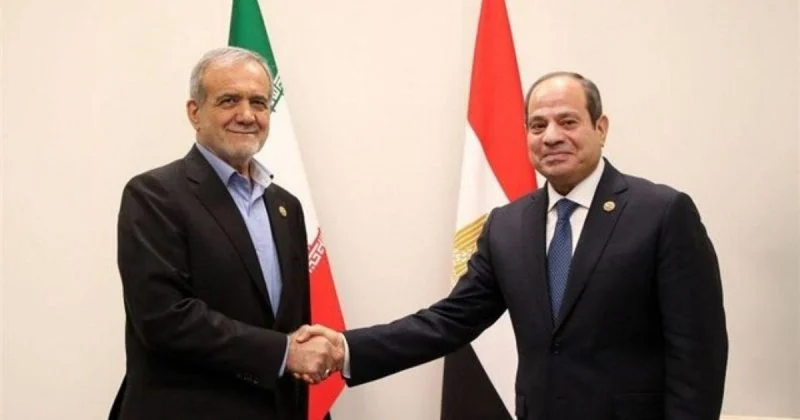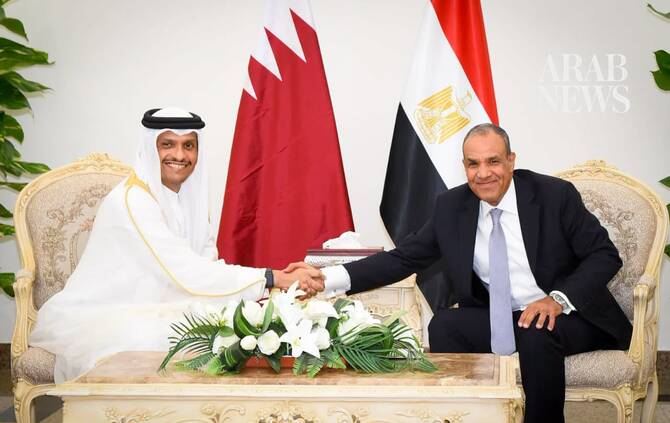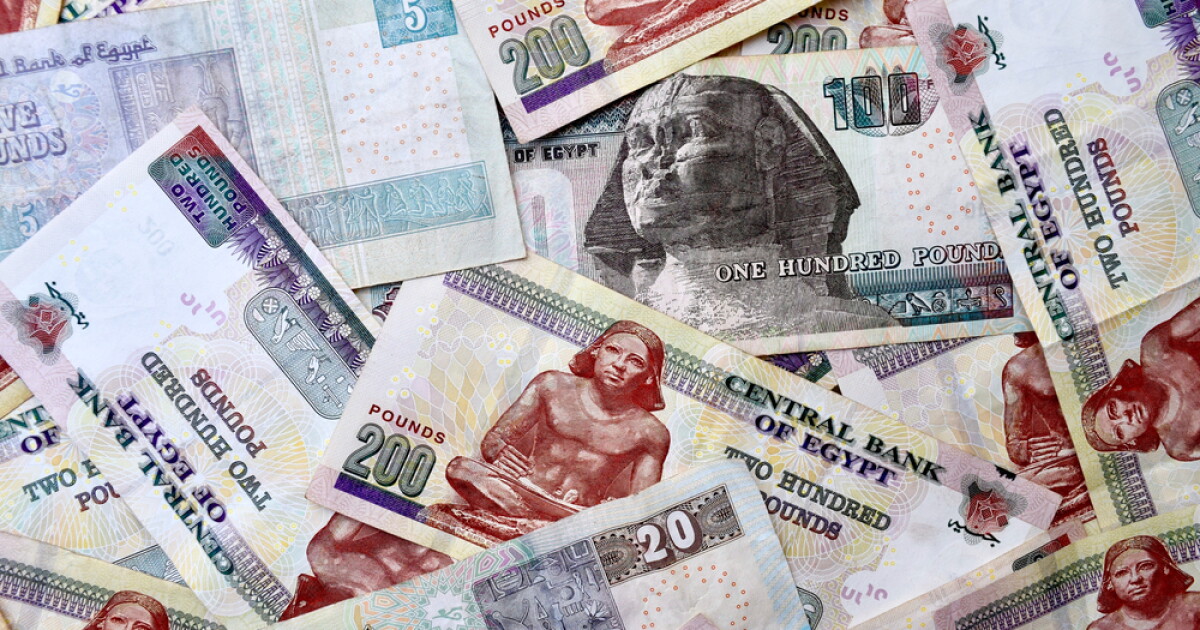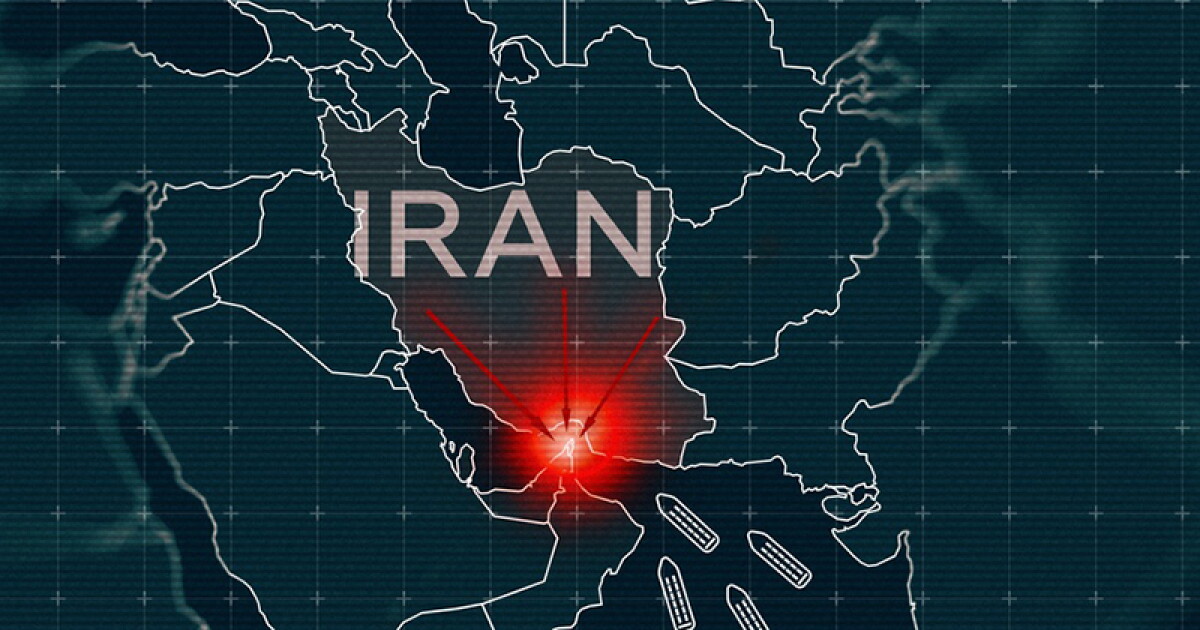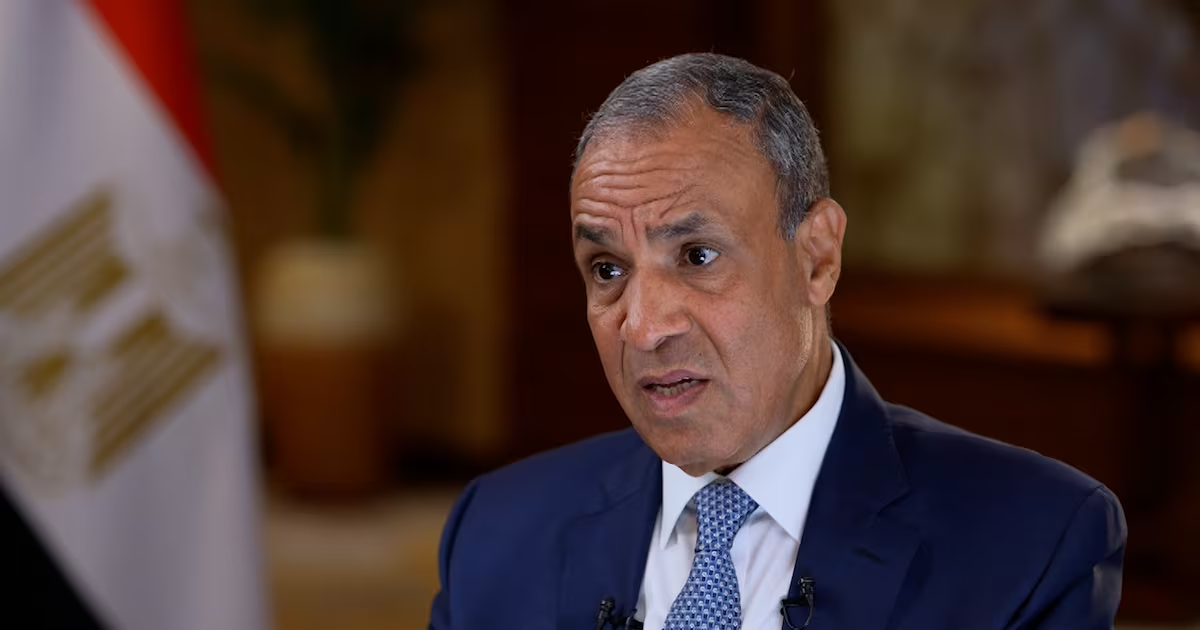
Egypt faces a region erupting in crisis, Foreign Minister Badr Abdelatty has said, as Cairo works to mediate between the US and Iran, contain the war in Gaza and protect its share of the Nile waters.“We are living in a very, very volatile region,” Mr Abdelatty told On The Record with Hadley Gamble. “It is unpredictable.”A framework agreement, signed by the US and Iran in June aimed at providing impetus for talks to end the war between them, collapsed last month.“There is a problem, and there is, you know, no peace, no war for the time being,” Mr Abdelatty said, describing the situation as a “deadlock.”The agreement was meant to lead to sanctions relief and the reopening of the Strait of Hormuz, but neither has emerged.Mr Abdelatty said Iran had assured him that it was “ready and committed” to the framework agreement, but acknowledged doubts about who controls policy in the country.He said that, in his view, negotiations were out of the hands of diplomats and were being handled by Iran’s Islamic Revolutionary Guard Corps. “But we have to continue contacting our counterparts to push for peaceful solutions.”The goal, he said, is to develop the framework into a final peace agreement that will resolve all contentious issues, including Iran’s nuclear programme, sanctions imposed by the US, the blockade of the Strait of Hormuz and a permanent ceasefire.Mr Abdelatty said the Egyptian economy was facing “a perfect storm” due to the combined effects of the Gaza war, the blockade of the Strait of Hormuz and attacks by Houthi rebels on Red Sea shipping.The consequences for traffic through the Suez Canal, he added, have cost his country about $11 billion.But despite Egypt’s unprecedented debt, Mr Abdelatty insists the economy has proved resilient, buoyed by growth he estimated at 5.5 per cent and a “huge” reserve of foreign currency.Palestine's plightAs efforts to secure a long-term peace in Gaza continue to stall, Mr Abdelatty said the biggest obstacle was Israel.Mediators from Egypt, Qatar and Turkey had managed to gather all Palestinian factions, including Hamas, in Cairo and secure an agreement on the next steps towards implementing a US-brokered peace plan in the enclave.“Hamas and the other Palestinian factions agreed to hand over all heavy and light weapons, and to move forward with the Palestinian National Committee taking over Gaza for a temporary period,” he said.However, he added, the first phase of the peace plan has yet to be implemented in full – terms including the entry to Gaza of 600 aid lorries a day and the start of efforts to rebuild hospitals have not been fulfilled.With winter approaching, Mr Abdelatty warned that “people cannot sustain these very harsh conditions”.“The Israelis are not allowing caravans to enter. They are not even allowing tents to enter,” he added.Mr Abdelatty outlined a push within the Arab League for a collective security arrangement based on Palestinian statehood, respect for sovereignty and rejection of non-state actors.“Whenever you have non-state actors competing with national authorities, then you will have a problem,” he added, raising the examples of Sudan, Yemen, Libya, Syria, Lebanon and Palestine.“We will continue our efforts in order to promote peace and stability in the region,” Mr Abdelatty said. “History teaches us that military solutions will lead to nothing but suffering and destruction, and more burden on civilians.”Sudanese refugees prepare to board a train in Cairo that will return them home.ReutersShow caption: Sudanese refugees prepare to board a train in Cairo that wil…Meanwhile, Egypt continues to struggle with growing numbers of refugees. Mr Abdelatty said that of the 10 million refugees currently in the country, 5.5 million are from Sudan and 1.5 million are from Syria.“We will not allow Sudan to be divided, because if this happened, it would be divided into three or four Sudans, and that’s not an option for us,” he said. Cairo is working with the African Union and the Arab League to advocate for a humanitarian truce and a Sudanese-led political process, he added.Mr Abdelatty spoke at length about an issue he considers the most pressing facing his country today – water security.“Most of these conflicts are of a security dimension. But the issue of water is different: this is an existential threat to Egypt. Even above national security, because it has an existential nature.”Nile water crisisEgypt depends on the Nile for almost all of its freshwater and has for years been locked in a dispute with Ethiopia over the construction of the Grand Ethiopian Renaissance Dam, which was completed last year.Cairo says the dam – and three others that have been proposed by Addis Ababa – could cause catastrophic drought in Egypt.Egypt receives 55.5 billion of the 1,600 billion cubic metres of rain that falls in the Nile basin each year. “Ethiopia have 900 billion cubic metres of rain a year. So we are getting 3 per cent of the total water coming to the region,” he said.Play01:43Were the Camp David Accords good for Egypt?Meanwhile, Egypt’s annual water demand is about 94 billion cubic metres, meaning the Nile currently covers only 60 per cent of the total. The shortfall is made up through recycling, but with the country’s population growing by 2.5 million people a year, pressure is mounting on Cairo.After a 13-year stalemate in negotiations with Ethiopia, Mr Abdelatty said Egypt reserved the right to act.“If any harm happened that could interrupt the flow of water, we have the right to defend ourselves in accordance with international law,” he said, quoting Article 51 of the UN Charter.He recalled that in February 2020, Egypt, Ethiopia and the US signed an agreement in Washington. “Unfortunately, the other side backed off.”Ethiopia has accused Egypt of exaggerating the threat posed by the dam and has described Gerd as a hydroelectric power project that does not use up water, but only stores and releases it to generate energy.
Iran's IRGC holds real power but peace talks must go on, says Egypt's foreign minister | The National
Red Sea crisis, Gaza war and Hormuz disruption create 'perfect storm' for economy
972 words~4 min read