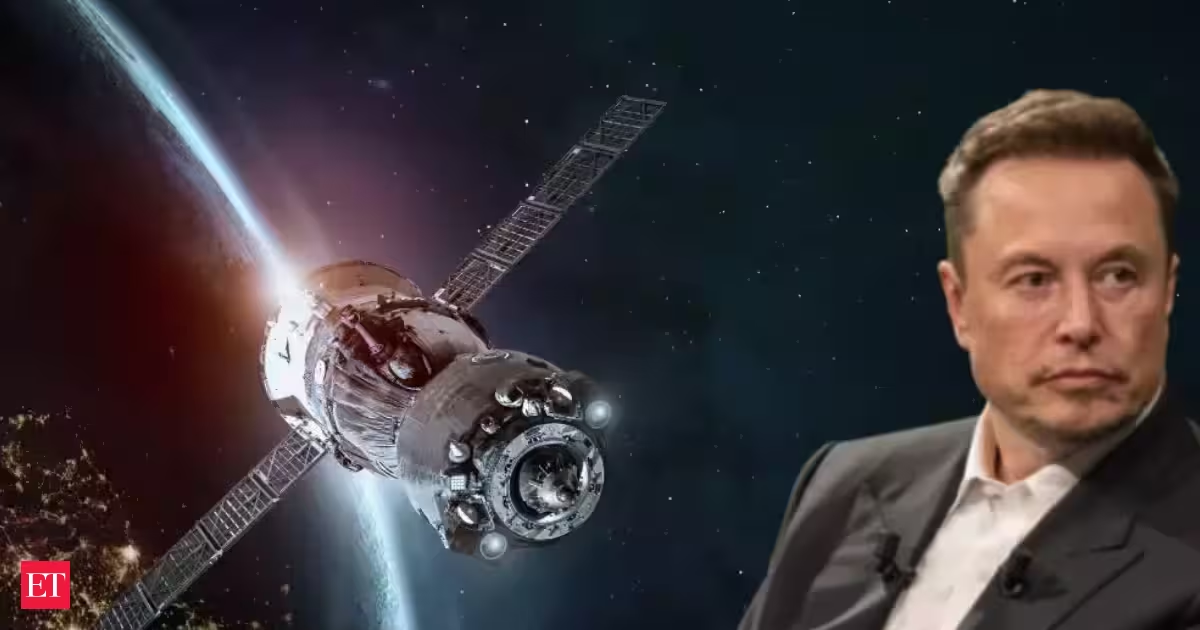
SynopsisStarlink seeks India's approval for its advanced satellite services. The company needs landing rights and spectrum assignment for its new technology. India has allowed current services but not the Satcom 2.0 proposal yet. Regulatory issues and spectrum assignment remain key challenges for Starlink. Clearances are essential before satcom can bridge India's digital divide.ReutersThe silhouette of Elon Musk and Starlink logo are seen in this illustrationStarlink has begun launching its constellation of satellites for 2nd-gen services that permit direct-to-mobile-handset communication through cell towers. It has approval for Satcom 2.0 from the US Federal Communications Commission (FCC). Still, it needs to secure permission from individual countries for landing rights, spectrum assignment and access to cellular networks.The company has reapplied in India for clearance. Commercial Satcom 2.0 requires global harmonisation of approvals, as SpaceX, Starlink's parent company, uses its reusable rocket launch capability to build the higher-capacity satellite network.Also read: Starlink would help the 'least served' in India: Elon MuskIndia has allowed Starlink's current satellite broadband services, but is yet to approve its Satcom 2.0 proposal. The company is also awaiting a full operating licence, and New Delhi has warned states against initiating projects until it is granted. A key issue is assignment of spectrum for satcom services. Trai accepts that radio frequencies for satcom are a globally harmonised shared resource not suitable for traditional spectrum auctions, but GoI is yet to decide on assigning them.There's another regulatory grey area over direct-to-device (D2D) satcom services, with the country's terrestrial networks seeking a level playing field. Besides, a specialised framework will have to be created for satcom to be able to interface with existing grids.Also read: Elon Musk's Starlink reapplies for India approval of satellite network with direct-to-device techThe regulatory scaffolding must be in place before satcom can deliver its anticipated benefits to telecom coverage in India. Satcom has significant potential to bridge the digital divide as rocket-launch and D2D technologies mature. But it comes with a big bill. Satellites and landing infrastructure cost a lot. Clearances for swarms of low-Earth-orbit satellites are an administrative nightmare. Governments worry about the national security risks satcom poses. Yet, the idea of a connected planet, including its most inaccessible regions, is economically irresistible. India will have to find its way around its concerns over satcom. ...moreElevate your knowledge and leadership skills at a cost cheaper than your daily tea.Subscribe Now
Starlink's satcom needs earthly fixes - The Economic Times
Starlink seeks India's approval for its advanced satellite services. The company needs landing rights and spectrum assignment for its new technology. India has allowed current services but not the Satcom 2.0 proposal yet. Regulatory issues and spectrum assignment remain key challenges for Starlink. Clearances are essential before satcom can bridge India's digital divide.
393 words~2 min read