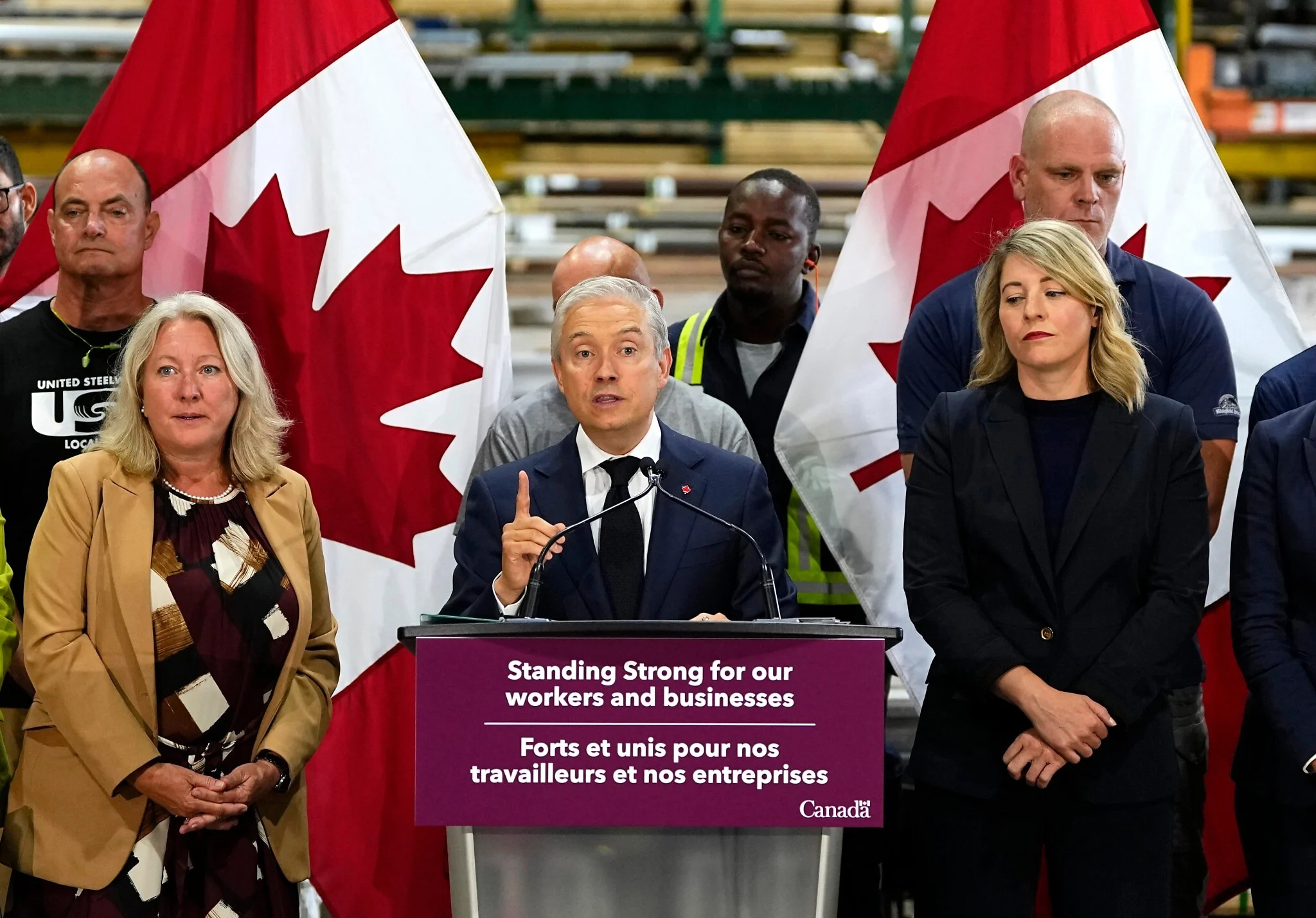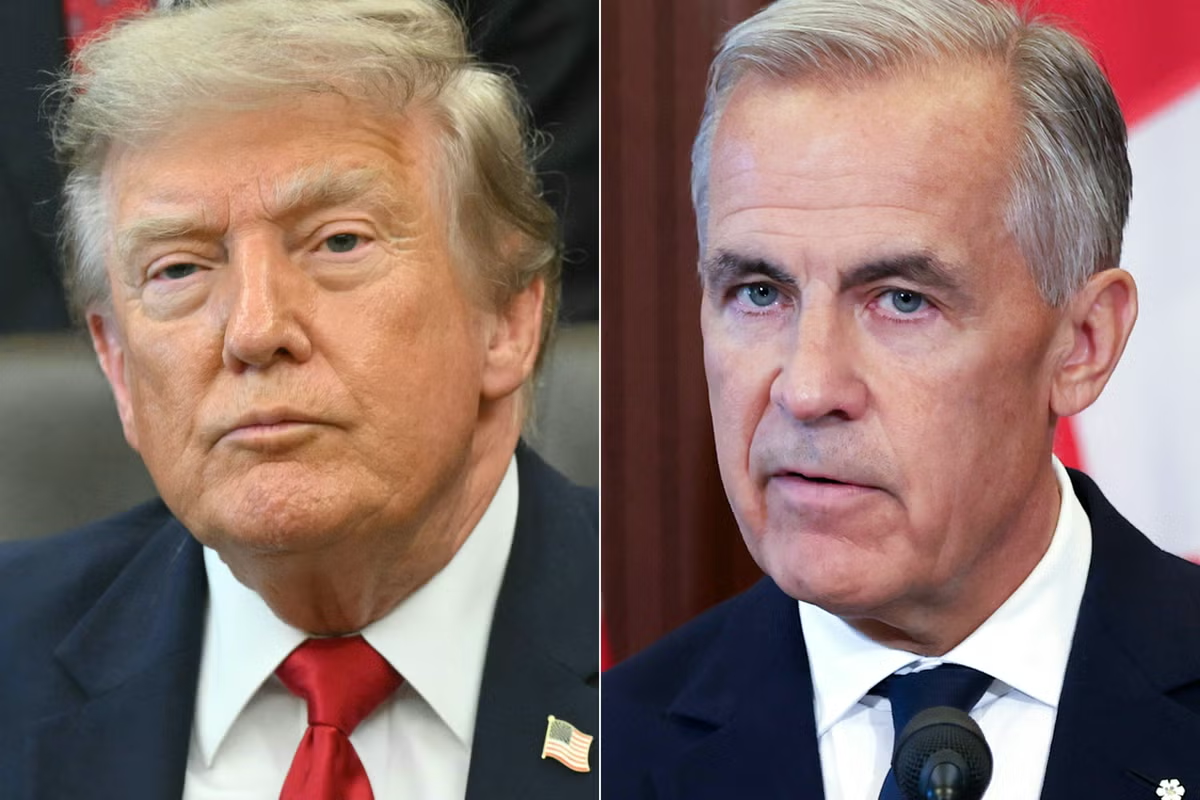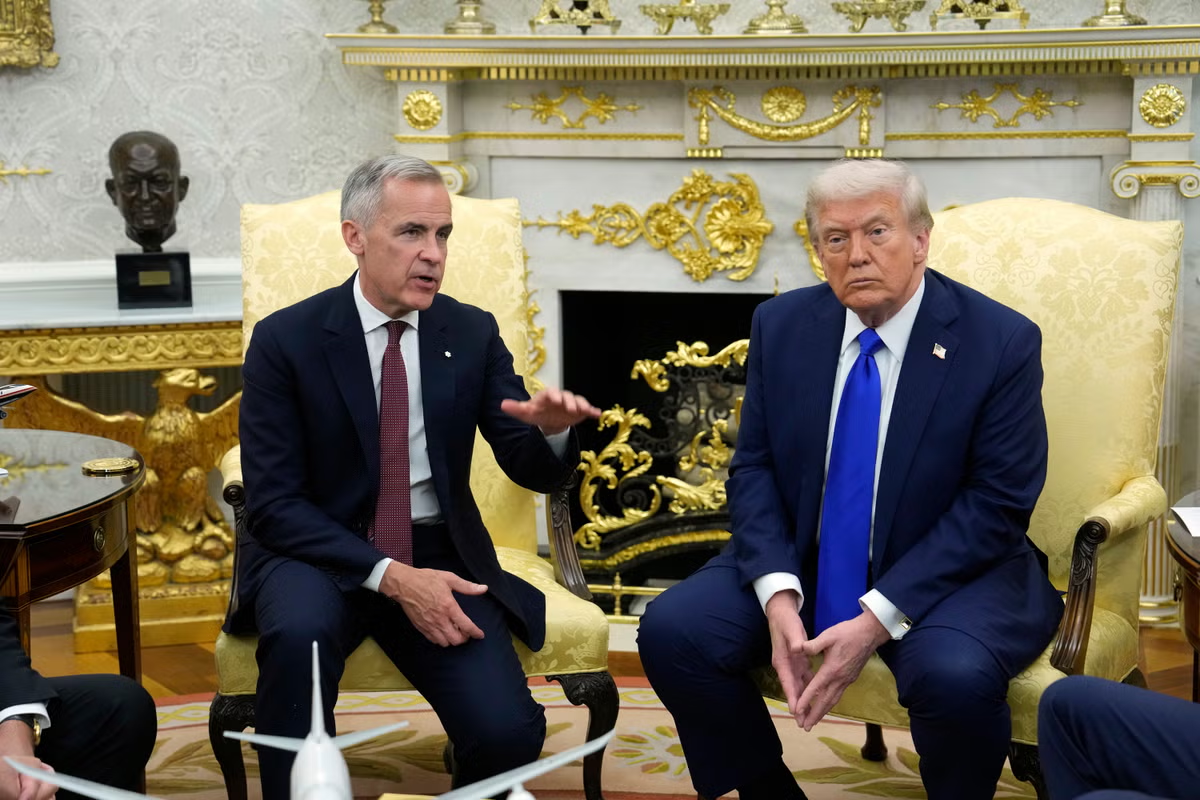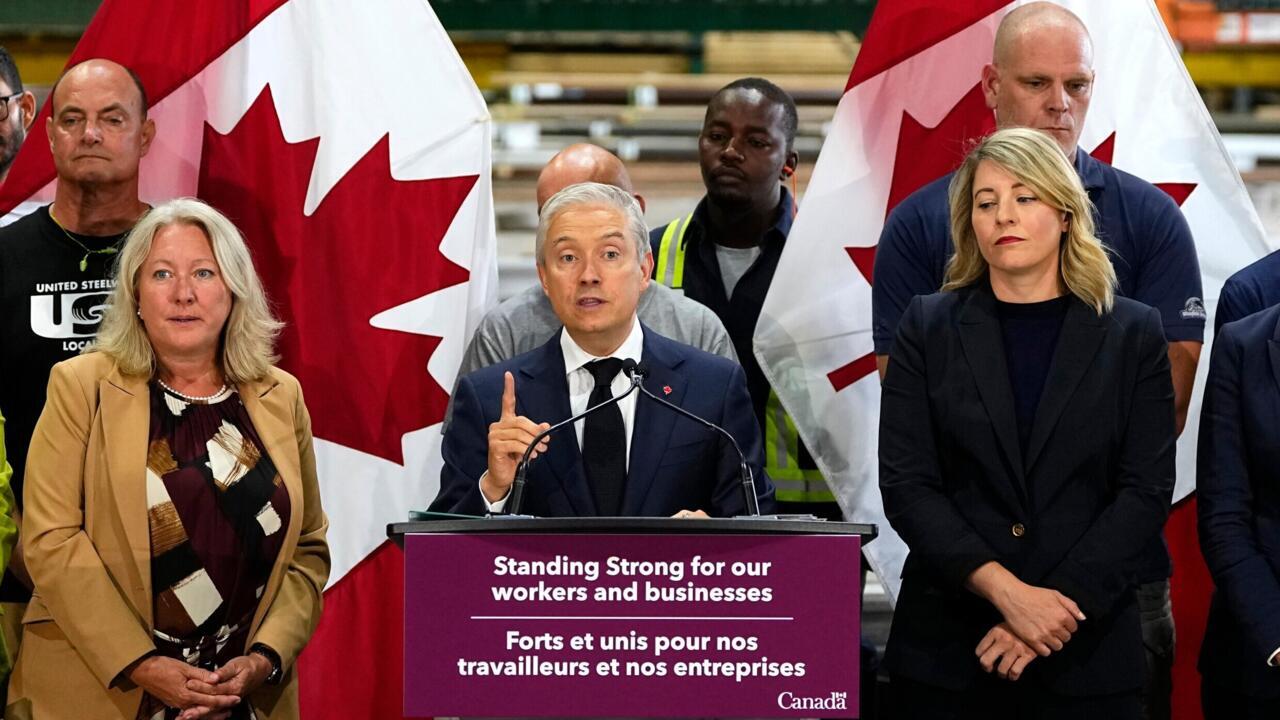
Canada struck back at the United States on Tuesday with retaliatory tariffs on about $20 billion worth of American goods, including steel, dairy products, appliances and farm equipment, as the trade war between the once-friendly neighbours escalated sharply. Read more‘We don’t need Canada’: Trump threatens to double auto tariffs after trade talks collapse The tension threatened one of the world’s largest trading relationships. The new tariffs extended well beyond industrial goods, hitting everyday purchases such as seafood, cheese, clothing, cosmetics and toilet paper, with some facing duties as high as 50 percent. “We did not choose this conflict, but when our economic integration is used as a weapon rather than the foundation for a win-win partnership, we need to stand up,” Finance Minister François-Philippe Champagne said in French, calling the situation "an unprecedented challenge imposed on Canada”.
To display this content from YouTube, you must enable advertisement tracking and audience measurement.
One of your browser extensions seems to be blocking the video player from loading. To watch this content, you may need to disable it on this site.
Cover image: © France 24
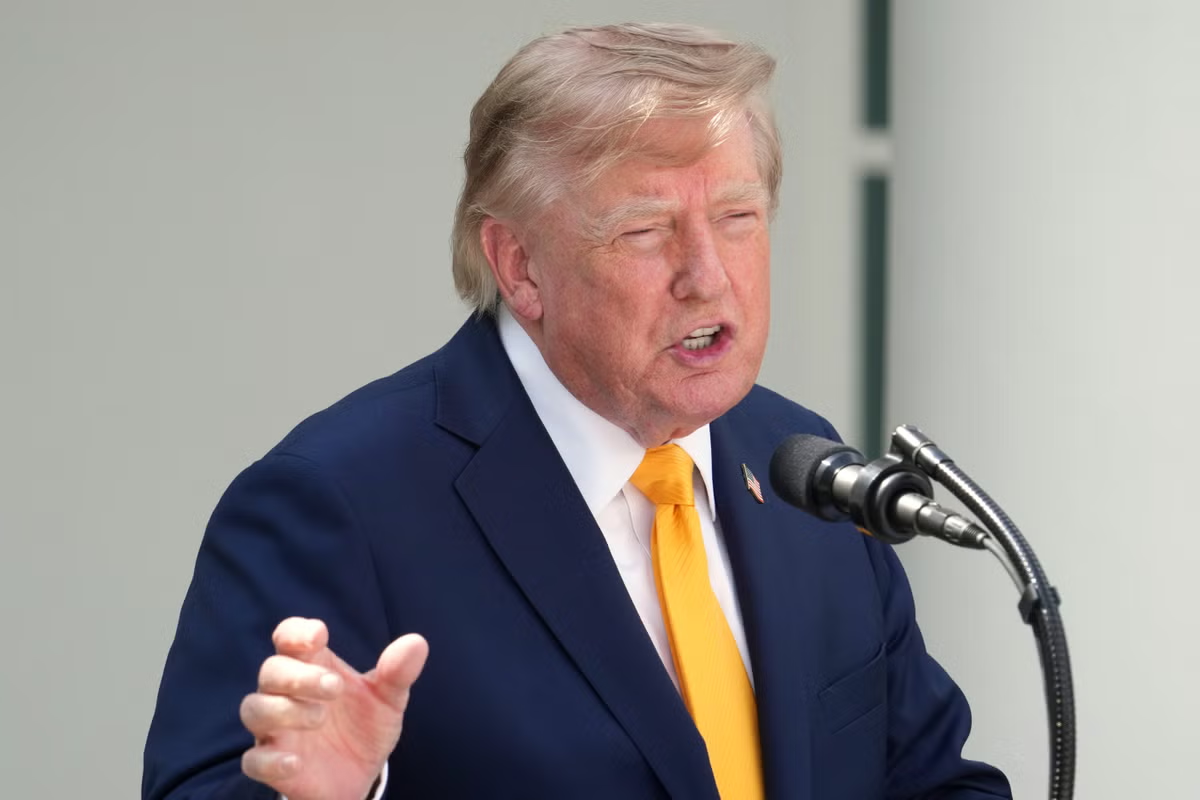
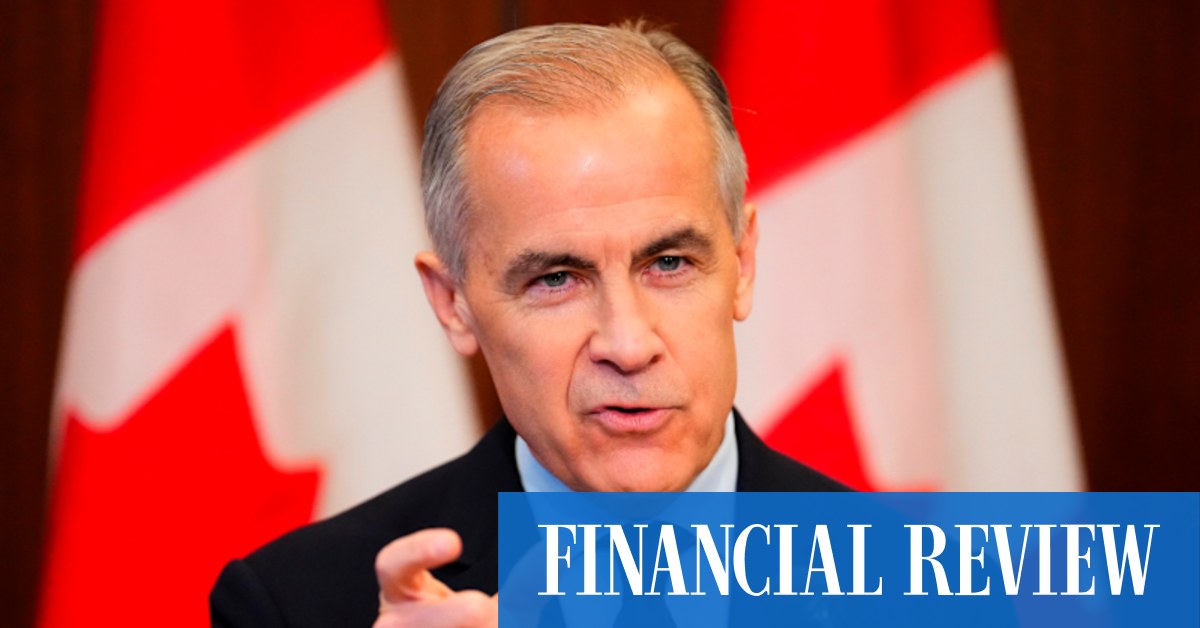
Canada's retaliation came after the Trump administration imposed 50 percent tariffs over the weekend on Canadian goods following the collapse of trade negotiations. Canadian Prime Minister Mark Carney accused Washington of trying to subordinate Canada and said US demands during the failed talks showed that Americans wanted to “destroy our major industries". President Donald Trump intensified the confrontation Monday, telling Canadian leaders to “fall in line” or face consequences “far WORSE” than existing tariffs and threatening new 50 percent tariffs on Canadian vehicles, auto parts and steel. Read moreWhat to know about Trump's tariffs on Canada Trump added another provocation Tuesday, saying the United States was giving “serious consideration” to renaming Lake Ontario “Lake America” in a feud with Ontario Premier Doug Ford. Such a change would be reminiscent of the Republican president’s unilateral action last year by executive order to rename the Gulf of Mexico to the Gulf of America. The tariffs will take effect September 8 at rates of 15, 25 and 50 percent, with Canada matching the corresponding US tariff rate on more than 700 products such as pulp and paper and electronics. The tariffs on many American products would double from 25 to 50 percent, with the largest share of the new measures affecting steel and aluminum. Canadian officials said the goal is not to raise revenue but to protect Canadian companies and reduce US imports. US steel imports, for example, have already fallen 30 percent since Canada imposed a 25 percent tariff, and the new 50 percent rate is expected to cut them further, Canadian officials said. Goods facing 50 percent tariffs include some steel and aluminum products, furniture and clothing. Appliances, dairy products including cheese, fish and seafood, and certain steel and aluminum derivatives will face 25 percent tariffs. Existing Canadian countertariffs on US autos will remain in place. Support package for Canadian small businesses, workers Canada also announced a support package for workers and businesses affected by the dispute worth $7.5 billion in Canadian dollars (C$). Canadian Industry Minister Mélanie Joly on Tuesday outlined the details of the C$7.5 billion ($5.4 billion in US dollars) support package. It included C$3 million ($2.1 million) of grants for small businesses through state institutions and C$2 million ($1.4 million) of interest-free loans. Joly acknowledged that business leaders and workers across the country are anxious and concerned, but she said the government aims to protect Canadians and their jobs. Canadian officials acknowledged the counter tariffs will raise costs for some businesses and consumers but said they expect the overall economic effects to be moderate. They said the government has provided more than $30 billion Canadian dollars (US$21.7 billion) in tariff-related support since the beginning of 2025 – far more than it has collected in retaliatory duties – as it tries to cushion the blow from the trade fight. Canada and the United States have deeply integrated supply chains across autos, energy, agriculture and manufacturing, making a prolonged trade fight potentially costly for businesses and workers on both sides of the border. Businesses and consumers are caught in the middle, facing uncertainty about how much prices may increase. Michael Howard II, owner of a furniture business in Warren, Michigan, outside Detroit, said the tariffs will hamper the “ability for us to put food on the table for our family" and affect "the ability for us to give back to our community”. Howard and his wife started their business a decade ago. They make and sell everything from dining room tables to bookcases. “To say that we don’t need Canada is just disingenuous,” he said. “It’s dishonest. And it’s just absolutely not truthful. We need our neighbour, but also they need us.”