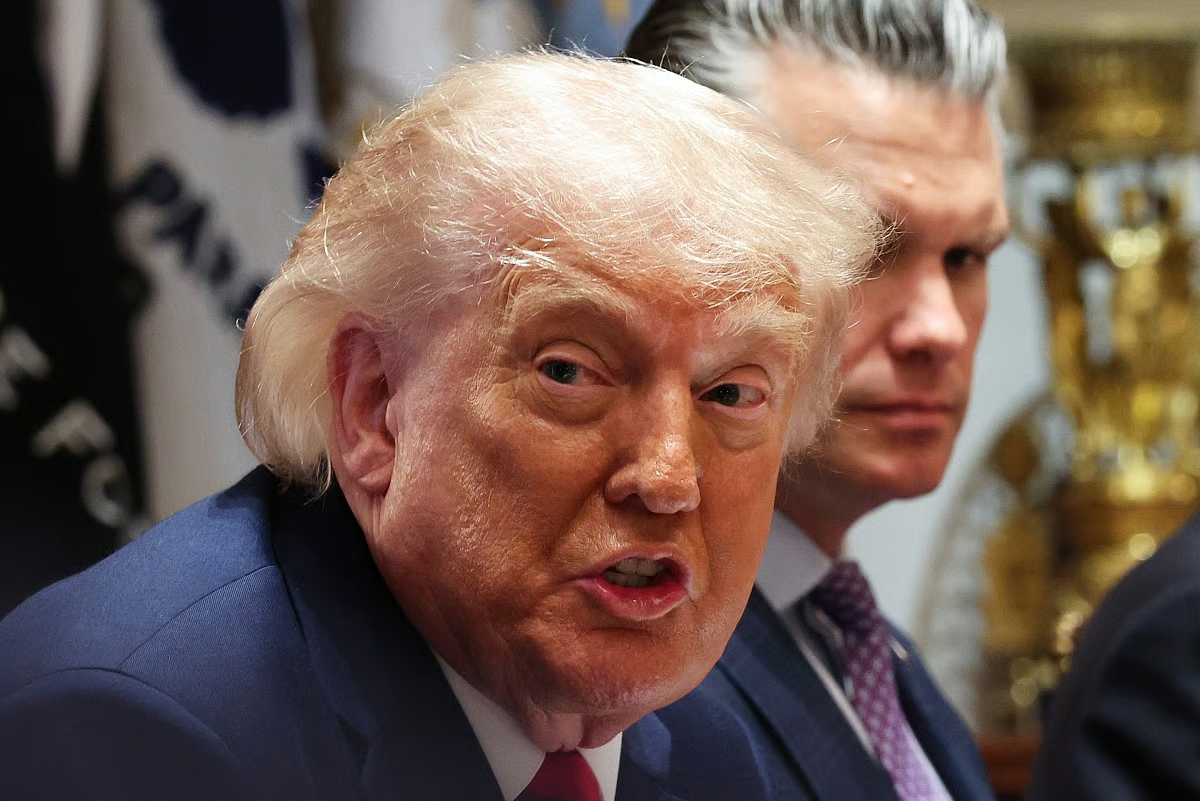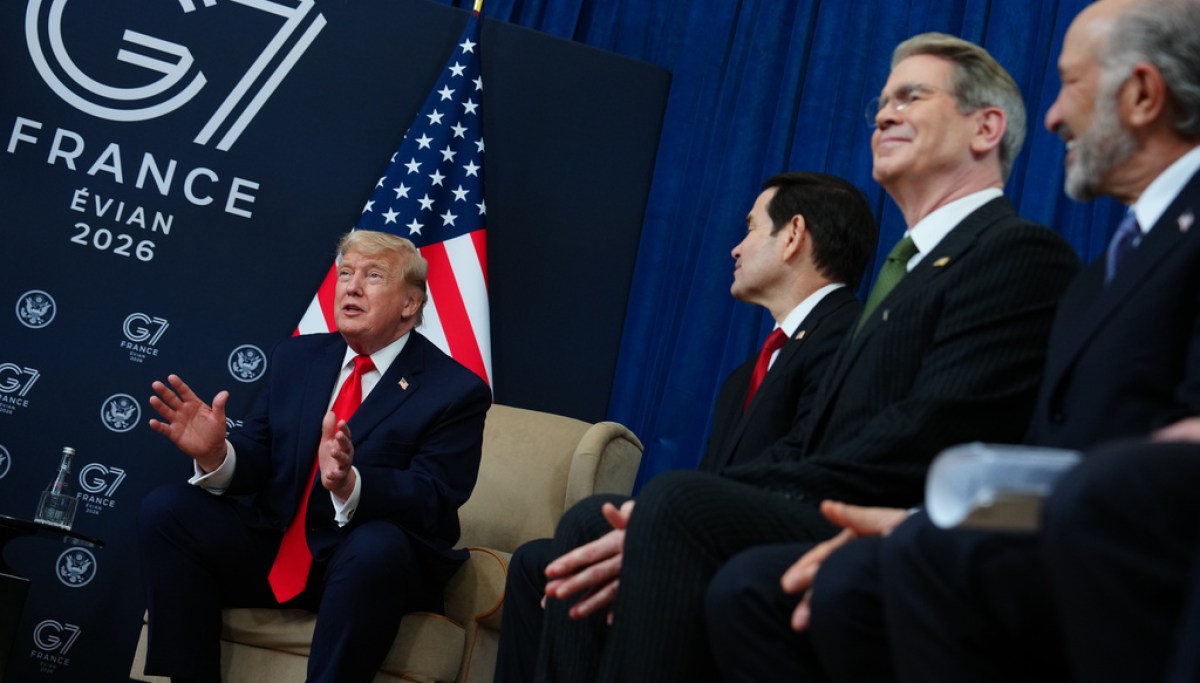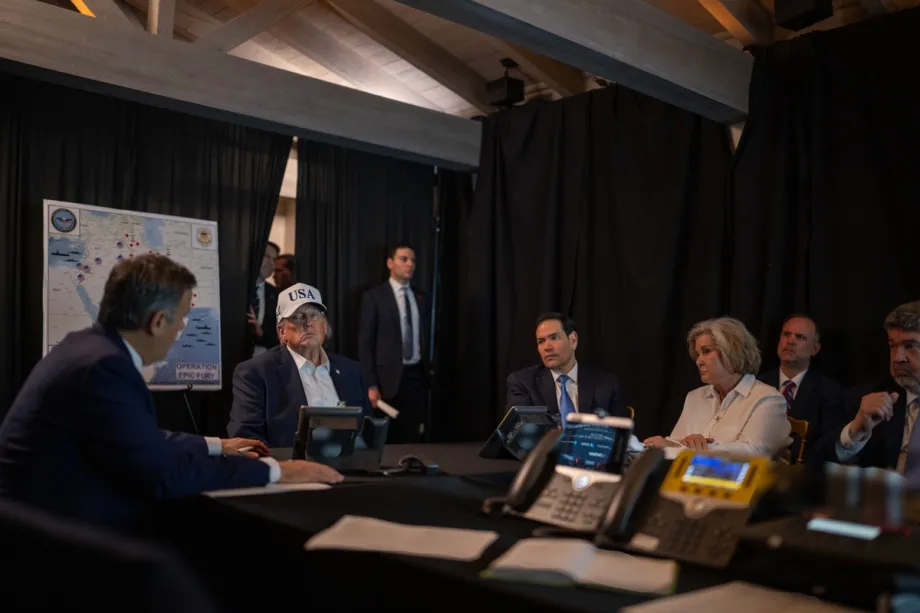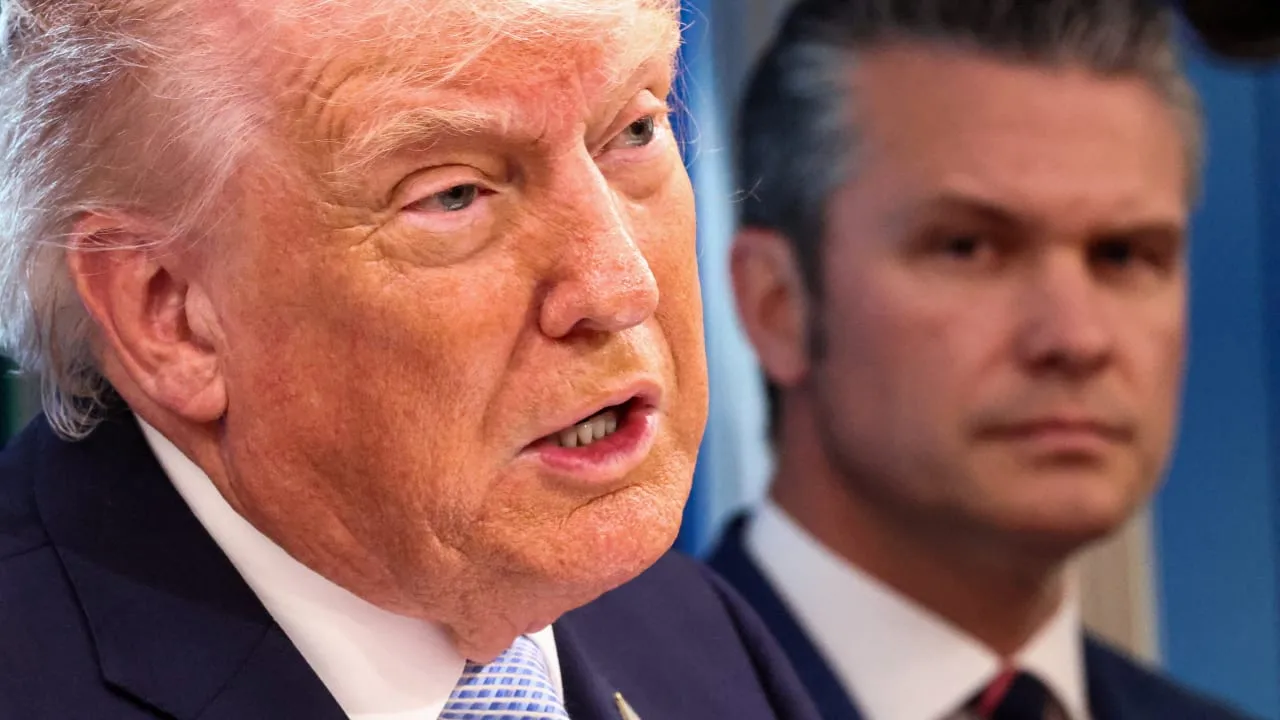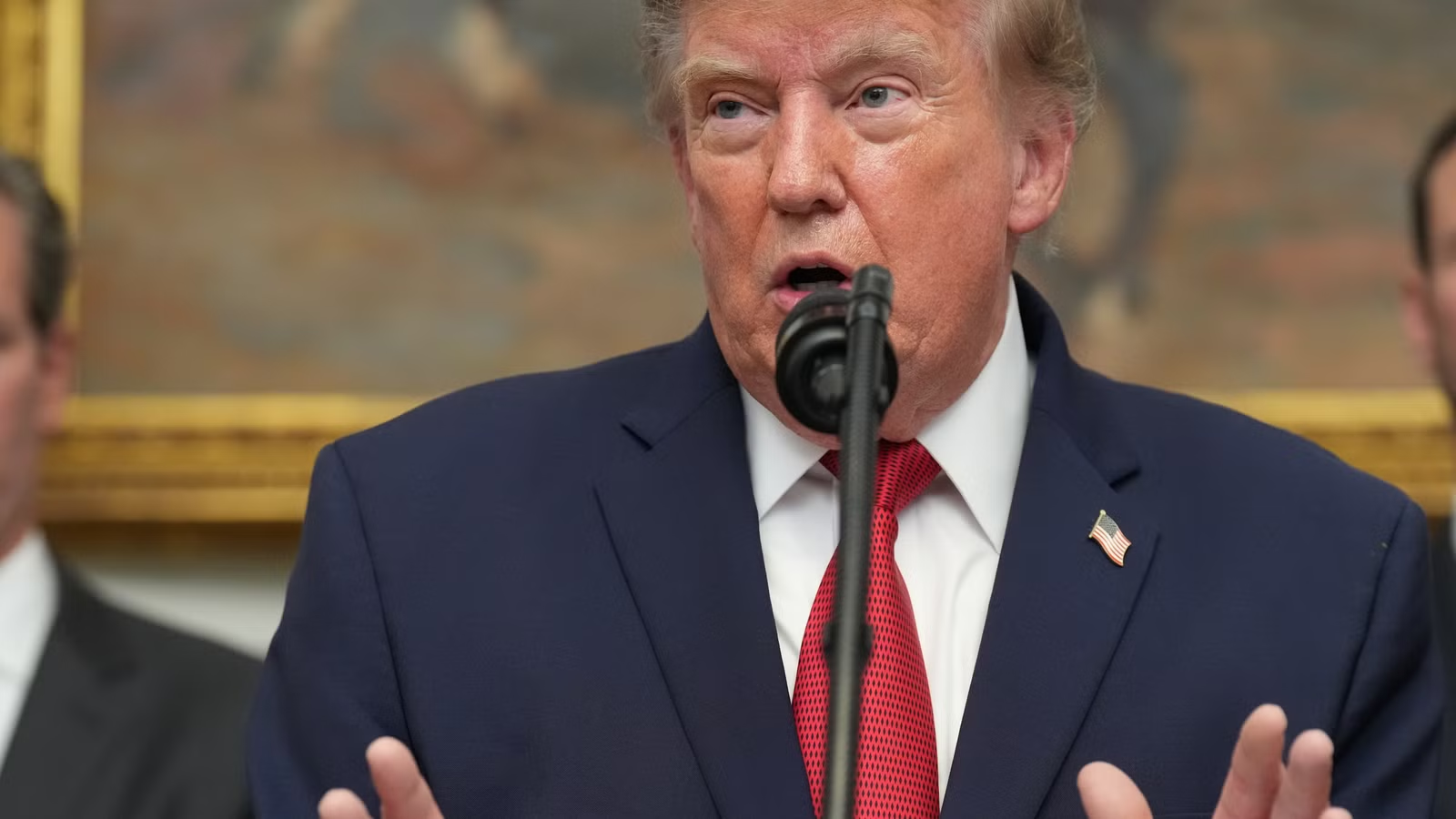
WASHINGTON—Days before going to war with Iran in February, President Trump summoned his intelligence chief to the Oval Office to ask whether a full-on assault was a good idea.President TrumpIran was at its weakest point in decades, senior aides and Israeli Prime Minister Benjamin Netanyahu told him, providing Trump the rare opportunity to dismantle Iran’s nuclear program and bolster his legacy as a peacemaker. The question was whether a large-scale attack would work and possibly topple the regime.Then-Director of National Intelligence Tulsi Gabbard outlined assessments from America’s intelligence apparatus. According to people familiar with the meeting, she told Trump that killing Iran’s supreme leader would likely usher in a more hard-line regime open to acquiring nuclear weapons. Tehran would rush to close the Strait of Hormuz, destabilizing the global energy market. And it would strike U.S. forces and partners in the Middle East, prompting questions about American resolve and reliability with allies.The notes of caution echoed warnings Trump was receiving from all corners. Top military leaders told the president that a war would lead to casualties, concerns about the weapons stockpile and readiness problems for an overstretched force, The Wall Street Journal reported.Trump ordered an attack that began on Feb. 28 and urged Iranians to overthrow their government. Nearly six months later, a conflict the president promised would be over within six weeks is continuing without a clear end in sight.Iran’s Islamic Revolutionary Guard Corps controls the country and fires on commercial ships in the strait. The regime led by Mojtaba Khamenei, the supreme leader who succeeded his slain father, shows no signs of capitulating. The deadlock has led Trump to consider declaring victory if the waterway opens, even without a nuclear deal.Now Trump is relying on sanctions and a perpetual blockade wearing down U.S. forces to crush Iran’s economy, a wait-and-see strategy he argues will send the regime crawling to his feet.An estimated 3,000 Iranians and 18 U.S. servicemembers have died related to combat operations, and the Pentagon says an additional 756 American troops have been wounded. The war also has damaged U.S. bases, drained oil reserves and shrunk munitions stockpiles. The conflict is weighing down Republican prospects ahead of the midterm elections and sinking Trump’s poll numbers to the lowest of his presidency.Some former White House and former national security officials say there is no easy way for Trump to get what he wants: a deal that caps Iran’s nuclear work indefinitely and marks him as a historic wartime president.“This was all predictable and predicted,” said Eric Brewer, a deputy vice president at the Nuclear Threat Initiative who worked in Democratic and Republican administrations. “You can draw a straight line from the fact that the war was launched without any clear political objective to the mishandled diplomacy in trying to end it.”White House spokeswoman Olivia Wales said in a statement that Trump has decimated Iran’s military and nuclear facilities and is preparing now to crush the country’s economy with a naval blockade and sanctions. “He will never allow Iran to have a nuclear weapon,” Wales said. “It would be wise for Iran to reach a deal. Otherwise, they know what could happen.”The case for warAt the beginning of this year, Trump wanted another chance to flash American power following a June 2025 operation to strike three Iranian nuclear facilities and a January raid to capture Venezuelan leader Nicolás Maduro, according to U.S. officials.Netanyahu suggested Iran as Washington’s next arena.Not everyone agreed on the case for war. Vice President JD Vance promoted a more cautious approach, officials said. Iran might dissolve its nuclear program in negotiations, he told the president. Getting a deal was a risk but less costly than a war with unwieldy consequences. Plus, Iran’s economy was collapsing under heavy U.S. sanctions.If that path proved fruitless, Trump would have more legitimacy to attack Iran in a swift and overwhelming operation, Vance said.Trump listened but was ultimately swayed by Pentagon presentations of “decisive” options, U.S. officials said.Defense Secretary Pete Hegseth, Joint Chiefs Chairman Gen. Dan Caine and Adm. Brad Cooper, the head of U.S. Central Command, briefed the president several times on plans to strike Iranian targets, including using missile launchers, radar, weapons-production facilities, mine-storage sites and warships. The idea was to overpower the Islamic Republic and cripple its forces while Israel killed Iran’s top leadership.Despite the warnings from top national security officials, Trump dismissed those concerns during the meetings, suggesting the military could handle any problems as they arose.Hegseth and Caine replied on multiple occasions that they would navigate any complications, said officials who attended the meetings.A White House official said the Pentagon offers Trump unbiased and accurate information to make informed decisions. A spokesman for Caine declined to comment. U.S. Central Command referred the Journal to the defense secretary’s office, which didn’t respond to a request for comment.Applause, then doubtsCentral Intelligence Agency Director John Ratcliffe and Steve Witkoff, one of Trump’s main Iran envoys, walked into a fundraiser at Mar-a-Lago after the war kicked off Feb. 28 to inform Trump that Israel had killed Iranian Supreme Leader Ali Khamenei. Trump was so pleased that he told them to deliver the news to the crowd.The room burst into applause. Trump, soaking in the praise from his aides and the guests, crossed his arms and puffed out his chest, people familiar with the event said.The CIA didn’t respond to a request for comment.Trump’s beaming wouldn’t last. The battlefield losses and damage to U.S. equipment and bases raised questions over what the U.S. was gaining from the conflict.The military pain was compounded by a roiling energy market. Iran’s closure of the Strait of Hormuz brought one-fifth of the world’s oil and gas trade to a grinding halt, sending fuel prices soaring.Several leaders from Gulf countries, including Saudi Arabia and Qatar, contacted the White House seeking an end to the fighting and a face-saving diplomatic solution for all involved. Republicans also called Trump, telling him the war was hurting the party’s prospects in the November midterms.Trump privately fumed at the backlash, officials said. He queried aides about why Iran wasn’t backing down amid the unrelenting bombing campaign.Diplomatic efforts sputtered, then led to a ceasefire. Defense officials watched as Iran took advantage of the fighting pause to drop dozens of mines in the Strait of Hormuz, though they were confined to a small area of the waterway.By mid-April, Trump was still torn about the best path forward. A friend who visited Trump urged the president to end the war. Trump asked whether he should “bomb the s—” out of Iran, a person familiar with the conversation said. The friend said no, warning that it would only suck the U.S. deeper into a widening Middle East conflict.On June 17 came the breakthrough—an interim peace agreement to reopen the strait, paving the way for 60 days of nuclear talks. Asked by confidants why Trump went for a temporary deal, the president pointed to new internal White House polling: Nearly 80% of Americans wanted an agreement to end the conflict, no matter its contents.Tehran quickly renewed strikes on ships in the Strait of Hormuz after the June interim agreement. Trump considered it a betrayal.The frustrating cycle spun again. Trump would announce a deal, only to see it collapse. He would then issue threats to force Iranian capitulation. Sometimes he followed through, but other times he backed off, citing renewed progress on an agreement to dismantle Iran’s nuclear program.In late July, Trump ordered a large assault he claimed would be bigger than any other since World War II. But he pulled back after regional leaders told him to avoid more violence.The 60-day period for nuclear negotiations ended Aug. 17. Three days later, Treasury Secretary Scott Bessent said Trump has turned to an economic-pressure campaign to “collapse the regime” under what would be called Operation Economic Outcast.Six months after the war began, the “regime change” talking point had returned.Write to Alexander Ward at alex.ward@wsj.com, Lara Seligman at lara.seligman@wsj.com and Alex Leary at alex.leary@wsj.com
The Warnings That Came Before a War Now Reaching the Six-Month Mark
After military and diplomatic efforts, President Trump is pinning his hopes on economic warfare. | World News
1,327 words~6 min read