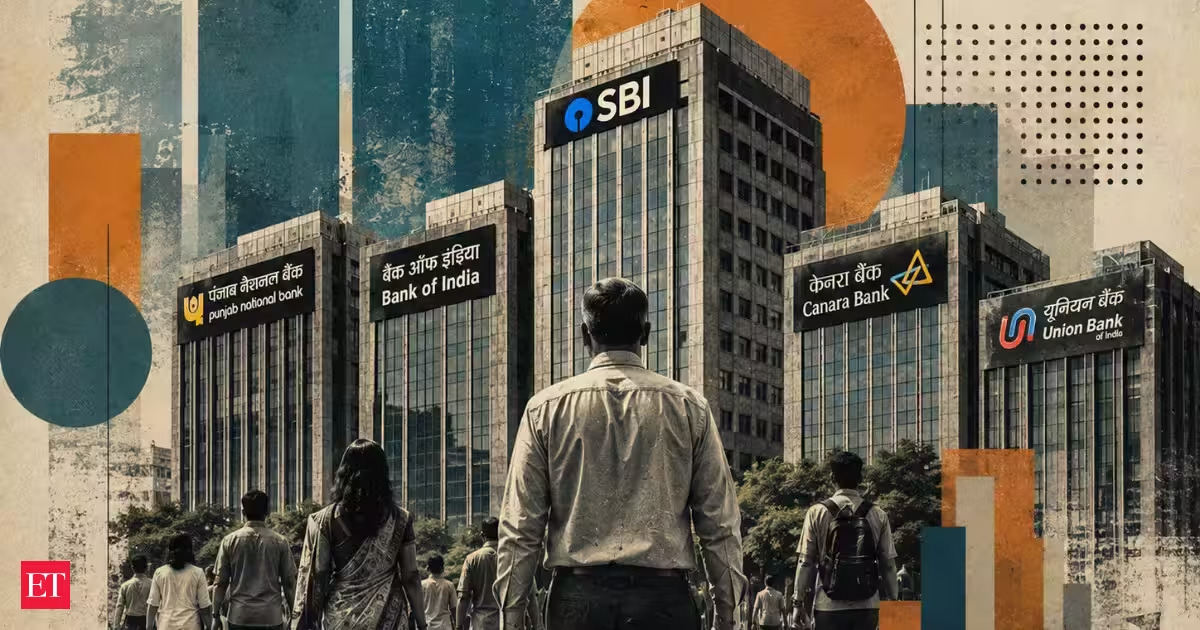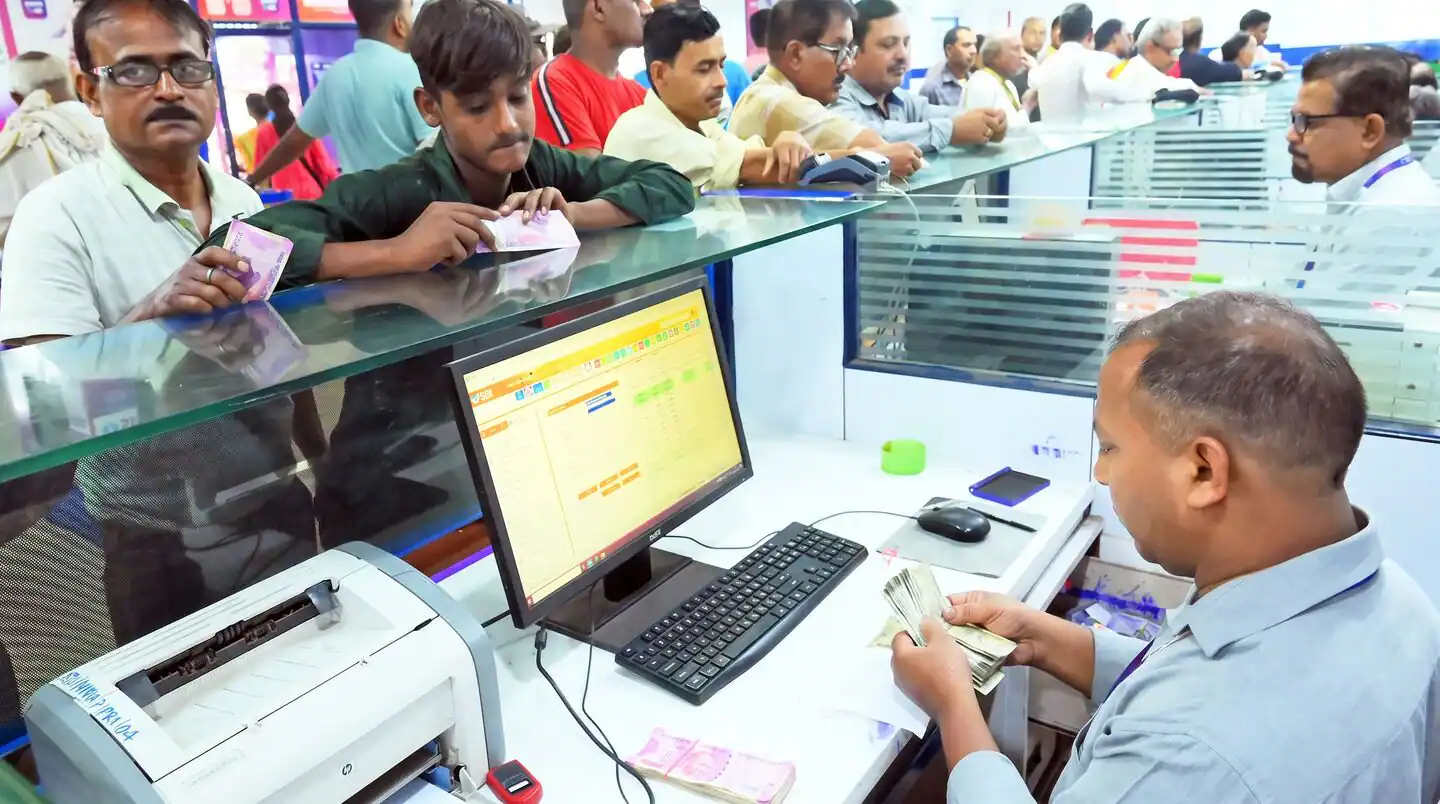
Contrary to popular perception, a working paper by the Economic Advisory Council to the Prime Minister (EAC-PM) has said that efficiency of public sector banks (PSBs) is much better than private banks and foreign banks.The paper, authored by Soumya Kanti Ghosh (Part-time member, EAC-PM and Group Chief Economic Advisor at State Bank of India) and Tapas Kumar Parida (Economist at State Bank of India) studied 47 banks for the period FY15 to FY26 and employed Data Envelopment Analysis (DEA) to calculate efficiency and productivity of the banks. It studied 12 public sector banks, 21 private sector banks and 14 foreign banks. These banks cover more than 95 per cent of the assets of the banking system.Efficiency has been measured between 0 and 1, and the range is expressed in percentage terms.The paper found that PSBs efficiency improved to 93.12 per cent in FY26 from 72.46 per cent in FY20, citing subsequent capital infusion and technological upgradation in select PSBs as key reasons for improvement. “PSBs are relatively more efficient than private banks except FY19-FY22, which may be due to merger and rationalisation of business, branches, and employees,” the paper said.Further, private sector banks recorded improvement to over 86 per cent in FY26 from around 78 per cent in FY20. Foreign banks (FBs) efficiency remained 83-85 per cent during FY20 to FY26. Further, “it is interesting to know that the performance of PSBs is in a better position compared to private banks, especially during the last 3 years, i.e., FY24 to FY26,” the paper said.Among PSBs, SBI performs relatively better and scored 97.49 per cent during the full sample period FY15-FY26, followed by Bank of Maharashtra (BoM) at 90.49 per cent. Among the private banks, HDFC Bank has scored 97.54 per cent followed by IDBI Bank at 96.51 per cent. Among foreign banks, HSBC and JP Morgan have scored 1. During the whole study period FY15 to FY26, JP Morgan and HSBC have been ranked at 1st place followed by Citibank at 3rd, HDFC Bank at 4th and SBI at 5th position. “The FBs efficiency is better than the domestic banks mostly due to their prevalent business models,” the paper said.Talking about the long-term, the paper emphasised that banking in India will change. Some of the main drivers of this change will include hyper-personalisation through AI that will tailor the needs of young individual customers. Subsequently, there will be a shift from reactive to proactive service deepening customer relationships and increase institutional loyalty. “In principle, banks will increasingly focus on data-driven customer experiences, AI automation, and robust data security. Thus, product offerings and delivery will become customised in the coming years,” it said.The paper expects India being a multi-language country the creation of foundational AI models will gather pace. Banks will be exploring at suitable time to harness these India-specific foundational models for multiple language onboarding and hyper-customisation of services. The long-term positive outlook of India remains intact. India’s sovereign rating remains stable at BBB after its revision in August 2025.“Given the strong fundamentals such as high savings rate, adequate FX reserves at more than $700 billion, well-capitalised banking and cash-rich corporate balance sheet the long-term outlook of high growth is feasible,” the paper concluded.Published on August 25, 2026
Public sector bank more efficient than Private Sector Banks, says EAC-PM paper
The paper found that PSBs efficiency improved to 93.12% in FY26 from 72.46% in FY20, citing subsequent capital infusion and technological upgradation in select PSBs as key reasons for improvement
538 words~2 min read