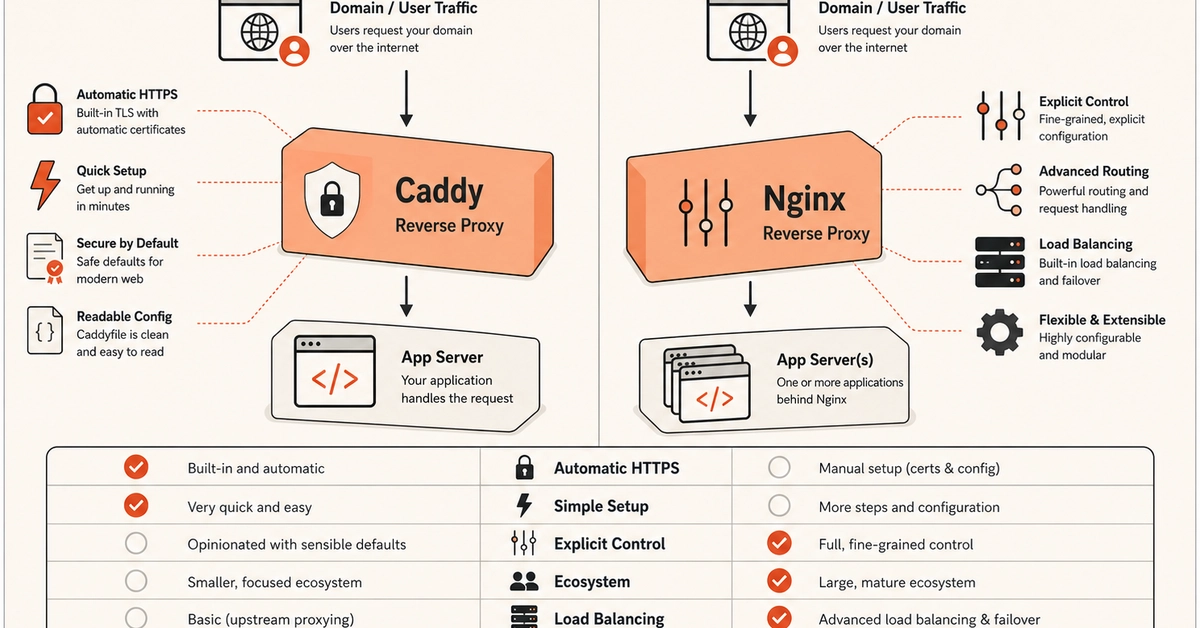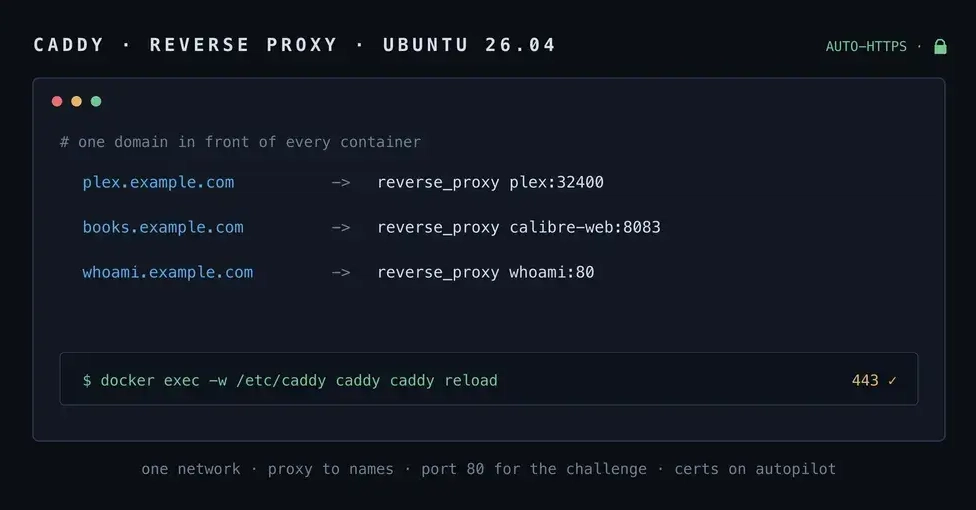
Have you ever heard "Caddy is great" and wondered what actually makes it different from Nginx? Or maybe you were evaluating Traefik for a Kubernetes setup, went down a rabbit hole of comparison articles, and gave up halfway through?
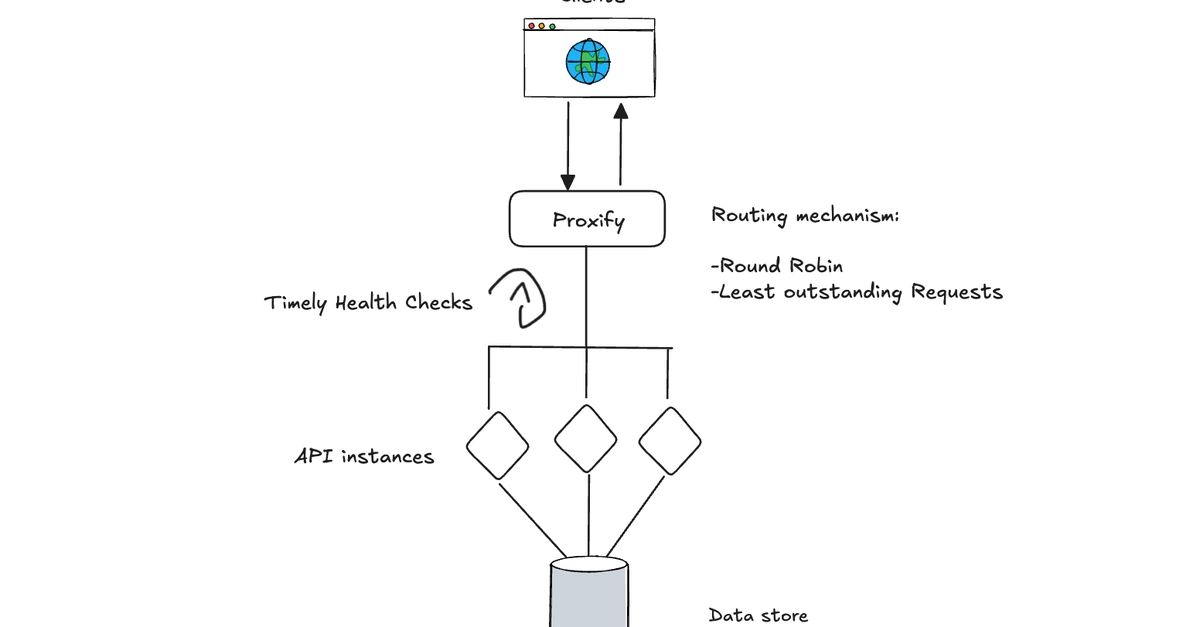
Part 1 ("For People Who've Configured a Reverse Proxy but Can't Explain How It Works") covered how reverse proxies work under the hood. Part 2 — this article — focuses on tool selection: the design philosophies behind Nginx, Caddy, Traefik, and HAProxy, and a mental model for deciding which one fits your use case. If you haven't read Part 1, one baseline is enough: a reverse proxy is software that sits between the browser and the app server, relaying traffic between them.
The four tools and what each one is
A quick one-liner for each:
Nginx: the most widely used general-purpose web server and reverse proxy