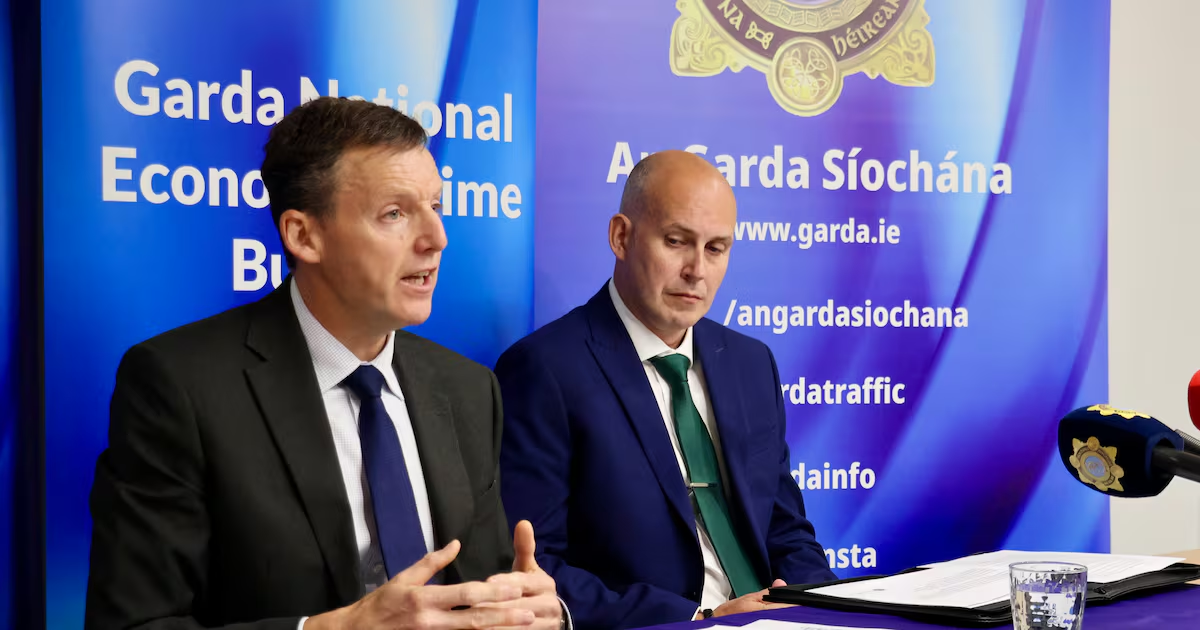
Students have been warned by An Garda Síochána about accommodation scams as they begin their third-level year. The August-October period is the “peak season” for such scams, according to Det Insp Alan Govern of the Garda National Crime Bureau, who said there had been “notable spikes” during these months in the last two years. This year, up to the end of July, the Garda has received 230 reports of accommodation scams, involving losses to the victims worth a total of €400,000. The most common scam involves property that does not exist or property that does exist and is not available for rent. Victims are asked to pay a deposit or a holding fee before viewing the property. Once the payment is made, the offender is gone and there is no further contact. Others turn up having paid a deposit. When they collect the key, they find the key does not work and somebody else is occupying the property. Gardaí have warned that some of these properties are advertised on reputable websites such as daft.ie or booking.com. Govern advised students looking for accommodation to do their own research on the advertised property and to check with the Residential Tenancies Board (RTB) whether the property is registered with them. Students should only use recognised letting agencies or deal with people who are genuine and trusted. If searching online, students are advised to check the URL to ensure it is a real website and take note of the privacy and refund policy sections. They should also be wary of unrealistically low prices or if people put pressure on students to pay quickly. A third red flag is if students are asked to pay cash, with cryptocurrency or through peer-to-peer transfer apps. Instead, students should always view the property before handing over any money, use a traceable banking method and use the RTB to benchmark the rents offered.Students are also advised to walk away if the landlord refuses to show them around the property in advance. There were 14 incidents of accommodation fraud involving students in 2025 and 13 in 2024. There were 305 involving other tenants and 74 involving holiday lets in 2025. In 2024 there were 296 accommodation scams involving tenants and 38 involving holiday lettings. Gardaí also warned against students becoming “money mules” for organised criminal networks. A money mule is someone who receives stolen money or proceeds of crime into their bank account and transfers it to another account. In the 12 months between June 2024 and June 2025, almost €9.4 million had been laundered through money-mule accounts. Govern warned that the prospect of “easy money” for young people could lure them into situations that could have dire consequences for them if they are caught. “You may be oblivious to the fact the money going into your accounts is the proceeds of crime – but you are still culpable in the eyes of the law,” he said.
Students warned of ‘spike’ in accommodation scams as they return to college
Garda describes three red flags to watch out for
487 words~2 min read