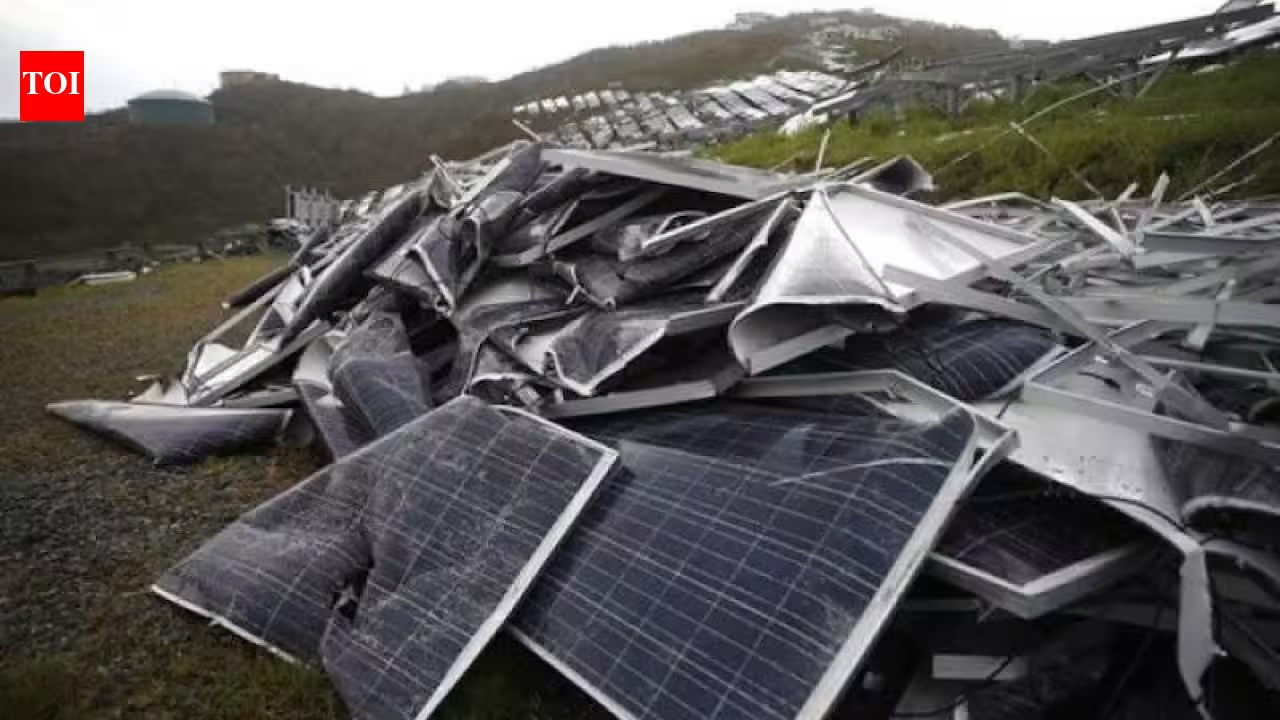
Sweden decommissioned just 17 metric tons (MT) of solar panels in 2021, but a new industry roadmap warns that figure could reach 150,000 MT per year by around 2060, and says current recycling and reuse systems are not yet equipped to handle it.
Sweden’s annual volume of decommissioned solar panels could grow from 17 MT in 2021 to as much as 150,000 MT by around 2060, according to a new circular-economy roadmap published by Axfoundation, KTH Royal Institute of Technology, and industry partners including Svea Solar, El-Kretsen, Stena Recycling, and REMONDIS.
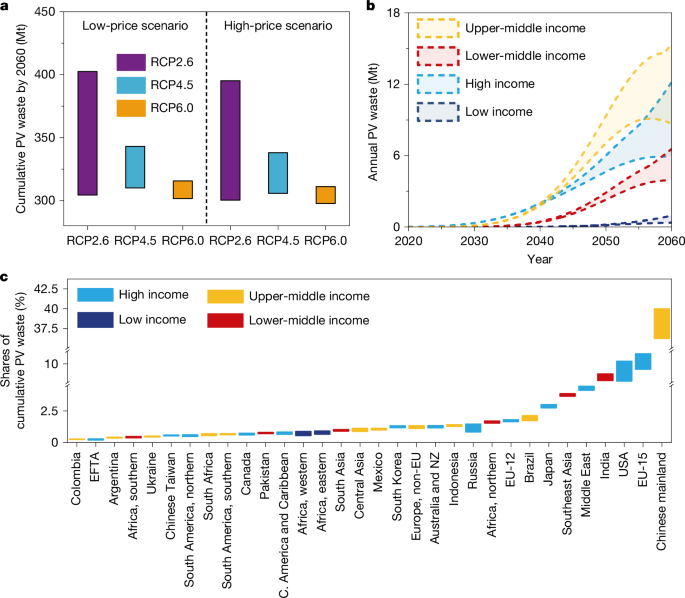
The roadmap, developed through the CircSolar project and financed in part by Vinnova, Sweden’s innovation agency, draws on scenario modeling by RISE Research Institutes of Sweden. Depending on the pace of solar deployment and how much of the fleet is repowered – replaced with newer panels before reaching the end of its technical life – RISE estimates annual decommissioning volumes could range from 40,000 MT in a lower-deployment scenario to 150,000 MT in a rapid-expansion scenario by 2060, with larger volumes beginning to emerge from around 2035.
“This roadmap is not the end point, but a starting point for collective action,” said Johanna Olofsson Behrman, project manager for future materials at Axfoundation. “By bringing together actors from across the value chain, CircSolar has shown that circular solutions for solar panels require system innovation, shared responsibility and practical collaboration. The next step is to turn these recommendations into action.”